Monday, February 4, 2019

Scientists: W. Antarctica’s Thwaites Glacier Is NOT Melting Due To A Progressively Warming Climate

Antarctica Has Not Warmed In Over A Century

Natural Variability – Not Humans – Drives Ice Melt

The most recent mass media contribution to the canon of climate alarmism referenced a study claiming that "climate change" (i.e., human-caused deep ocean warming) was responsible for the Amundsen Sea's (West Antarctica) "rapid melting" of the Thwaites Glacier.

NYT-Climate-Chage-Is-Melting-W-Antarctic

Image Source: New York Times

A few months ago, however, scientists (Jenkins et al., 2018) reported that the Amundsen Sea sector – where Thwaites glacier is locatedhas been in a cooling phase since 2009-'11.

Furthermore, the ocean in this region warms and cools in accordance with decadal-scale cycles.  Consequently, the authors conclude that the "accelerated mass loss from the Amundsen Sea sector of the [West Antarctic Ice Sheet, WAIS] has not resulted from progressive ocean warming or unstable ice retreat."

This would appear to contradict the claim that rapidly and linearly rising anthropogenic CO2 emissions are what lies behind the ocean warming and/or ice sheet melt for this region.

West-Antarctic-Ice-Loss-Not-Compatible-W

Image Source: Jenkins et al., 2018

Antarctic ice melt, temperature, sea ice…driven by natural variability

It is well documented in the scientific literature that climatic trends in and around Antarctica are predominantly controlled by natural mechanisms and internal variability, not greenhouse gas emissions.

A newly published paper (Scott, 2019), for example, identifies the forcing mechanisms behind the ice melt in the Amundsen Sea region of the WAIS during 1979-2017.  Neither anthropogenic influences or greenhouse gas concentrations are mentioned anywhere in the paper as factors in Antarctic ice melt trends.

"Understanding the drivers of surface melting in West Antarctica is crucial for understanding future ice loss and global sea level rise. This study identifies atmospheric drivers of surface melt on West Antarctic ice shelves and ice sheet margins and relationships with tropical Pacific and high-latitude climate forcing using multidecadal reanalysis and satellite datasets. Physical drivers of ice melt are diagnosed by comparing satellite-observed melt patterns to anomalies of reanalysis near-surface air temperature, winds, and satellite-derived cloud cover, radiative fluxes, and sea ice concentration based on an Antarctic summer synoptic climatology spanning 1979–2017. Summer warming in West Antarctica is favored by Amundsen Sea (AS) blocking activity and a negative phase of the southern annular mode (SAM), which both correlate with El Niño conditions in the tropical Pacific Ocean. Extensive melt events on the Ross–Amundsen sector of the West Antarctic Ice Sheet (WAIS) are linked to persistent, intense AS blocking anticyclones, which force intrusions of marine air over the ice sheet. Surface melting is primarily driven by enhanced downwelling longwave radiation from clouds and a warm, moist atmosphere and by turbulent mixing of sensible heat to the surface by föhn winds. Since the late 1990s, concurrent with ocean-driven WAIS mass loss, summer surface melt occurrence has increased from the Amundsen Sea Embayment to the eastern Ross Ice Shelf. We link this change to increasing anticyclonic advection of marine air into West Antarctica, amplified by increasing air–sea fluxes associated with declining sea ice concentration in the coastal Ross–Amundsen Seas."   (Scott, 2019)

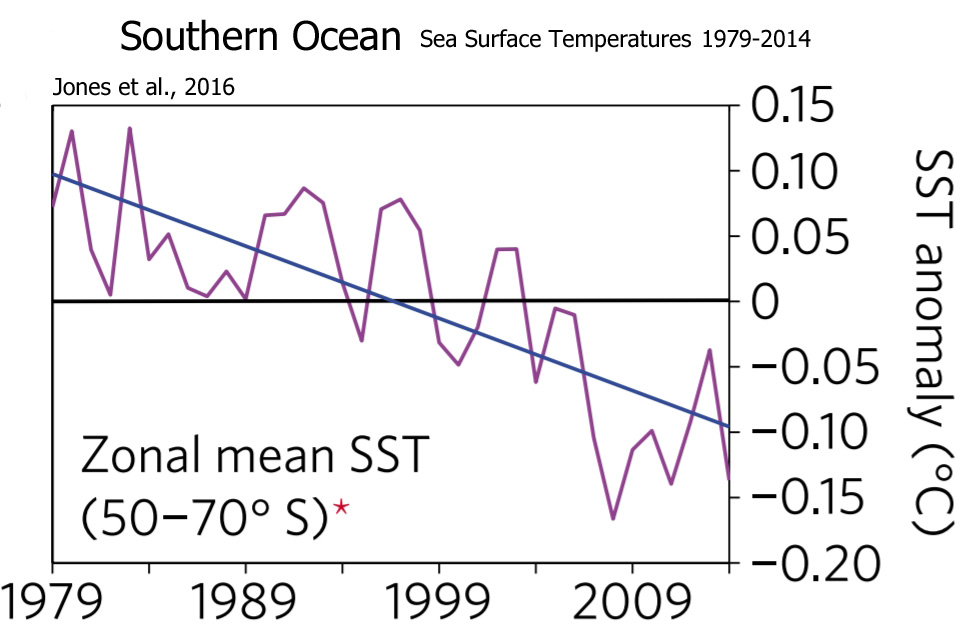
In a comprehensive analysis of the surface climate in and around Antarctica during 1979-2014 – including the cooling Southern Ocean – 25 scientists (Jones et al., 2016) assert that climate models predicated on anthropogenic forcing "are not compatible with the observed trends", and that "natural variability overwhelms the forced [anthropogenic] response in the observations".

Natural-Variability-Dominates-Antarctica

Image Source: Jones et al., 2016

Scientists: Antarctica hasn't warmed in over a century

Recent climate trends for the West Antarctic Ice Sheet have not offset the long-term cooling trend.  The region was actually much warmer than modern for most of the last 2000 years.

Holocene-Cooling-West-Antarctic-Ice-Shee

Image Source: Stenni et al., 2017

In fact, recent paleoclimate evidence suggests (Stenni et al., 2017) that "no continent scale warming of Antarctica is evident in the last century."

Holocene-Cooling-Antarctica-Stenni-2017.

Image Source: Stenni et al., 2017

The Antarctic Peninsula warmed rapidly, but the rest of the continent cooled over the last century

An earlier (2008) continent-wide climate data compilation revealed that although models of anthropogenic forcing simulated a climate warming of +0.75°C,  Antarctica as a whole warmed by "only 0.2°C" over the last century.

Most of the continent has cooled since the early 1900s.

The Antarctic Peninsula, which warmed by "several degrees", drove the net continental temperature trend into positive territory, compensating for the cooling throughout East Antarctica.

Antarctica-warmed-by-only-0.2-C-in-100-y

Image Source: Newton, 2008

The Antarctic Peninsula has rapidly (-0.47°C per decade) cooled since the late 1990s

As mentioned, the Antarctic Peninsula was the only anomalously warming sector of an otherwise-cooling Antarctic continent over the last several decades to century.   It warmed by a rapid +0.32°C per decade from 1979-1997.

Then, beginning in about 1998-'99, the Peninsula began cooling even more rapidly than it had been warming. By 2014, all of the warming since 1979 had been offset, revealing an overall non-warming trend (Turner et al., 2016).

Antarctic-Peninsula-Cooling-0.47-C-per-d

Image Source: Turner et al., 2016

The northern-most portion of the Antarctic Peninsula cooled by -1.98°C between 2008-2014.

Antarctic-Peninsula-Cooling-2008-2014-Fe

Image Source: Fernandoy et al., 2018

The Larsen Ice Shelf station has been cooling at a rate of -1.8°C per decade since 1995.

Antarctic-Peninsula-Cooling-Since-2000-M

Image Source: Mörner et al., 2018

Surface mass balance gains for Antarctic Peninsula glaciers since 2009

"Two small glaciers on James Ross Island, the north-eastern Antarctic Peninsula, experienced surface mass gain between 2009 and 2015 as revealed by field measurements. A positive cumulative surface mass balance of 0.57 ± 0.67 and 0.11 ± 0.37 m w.e. was observed during the 2009–2015 period on Whisky Glacier and Davies Dome, respectively. …  Ambrožová and Láska (2016) reported a significant decrease (0.03–0.15°C a−1 [-0.3 to -1.5°C per decade]) in the temperature along the AP [Antarctic Peninsula] over the 2005–15 period with the most prominent cooling at the Bibby Hill station on JRI [James Ross Island]. … The cumulative mass gain of the glaciers around the northern AP [Antarctic Peninsula] indicates a regional change from a predominantly negative surface mass balance in the first decade of the 21st century to a positive balance over the 2009–15 period. The change in the glacier mass balance follows a significant decrease in the warming rates reported from the northern AP [Antarctic Peninsula] since the end of the 20th century. The mass gain is also consistent with the regional trend of climate cooling on the eastern side of the AP [Antarctic Peninsula]." (Engel et al., 2018)

Antarctic-Peninsula-Mass-Gain-Cooling-20

Image Source: Engel et al., 2018

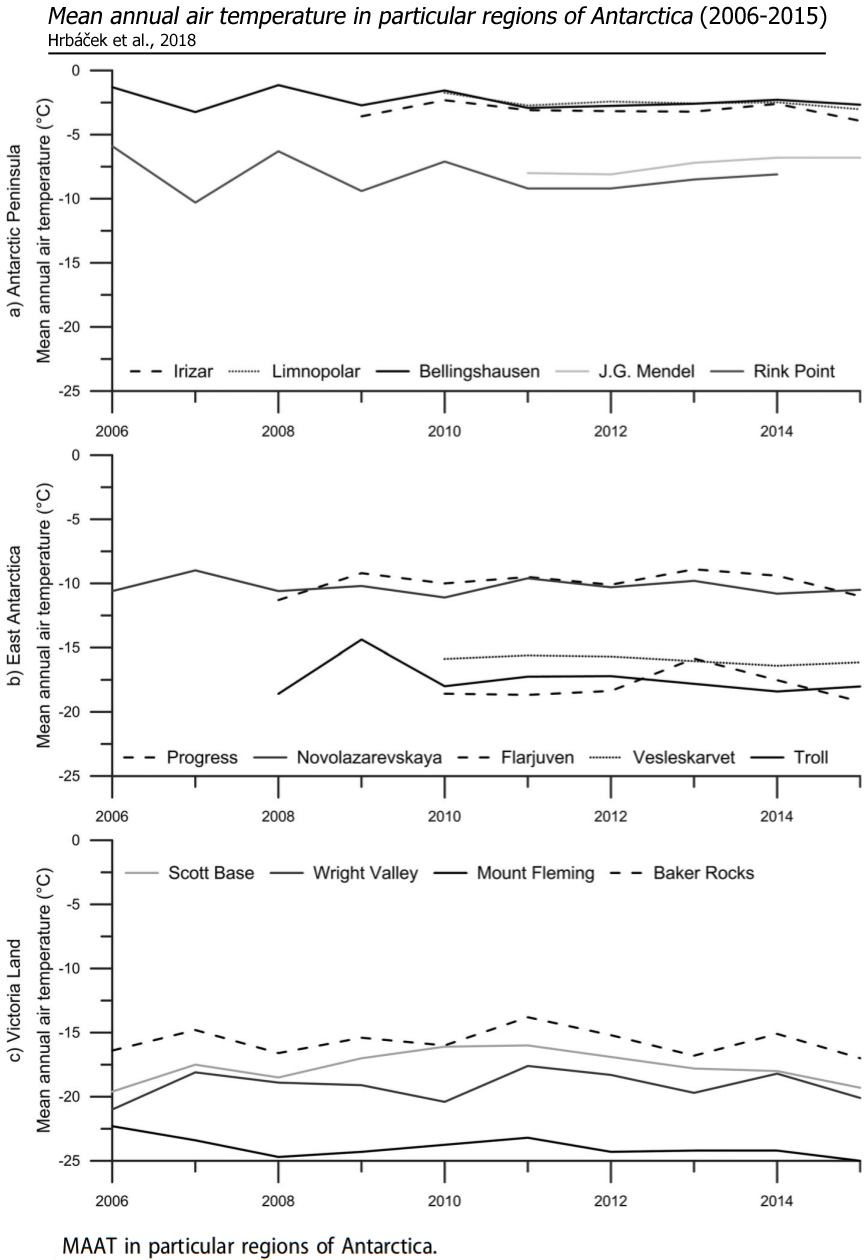
Eastern and southern Antarctica have also been cooling during the last decade(s)

Antarctica-Mean-Annual-Air-Temperatures-

Image Source: Herbacek et al., 2018

Antarctica-Mean-Temperatures-1991-to-201

Image Source: Ramesh and Soni, 2018

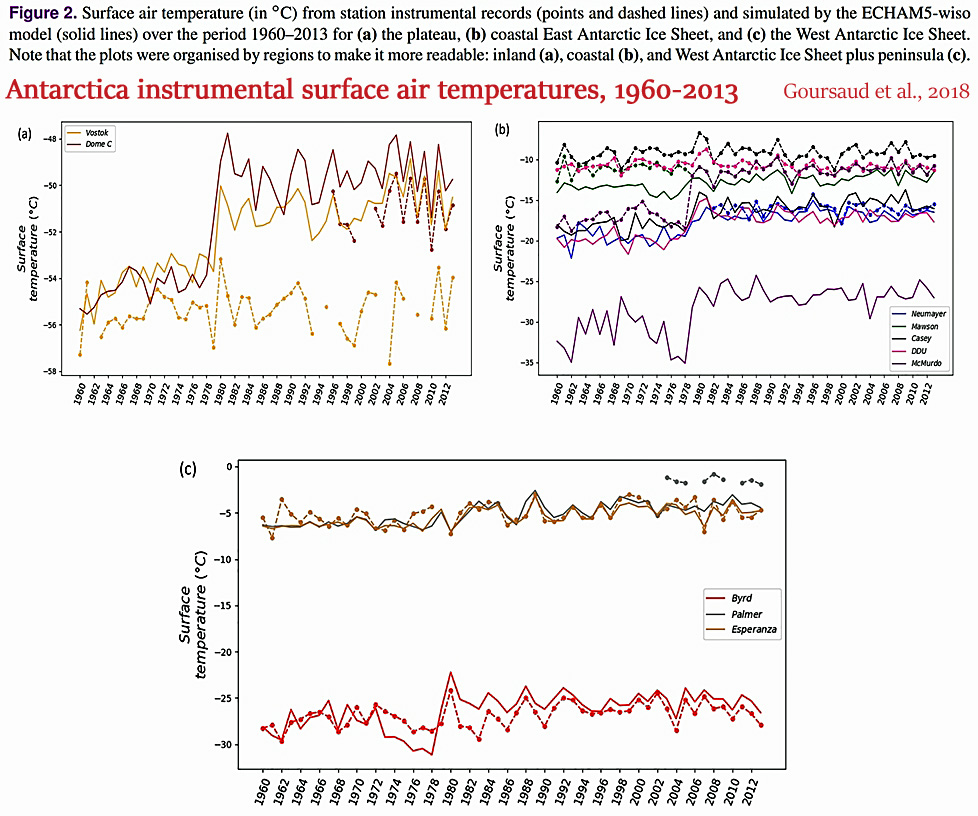
The overall non-warming/cooling trend for Antarctica may extend back to the 1960s and 1970s

Antarctica-Instrumental-Temperatures-196

Image Source: Goursaud et al., 2018

Antarctica-Cooling-1966-to-2000-Doran-20

Image Source: Doran et al., 2002

An alternative mechanism underlying the Thwaite Glacier's recent retreat

It is widely accepted that geothermal heat flux (volcanic activity) beneath the West Antarctic ice sheet – and Thwaites Glacier – is a "critical factor" in the active melting for the region.

Geothermal-Heat-Flux-Thwaites-Glacier-We

Image Source: Schroeder et al., 2014

Geothermal-Heat-Flux-West-Antarctica-Dzi

Image Source: Dziadek et al., 2019

An attribution reassessment is needed

Considering widespread modeling failures with trend simulation for Antarctica, perhaps there should be a reassessment of the factors and mechanisms underpinning the continent's variable climate and ice sheet melt.

The assumption that humans are driving the changes in Antarctica is not compatible with observations.


from Climate Change Skeptic Blogs via hj on Inoreader http://bit.ly/2UEJ6Yu

A mixed molecular salt of lithium and sodium breaks the Hume-Rothery rules for solid solutions

GA?id=C8CC09850F

Chem. Commun., 2019, Advance Article
DOI: 10.1039/C8CC09850F, Communication
Open Access Open Access
Monica Lestari, Matteo Lusi
Despite the difference in size and chemistry, lithium and sodium form a solid solution as isoorotate salt. Such behaviour, which represents an exception to the Hume-Rothery rules, can be exploited in the preparation of novel lithium drugs.
To cite this article before page numbers are assigned, use the DOI form of citation above.
The content of this RSS Feed (c) The Royal Society of Chemistry


from Journals via hj on Inoreader https://rsc.li/2DacjU7

Catalytic hydrogenation of α,β-unsaturated carboxylic acid derivatives using copper(I)/N-heterocyclic carbene complexes

GA?id=C8CC09853K

Chem. Commun., 2019, Advance Article
DOI: 10.1039/C8CC09853K, Communication
Open Access Open Access
Creative Commons Licence  This article is licensed under a Creative Commons Attribution 3.0 Unported Licence.
Birte M. Zimmermann, Sarah C. K. Kobosil, Johannes F. Teichert
A simple and air-stable copper(I)/N-heterocyclic carbene complex enables the catalytic hydrogenation of enoates and enamides, hitherto unreactive substrates employing homogeneous copper catalysis and H2 as a terminal reducing agent.
To cite this article before page numbers are assigned, use the DOI form of citation above.
The content of this RSS Feed (c) The Royal Society of Chemistry


from Journals via hj on Inoreader https://rsc.li/2DhLxJF

Selective reduction of 1,5-diazacyclooctatetraenes: synthesis and structures of aromatic diazacyclooctatetraenyl dianions and 2,6-bipyrrolinyl dianionic Co(II) complex

Chem. Commun., 2019, Accepted Manuscript
DOI: 10.1039/C9CC00075E, Communication
Zhe Huang, Genwen Tan, Chao Chen, Wen-Xiong Zhang, Xinping Wang, Zhenfeng Xi
Selective reduction of 1,5-diazacyclooctatetraenes with potassium or Co(I) complex was achieved to provide the first structurally well-defined aromatic 1,5-diazacyclooctatetraenyl dianion or the novel dinuclear Co(II) complex bridged by a bipyrrolinyl...
The content of this RSS Feed (c) The Royal Society of Chemistry


from Journals via hj on Inoreader https://rsc.li/2SaotGW

Tuning of the exchange interaction and the Curie temperature by mixed crystal formation of the bridging anionic ligands

Chem. Commun., 2019, Accepted Manuscript
DOI: 10.1039/C8CC09392J, Communication
Tristan Neumann, Michał Rams, Zbigniew Tomkowicz, Inke Jess, Christian Nather
Mixed crystals with the composition [Co(NCS)x (NCSe)2−x(pyridine)2]n were prepared from solution and by annealing of Co(NCS)x(NCSe)2−x(pyridine)4. With increasing selenocyanate content, an increase of the magnetic exchange constant and of the...
The content of this RSS Feed (c) The Royal Society of Chemistry


from Journals via hj on Inoreader https://rsc.li/2REChnM

Application of molecularly imprinted polymer nanoparticles for degradation of the bacterial autoinducer N-hexanoyl homoserine lactone.

Chem. Commun., 2019, Accepted Manuscript
DOI: 10.1039/C8CC07685E, Communication
Javier Garcia Lopez, Elena Piletska, Michael J Whitcombe, Joanna Czulak, Sergey A Piletsky
A novel bacterial quorum quenching system is presented. For the first time the degradation of N-L-hexanoyl homoserine lactone (C6-AHL), a Gram-negative quorum sensing autoinducer, has been enhanced using molecularly imprinted...
The content of this RSS Feed (c) The Royal Society of Chemistry


from Journals via hj on Inoreader https://rsc.li/2WAfy01

Aryl hydrocarbon receptor-mediated potencies in field-deployed plastics vary by type of polymer

Abstract

Plastic is able to sorb environmental pollutants from ambient water and might act as a vector for these pollutants to marine organisms. The potential toxicological effects of plastic-sorbed pollutants in marine organisms have not been thoroughly assessed. In this study, organic extracts from four types of plastic deployed for 9 or 12 months in San Diego Bay, California, were examined for their potential to activate the aryl hydrocarbon receptor (AhR) pathway by use of the H4IIE-luc assay. Polycyclic aromatic hydrocarbons (PAH), including the 16 priority PAHs, were quantified. The AhR-mediated potency in the deployed plastic samples, calculated as bio-TEQ values, ranged from 2.7 pg/g in polyethylene terephthalate (PET) to 277 pg/g in low-density polyethylene (LDPE). Concentrations of the sum of 24 PAHs in the deployed samples ranged from 4.6 to 1068 ng/g. By use of relative potency factors (REP), a potency balance between the biological effect (bio-TEQs) and the targeted PAHs (chem-TEQs) was calculated to 24–170%. The study reports, for the first time, in vitro AhR-mediated potencies for different deployed plastics, of which LDPE elicited the greatest concentration of bio-TEQs followed by polypropylene (PP), PET, and polyvinylchloride (PVC).


from Climate Change Skeptic Blogs via hj on Inoreader http://bit.ly/2S69UE4

Weekly Climate and Energy News Roundup #346

Brought to You by SEPP (www.SEPP.org) The Science and Environmental Policy Project THIS WEEK: By Ken Haapala, President, Science and Environmental Policy Project (SEPP)   Influence of Greenhouse Gases: The past two TWTWs discussed that when liquid water changes phases and turns into a gas, water vapor, it absorbs heat energy, which is not measured by temperature.…

from Climate Change Skeptic Blogs via hj on Inoreader http://bit.ly/2D704Yh

Cryo-assisted exfoliation of atomically thin 2D Sb2Se3 nanosheets for photo-induced theranostics

Chem. Commun., 2019, Accepted Manuscript
DOI: 10.1039/C9CC00576E, Communication
Linxin Fan, Doudou Huang, Yichuan Wang, Zhaohua Miao, Yan Ma, Qingliang Zhao, Zhengbao Zha
A liquid-phase exfoliation approach, combined with cryogenic fracturing and bath/probe sonication, is developed to prepare atomically thin 2D anisotropic Sb2Se3 nanosheets for simultaneous photoacoustic imaging and photothermal therapy.
The content of this RSS Feed (c) The Royal Society of Chemistry


from Journals via hj on Inoreader https://rsc.li/2UKiLsf

A durability study of a compression ignition engine operating with Thumba ( Citrullus colocyntis ) vegetable oil

Abstract

Vegetable oils are found suitable alternate of diesel fuel as per the results of short-run studies. Long-run studies with vegetable oil as a fuel pointed out the problems related to wear and maintenance of the engine. A single cylinder, variable compression ratio diesel engine was tested for 512 h (32 cycles of 16 h per day) to investigate longevity implications of fueling Thumba vegetable oil. Results of the study revealed that a very little damage was observed over the running surface of the cylinder liner, piston rings, valves, and valve seats. Wear in the piston outer diameter was observed to be 13 to 30 microns. Cylinder wear was about 80 microns. The closed gap in the oil piston ring increased up to 200 microns. Heavy carbon deposition was found on different internal parts of the engine, which indicates poor combustion of fuel. Amount of copper (66 mg/kg) and silicon (112 mg/kg) dissolved in the lubricating oil was found more than permissible limits (Cu 50 mg/kg, Si 25 mg/kg), after 450-h engine test run. But all the dissolve materials remain in allowable limits when the durability test conducted with diesel. Smoke, CO, HC, and NOX emissions were found to increase initially then decrease in the further engine running hours. But these emissions were found inferior to the engine emissions fueled with diesel in all the running hours. CO2 emissions were found superior throughout the test with the preheated T20 Thumba oil blend than diesel. The maximum reduction in the viscosity of the lubricating oil, during endurance testing, was found 60 centipoises but it was found 25 centipoises when the test conducted with diesel.


from Climate Change Skeptic Blogs via hj on Inoreader http://bit.ly/2WDZr1g

State of rare earth elements in the sediment and their bioaccumulation by mangroves: a case study in pristine islands of Indian Sundarban

Abstract

The mangrove ecosystems are known to efficiently sequester trace metals both in sediments and plant biomass. However, less is known about the chemistry of rare earth elements (REE) in the coastal environments, especially in the world's largest mangrove province, the Sundarban. Here, the concentration of REE in the sediment and plant organs of eight dominant mangrove species (mainly Avicennia sp.) in the Indian Sundarban was measured to assess REE sources, distribution, and bioaccumulation state. Results revealed that light REE (LREE) were more concentrated than the heavy REE (HREE) (128–144 mg kg−1 and 12–15 mg kg−1, respectively) in the mangrove sediments, with a relatively weak positive europium anomaly (Eu/Eu* = 1.03–1.14) with respect to North American shale composite. The primary source of REE was most likely linked to aluminosilicate weathering of crustal materials, and the resultant increase in LREE in the detritus. Vertical distribution of REE in one of the long cores from Lothian Island was altered by mangrove root activity and dependent on various physicochemical properties in the sediment (e.g., Eh, pH, organic carbon, and phosphate). REE uptake by plants was higher in the below-ground parts than in the above-ground plant tissues (root = 3.3 mg kg−1, leaf + wood = 1.7 mg kg−1); however, their total concentration was much lower than in the sediment (149.5 mg kg−1). Species-specific variability in bioaccumulation factor and translocation factor was observed indicating different REE partitioning and varying degree of mangrove uptake efficiency. Total REE stock in plant (above + live below ground) was estimated to be 168 g ha−1 with LREE contributing ~ 90% of the stock. This study highlighted the efficiency of using REE as a biological proxy in determining the degree of bioaccumulation within the mangrove environment.


from Climate Change Skeptic Blogs via hj on Inoreader http://bit.ly/2RCnJoP

Estimates of carbon dioxide emissions based on incomplete condition information: a case study of liquefied natural gas in China

Abstract

Recent calculations of carbon dioxide (CO2) emissions have faced challenges because data consist of only partial information, which is called "incomplete information." According to the emission factor method, energy consumption and CO2 emission factors with incomplete information may lead to unmatched multiplication between themselves, which affects accuracy and increases uncertainties in emission results. To address a specific case of incomplete information that has not been fully explored, we studied the effects of incomplete condition information on the estimates of CO2 emissions from liquefied natural gas (LNG) in China. Based on Chinese LNG sampling data, we obtained the specific-country CO2 emission factor for LNG in China and calculated the corresponding CO2 emissions. By applying hypothesis testing, regression analysis, variance analysis, or Monte Carlo (MC) simulations, the effects of incomplete information on the uncertainty of CO2 emission calculations in three cases were analyzed. The results indicate that calorific values have more than a 9.8% impact on CO2 emission factors and CO2 emissions with incomplete sample information. Regarding incomplete statistical information, the impact of statistical temperature on CO2 emissions exceeds 5.5%. Regarding incomplete sample and statistical information, sample and statistical temperatures can individually increase estimate biases by more than 5.2%. Significantly, the impacts of sample temperature and statistical temperature may offset each other. Therefore, the incomplete condition information is quite important and cannot be ignored in the estimation of CO2 emissions from LNG and international fair comparison.


from Climate Change Skeptic Blogs via hj on Inoreader http://bit.ly/2WHKgEe

Degradation of cefradine in alga-containing water environment: a mechanism and kinetic study

Abstract

Large quantities of antibiotics are manufactured, used, and eventually discharged into alga-containing water environment as prototypes, by-products, or transformation products. Different activities of Chlamydomonas reinhardtii toward cefradine (CFD) were studied, and the results indicated that CFD is resistant (removal rate of 5.45–14.72%) in simulated natural water environment. Cefradine was mainly removed by hydrolysis, adsorption, desorption, photodecarboxylation, and photoisomerization. The effects of C. reinhardtii density, initial solution pH, and different light sources on CFD removal efficiency were investigated. The optimum conditions occurred at a density of algae 10 × 104 cells/mL, a solution pH of 9.0, and the ultraviolet (UV) light. Additionally, the removal kinetics under 16 different conditions was explored. The results showed that the removal of CFD fits well with a pseudo-first-order kinetic, and the half-life times are from 0.8 to 261.6 days. This study summarizes the CFD removal mechanisms in alga-containing water environment, highlights the important role played by light irradiation in eliminating CFD, and obtains the important kinetic data on CFD removal.


from Climate Change Skeptic Blogs via hj on Inoreader http://bit.ly/2RyyRmJ

Relationship between magnetic properties and heavy metal contamination of street dust samples from Shanghai, China

Abstract

In this study, for exploring the relationship between selected magnetic properties and heavy metal contamination of street dust in Shanghai, China, 160 samples from five different functional areas (industrial, high traffic density, commercial, residential and "clean" area) were collected and investigated by magnetic and geochemical analyses. It is found that the street dust exhibits a high concentration of ferrimagnetic minerals, which are predominantly coarse-grained. Meantime, the magnetic properties of the street dust samples exhibit significant differences between the five functional areas, namely, the values of χlf, SIRM, χARM, and S− 300 mT in the five functional areas all decrease in the following order: industrial > commercial > high traffic density > residential > clean. Calculation of enrichment factors (EF) and the Tomlinson pollution load index (PLI) indicates that the street dust samples are highly polluted in terms of their degree of heavy metal contamination. The values of χlf, SIRM, and χARM are significantly correlated with Pb, Cu, Zn, Ni, Mn, Cr, Ba, and Fe concentrations as well as PLI. In accordance with similar findings in other urban areas, these results indicate that magnetic parameters, such as χlf, SIRM, χARM, can be used as an efficient proxy for heavy metal pollution and anthropogenic activities in Shanghai. In addition, the results demonstrate that it is possible to distinguish different heavy metal pollution sources using a combination of magnetic measurements and geochemical analysis.


from Climate Change Skeptic Blogs via hj on Inoreader http://bit.ly/2WDZBpo

The use of vegetation, bees, and snails as important tools for the biomonitoring of atmospheric pollution—a review

Abstract

The continuous discharge of diverse chemical products in the environment is nowadays of great concern to the whole world as some of them persist in the environment leading to serious diseases. Several sampling techniques have been used for the characterization of this chemical pollution, although biomonitoring using natural samplers has recently become the technique of choice in this field due to its efficiency, specificity, and low cost. In fact, several living organisms known as biomonitors could accumulate the well-known persistent environmental pollutants allowing their monitoring in the environment. In this work, a review on environmental biomonitoring is presented. The main sampling techniques used for monitoring environmental pollutants are first reported, followed by an overview on well-known natural species used as passive samplers and known as biomonitors. These species include conifer needles, lichen, mosses, bees and their byproducts, and snails, and were widely used in recent research as reliable monitors for environmental pollution.


from Climate Change Skeptic Blogs via hj on Inoreader http://bit.ly/2WDZjii

Oxygenated polycyclic aromatic hydrocarbons in mussels: analytical method development and occurrence in the Belgian coastal zone

Abstract

An analytical method was developed for the trace quantification of oxygenated polycyclic aromatic hydrocarbons (oxyPAHs) in mussels. Compounds included were naphthalene-1-ol, 9H-fluoren-9-one, anthracene-9,10-dione, 7H-benz[de]anthracene-7-one, naphtacene-5,12-dione, and benzo[a]anthracene-7,12-dione. Pyrene-1-carboxaldehyde was applied as an internal standard. Sample extraction by pressurized liquid extraction was followed by cleanup on silica, separation by high performance liquid chromatography, and quantitative measurement by mass spectrometry with atmospheric pressure chemical ionization. The method was validated by the analysis of spiked mussel samples, resulting in trueness values of 90–124% and measurement uncertainties of 6–49%, except for naphthalene-1-ol. Quantification limits varied from 0.25 ng·g−1 to 10.7 ng·g−1. The developed analytical oxyPAH method was applied on mussel samples from groynes and quaysides along the Belgian coastline and oxyPAH data were compared to PAH concentration data. The sum of 14 US EPA priority PAHs reached maxima at the eastern side of the Belgian coastal zone, with on average 202 ng·g−1 wet weight for quayside Zeebrugge and 38.4 ng·g−1 wet weight for groyne Knokke mussels. Anthracene-9,10-dione concentrations reached maxima of 19.1 ng·g−1 wet weight at the most industrialized quayside of Zeebrugge. For other oxyPAHs, no clear relationship could be made with direct PAH emissions. Concentrations of anthracene-9,10-dione and 9H-fluoren-9-one were found to exceed corresponding parent PAH concentrations.


from Climate Change Skeptic Blogs via hj on Inoreader http://bit.ly/2WFVauo

Regeneration of 4-chlorophenol from spent powdered activated carbon by ultrasound

Abstract

Ultrasound-assisted regeneration of powdered activated carbon (PAC) saturated with 4-chlorophenol (4-CP) was investigated in this work. The variables, i.e., acoustic frequency, density levels, regenerating solution species, spent PAC mass, and the number of repeated cycle, were optimized. The UV–Vis spectra, thermogravimetric analysis (TGA), Fourier transform infrared spectroscopy (FT-IR), scanning electron microscopy (SEM), Brunauer–Emmett–Teller (BET), and pore structure analysis were used to characterize the regenerated PAC as compared to the virgin and spent PAC. The adsorption experiments indicated that the adsorption kinetics of 4-CP fitted well with the pseudo-second-order model, and the main chemisorption process was nonlinear and heterogeneous. The desorption results showed that the optimized regenerated conditions were identified as 40 kHz of frequency, 0.18 W/mL of sonication intensity, 0.1 M NaOH and 50% (v/v) ethyl alcohol mixture of regeneration solution, and 1 g/L of saturated PAC mass. Under this condition, the regeneration efficiency reached up to 86.81%. Hydroxylated oxidation products especially benzoquinone and hydroquinone were formed during ultrasound regeneration. Ultrasound mainly acted on surface functionalities, mesopores, and macropores of PAC through the hydroxyl radical oxidization resulted from the cavitation effect.


from Climate Change Skeptic Blogs via hj on Inoreader http://bit.ly/2t7uZyY

Ammonia and greenhouse gas emissions following the application of clinoptilolite on the litter of a breeding hen house

Abstract

The husbandry of chicken for meat generates high levels of gases, being a serious problem for the health of birds and workers as well as for the environment. The aim of the present study was to assess the effect of clinoptilolite as litter additive on the concentrations and emissions of ammonia (NH3), nitrous oxide (N2O), carbon dioxide (CO2), and methane (CH4) from a breeding hen house under Mediterranean climate conditions. Two similar breeding hen houses were selected, and one house was assigned as control whereas the other house was treated with clinoptilolite as a litter additive. Data were collected during the winter season, in two occasions, first between 26 November and 18 December 2017 and second from 1 to 20 February 2018. Results showed that the application of clinoptilolite on the litter of a breeding hen house reduces the NH3 and N2O losses in 28 and 34%, respectively, but appears to have no effect on CO2 losses. In addition, the in-house CH4 concentrations were below the detection limits.


from Climate Change Skeptic Blogs via hj on Inoreader http://bit.ly/2HOK17d

Beneficial influences of pelelith and dicyandiamide on gaseous emissions and the fungal community during sewage sludge composting

Abstract

Reducing the emissions of NH3 and greenhouse gases (GHGs) during composting is essential for improving compost quality and controlling environmental pollution. This paper investigates the effects of pelelith (P) combined with dicyandiamide (DCD) on gaseous emissions and the fungal community diversity during sewage sludge (SS) composting. Results showed that the P and P + DCD treatments decreased the cumulative gaseous emissions by 41% and 22% for NH3, 21% and 34% for N2O, and 31.5% and 33.0% for CH4, respectively. The evolution of the fungal community analysis showed that Ascomycota and unclassified fungi dominated during the thermophilic stage, while only Ascomycota was the dominant fungal phylum during the maturity stage, composing 62%, 66%, and 73% of the total fungal community in the control, P, and P + DCD, respectively. The P and P + DCD significantly increased the fungal community richness at the genus level. Fungal community abundance was found to be significantly related to temperature, pH, organic matter, and total Kjeldahl nitrogen, which also influence the gaseous emissions during SS composting. It suggested that the combined addition of pelelith and dicyandiamide (DCD) was an effective method for reducing the emissions of NH3 and greenhouse gases during SS composting.


from Climate Change Skeptic Blogs via hj on Inoreader http://bit.ly/2t7uW6g

Thermochemical degradation of furfural by sulfate radicals in aqueous solution: optimization and synergistic effect studies

Abstract

In this study, thermochemical degradation of furfural by sulfate radical has been investigated to find the best-operating conditions. For this purpose, the response surface methodology (RSM) based on central composite design (CCD) was applied to optimize the five independent variables of thermally activated persulfate (TAP)/nZVI oxidation process including pH, PS concentration, furfural concentration, nZVI dosage, and heat. The ANOVA results ("P > F value" < 0.0001 and \( {\mathrm{R}}_{\mathrm{adj}}^2 \)  = 0.9701) showed the obtained quadratic model is acceptable to predict furfural removal. Based on the reduced quadratic model PS concentration, nZVI dosage, and heat revealed the positive effects on removal efficiency, while pH and furfural concentration had a negative effect. Accordingly, 98.4% of furfural could be removed within 60 min of reaction under the optimum conditions: pH 5.26, PS concentration of 20.52 mM, furfural concentration of 84.32 mg/L, nZVI dosage of 1.15 mg/L, and a temperature of 79 °C. In such circumstances, the furfural removal efficiency for TAP, PS/nZVI, PS, and nZVI was 94.5, 9, 3, and 2%, respectively. Therefore, based on the synergy index (SI) values, the combination of PS, nZVI, and heat can lead to a synergistic effect in the performance of the thermochemical process.


from Climate Change Skeptic Blogs via hj on Inoreader http://bit.ly/2RCcrAV

Hydrochars produced with by-products from the sucroenergetic industry: a study of extractor solutions on nutrient and organic carbon release

Abstract

Hydrothermal carbonization transforms biomass into value-added material called hydrochar. The release of nutrients (P, N, Ca, Mg, and K) and organic carbon (TOC) from hydrochar in different extractive solutions was investigated in this study. Two sets of hydrochar were produced: (i) hydrochar prepared from sugarcane bagasse and vinasse mixture (BV-HC) and (ii) hydrochar prepared by the addition of H3PO4 to this mixture (BVA-HC). Both hydrochar types released significative amounts of nutrient and organic carbon, mainly Ca (5.0 mg g−1) in the mixture (KCl, K2SO4, NaOH, 1:1:1) extractive solution and TOC (72.6 mg g−1) in the NaOH extractive solution, for BV-HC. Nutrient release was influenced by pH and ionic strength. The release of P, Ca, and Mg was affected by the presence of insoluble phosphate phases in BVA-HC. The release of nutrients P, N, Ca, Mg, and K and organic carbon demonstrated that hydrochar has potential for soil application purposes.


from Climate Change Skeptic Blogs via hj on Inoreader http://bit.ly/2RBu0Bh

Understanding spatial and temporal patterns of fish diversity and assemblage structure vis-a-vis environmental parameters in a tropical Indian reservoir

Abstract

Reservoirs have been given priority as an important resource for fisheries enhancement in inland open waters. This paper described the spatial and temporal pattern of fish diversity using GIS platform, assemblage structure, and studied the influence of environmental parameters in these variables in a large tropical reservoir, Chandil, located in the eastern India using multiple approaches. Altogether, 42 fish species belonging to 30 genera were recorded from the reservoir, including two exotic species: pangas, Pangasianodon hypophthalmus, and Nile tilapia, Oreochromis niloticus. The diversity indices indicated lowest fish diversity in the lacustrine zone, but without distinct seasonal variation. The taxonomic distinctness was lower in the lacustrine zone as compared to other zones, and the summer season exhibited higher taxonomic distinctness, though the number of species was lowest. Most of the physicochemical parameters recorded are within the favorable range for fisheries enhancement. Among the environmental parameters, pH and nitrate significantly influenced the fish abundance. The study recommends suitable measures and interventions for conservation of the native fish diversity and sustainable fisheries development: closed season, protected/conservation area, introduction of fish aggregating device (FAD), and regulated fish culture in enclosures.


from Climate Change Skeptic Blogs via hj on Inoreader http://bit.ly/2WHF6rV

Levels of phthalate acid esters and sex hormones and their possible sources in traffic-patrol policemen in Chongqing

Abstract

To investigate the correlation between the air phthalate acid ester (PAE) exposure and serum PAE concentration and the effects of PAE exposure on reproductive health among Chongqing traffic-patrol policemen. In 2013, 32 traffic-patrol policemen working in an area with poor air quality in Chongqing and 28 traffic-patrol policemen working in an area with good air quality were selected. Their blood levels of 14 PAEs and six reproductive hormones were determined. Air samples were collected from four traffic-patrol platforms. The concentrations of 14 PAEs in the air samples were evaluated. All 14 PAEs were detected in the blood samples. The concentrations of seven PAEs in the total suspended particulate, namely, dimethyl phthalate, diethyl phthalate, dibutyl phthalate, bis (2-ethox-yethyl) phthalate, dihexyl phthalate, benzyl butyl phthalate, and bis (2-n-butoxyethyl) phthalate, were positively and significantly associated with the blood levels of these PAEs in the participants. All the sex hormone levels measured here were significantly different between the participants from the two areas. The PAE concentrations in the blood samples were correlated with the reproductive hormone levels in the participants. Air PAE pollution may be a major source of PAE exposure in the traffic-patrol policemen of Chongqing.


from Climate Change Skeptic Blogs via hj on Inoreader http://bit.ly/2RBtPWD

Sunday, February 3, 2019

‘Cooling Is Warming’: Climate Hoaxters Panic As US Freezes, Media Provides Cover

Cold-Weather-Thermometer1-720x492.jpg

From the "War is Peace" department… WRITTEN BY JOHN NOLTE America enjoys a winter filled with tons of snow and frigid cold weather and out pops the Climate Hoaxsters to assure this kind of weather only further proves our planet is getting, um… warmer. This current Climate Hoaxster freak-out is largely in reaction to President Trump's…

from Climate Change Skeptic Blogs via hj on Inoreader http://bit.ly/2UxHq2S

Enhanced adsorption for Pb(II) and Cd(II) of magnetic rice husk biochar by KMnO 4 modification

Abstract

Novel KMnO4-treated magnetic biochar (FMBC) was successfully synthesized by addition of Fe(NO3)3 during carbonization and KMnO4 treatment following for Pb(II) and Cd(II) adsorption. SEM-EDS, XPS, and ICP-AES were used to evaluate the FMBC and magnetic biochar (FBC) on surface morphology, surface chemistry characteristics, surface functional groups, and Pb(II) and Cd(II) adsorption behavior. Results showed that the Langmuir maximum adsorption quantity of FMBC reached 148 mg/g for Pb(II) and 79 mg/g for Cd(II), nearly 7 times of that of FBC. The enhancement of FMBC for heavy metal adsorption was due to the successful load of manganese oxides and the increased oxygen functional groups consistent with XPS and FTIR results. The adsorption capacities of FMBC were maintained over 95% when the pH value was higher than 2.5 and 3.5 for Pb(II) and Cd(II), respectively. The adsorption performances of both heavy metals by FMBC were hardly influenced by ionic strength and humid acid. The adsorption capacities of FMBC could maintain over 50% and 87% after four cycles for Pb(II) and Cd(II), respectively. The saturation magnetization of FMBC was about 11.5 emu/g, which did not change after adsorption. This work proposed a new method to fabricate a magnetic biochar with high adsorption capacities of heavy metals Pb(II) and Cd(II).


from Climate Change Skeptic Blogs via hj on Inoreader http://bit.ly/2BgoxdG

Sediment phosphorus release in response to flood event across different land covers in a restored wetland

Abstract

The phosphorus (P) fraction and its release characteristics from sediment in response to flood events across different land covers (i.e., reclaimed land with dominant vegetation of Phragmites australis and/or Typha orientalis, grassland with dominant vegetation of annual and perennial forbs, and bare land) in the lakeshore of Chaohu Lake were investigated. The results indicated that the re-flooding of a restored wetland led to P release. IP (inorganic P) was the major P fraction in the soils pre-flood and post-flood. For all the soil samples, the rank order of P fractions was Ca-P (P associated with calcium) > OP (organic P) > Fe/Al-P (P bound to Al, Fe, and Mn oxides and hydroxides). During flooding, Fe/Al-P contributed the most as the P release source in the soils and to the P sources for the overlying water. In reclaimed land, Fe/Al-P release correlated significantly with soil pH. In grassland, Fe/Al-P release correlated significantly with soil pH and Al content. In bare land, Fe/Al-P release correlated significantly with Al and clay content. The max TP release rates were also significantly influenced by land cover, and the values in bare land, grassland, and reclaimed land were 9.91 mg P m−2 day−1, 8.10 mg P m−2 day−1, and 5.05 mg P m−2 day−1, respectively. The results showed that the P release processes might be regulated by different factors across different land covers, and that the re-introduction of vegetation during wetland restoration must be taken into account prior to flood events to avoid an undesirable degradation of water quality.


from Climate Change Skeptic Blogs via hj on Inoreader http://bit.ly/2TwnI7t

Evaluating giant panda as a surrogate species for conservation co-occurring species in the Baishuijiang National Nature Reserve

Abstract

The establishment of nature reserves is a key approach for biodiversity conservation worldwide. However, the effectiveness of nature reserves established by protecting the habitat needs of surrogate species is questioned. In this study, the Baishuijiang National Nature Reserve (Baishuijiang NNR), located in the Minshan Mountains, China, which is established mainly for the conservation of giant panda (a surrogate for the conservation of other endangered species) was selected. We quantitatively evaluated the conservation effectiveness of the reserve for giant panda and co-occurring species (here, seven protected species) using a maximum entropy model (Maxent), and analyzed spatial congruence between giant panda and other seven species. Results shown that the habitat of giant panda generally included the habitat of other seven protected species, suggesting that conservation of giant panda habitat also allows the conservation for the habitat of almost co-occurring species. Hence, the natural reserve established for giant panda as a surrogate species has a relatively high effectiveness. A high proportion of the suitable habitat for six species is inside the core zone, but a high proportion of the suitable habitat for two species is located in the experimental and buffer zones. Thus, the two species are affected by human activities. To improve the conservation effectiveness of the nature reserve, the management zones need to be amended. The result of the study will be beneficial for future conservation and management of the reserve. This study provides an effective method for evaluating the conservation effectiveness of nature reserves in other area of the worldwide.


from Climate Change Skeptic Blogs via hj on Inoreader http://bit.ly/2Bk1wGE

Impact of dietary nano-zinc oxide on immune response and antioxidant defense of broiler chickens

Abstract

This study aimed to elucidate the response of broiler chickens to the dietary nano-zinc supplementation in terms of immune response and antioxidant activity. Ninety-one-day-old chicks (Ross 308) were randomly assigned to one of three dietary treatments in three replicates, in a feeding trial that lasted for 5 weeks. Birds were fed a basal diet supplemented with inorganic zinc oxide at 40 mg/kg diet (control), zinc oxide nanoparticles (ZnONPs) at 40 mg/kg diet (ZN1), or ZnONPs at 80 mg/kg diet (ZN2). Birds were injected with DNP-KLH at the 7th and 21st days from the beginning of the experiment, and blood samples were collected on days 7, 14, 21, 28, and 35 to determine the levels of immunoglobulin Y (IgY) and malondialdehyde as well as the antioxidant enzyme activities. Cellular immunity was assayed by estimation of phagocytic percentage and index of peripheral monocytes of blood and estimation of the T lymphocyte activity using a lymphocyte transformation test. The results showed that feeding broiler chickens a diet supplemented with ZnONPs increased (p < 0.05) the activity of superoxide dismutase and catalase and decreased the concentration of malondialdehyde compared to the control diet, without significant differences between NZ1 and NZ2 diets. Moreover, the chicks fed diets supplemented with ZnONPs showed a significant increase (p < 0.05) in serum IgY, total lymphocyte count, and macrophages compared to the control. A higher significant response for antibodies IgY concentration was observed in birds fed the NZ2 vs NZ1 diet. Also, there was a significant increase in phagocytic activity and phagocytic index in ZnONP-fed groups with a higher significance in the group fed NZ1 than with NZ2 diet as compared with the control. In conclusion, ZnONP application up to 80 mg/kg in the diet is safe for broiler chickens and could improve their antioxidant defense and cellular immunity.


from Climate Change Skeptic Blogs via hj on Inoreader http://bit.ly/2Tv1bbo

Nanoanalytics: analytical methods for characterization of nano- and micro-objects


from Climate Change Skeptic Blogs via hj on Inoreader http://bit.ly/2HPqOCq

Technologies for deodorization of malodorous gases

Abstract

There is an increasing number of citizens' complaints about odor nuisance due to production or service activity. High social awareness imposes pressure on entrepreneurs and service providers forcing them to undertake effective steps aimed at minimization of the effects of their activity, also with respect to emission of malodorous substances. The article presents information about various technologies used for gas deodorization. Known solutions can be included into two groups: technologies offering prevention of emissions, and methodological solutions that enable removal of malodorous substances from the stream of emitted gases. It is obvious that the selection of deodorization technologies is conditioned by many factors, and it should be preceded by an in-depth analysis of possibilities and limitations offered by various solutions. The aim of the article is presentation of the available gas deodorization technologies as to facilitate the potential investors with selection of the method of malodorous gases emission limitation, suitable for particular conditions.


from Climate Change Skeptic Blogs via hj on Inoreader http://bit.ly/2t7gGKM

Rapid Nickel(II)-Promoted Cysteine S-Arylation with Arylboronic Acids

Chem. Commun., 2019, Accepted Manuscript
DOI: 10.1039/C9CC00159J, Communication
Kengo Hanaya, Jun Ohata, Mary K. Miller, Alicia E. Mangubat-Medina, Michael J. Swierczynski, David C. Yang, Reece M. Rosenthal, Brian V. Popp, Zachary Thomas Ball
S-Arylation of cysteine residues is an increasingly powerful tool for site-specific modification of proteins, providing novel structure and electronic perturbation. The present work demonstrates an operationally-simple cysteine arylation reaction with...
The content of this RSS Feed (c) The Royal Society of Chemistry


from Journals via hj on Inoreader https://rsc.li/2HOfq9R

Nuclear Jet Missiles Anyone?

An interesting video by Curious Droid about the SLAM missile. Nuclear ram jet cruise missile the USA was able to make, but thought better of it... Continue reading

from Climate Change Skeptic Blogs via hj on Inoreader http://bit.ly/2RxnNpT

Study finds billion-year superocean cycles in Earth’s history

Earth_Palaeontinidae_Distribution_Late_J

Curtin researchers believe that ancient supercontinents formed and then fell apart through alternating cycles spanning hundreds of millions of years that involved superoceans being swallowed and the restructuring of the Earth's mantle. The research, published in science journal Precambrian Research, found the supercontinents assembled and broke up through alternating processes of 'introversion' and 'extroversion'. The latter process…

from Climate Change Skeptic Blogs via hj on Inoreader http://bit.ly/2DQdc5V

Quietest Solar Cycle In 200 Years May Put The Brakes On Global Warming

berl1.jpg

Solar Cycle 24 has had the lowest solar activity since the Dalton Minimum around 1810. By Frank Bosse and Fritz Vahrenholt, No Tricks Zone Our sun was also very sub-normally active in December last year. We are writing the 121st month since the beginning of cycle number 24, in December 2008, and since 2012 we could only…

from Climate Change Skeptic Blogs via hj on Inoreader http://bit.ly/2TsEC6Z

Recognition of Important Work and implications For Climate Change and Society.

clip_image002_thumb.jpg

Guest Opinion: Dr. Tim Ball Two events provide the catalyst for this column. First, was the passing of a dear friend Elmer Stobbe, a soil scientist whose career at the University of Manitoba extended after retirement to consultation in Abbotsford BC. The second was my annual interview with a radio station in Yorkton, Saskatchewan, to…

from Climate Change Skeptic Blogs via hj on Inoreader http://bit.ly/2DQ2vQK

Minnesota Climate Change Believers in Full Damage Control Mode

minnesota-global-warming-1024x606.jpg

Guest essay by Eric Worrall As the reality of the USA's brutal "global warming" induced winter bites, Minnesotan climate scientists are keen to reassure us they are still in control. Believe it or not, global warming might have caused the arctic blast As climate destabilizes, Minnesota could see polar snaps more frequently. By Jennifer Bjorhus…

from Climate Change Skeptic Blogs via hj on Inoreader http://bit.ly/2UEcPk7

Wealthy Elites Attack Their Own Roots

2293.jpg?width=620&quality=45&auto=forma

It is the season for Corporate annual shareholder's meetings, and once again energy companies will be attacked. Wealthy individuals and institutions will again brandish knives against the energy goose that made them fortunes. Those who have benefited the most from modern society's use of fossil fuels now imitate a cancer eating away at the wellspring of prosperity. It is a puzzlement why they want to stop tapping the vast supply of underground energy before its benefits reach the impoverished masses in underdeveloped countries.

An outlook on the sparring ahead is provided at CNN Business

A standoff is brewing between investors, corporate boards and federal regulators as shareholders prepare to vote on resolutions that concern human rights, corporate governance, and climate change.  Excerpts in italics with my bold.

Leveraging shareholder votes for environmental and social ends isn't new, but such resolutions have been on the rise in recent years. Shareholders proposed 464 resolutions in 2018 compared with 407 in 2010, according to an analysis by the Sustainable Investments Institute.

Although that's down slightly from a record of 494 resolutions in 2017, the number of proposals that were withdrawn jumped in 2018, often following quiet deals with management to accomplish some part of what the resolution called for without going to a public vote.

One key reason: Backing from the three largest asset managers in America. BlackRock, State Street, and Vanguard, taken together, are the largest shareholder in 40% of all public companies in the United States.

All three of those heavyweights have altered their shareholder voting guidelines in recent years to be more open to progressive resolutions, resulting in a series of high-profile votes in favor of them. For example, in 2017 the trio voted for resolutions requesting that ExxonMobil and Occidental Petroleum compile reports analyzing how future climate change regulations would change their businesses.

Most shareholder resolutions are technically non-binding, and completing a report on the potential impact of climate change may not seem like that big a deal. But companies see them as a first step on the road toward real limits on their activities, and ultimately their profits.

To cut back on this kind of resolution, ACCF and other trade associations formed a group called the Main Street Investors Coalition. It advocates for small-time shareholders who might lose out if "politically motivated" resolutions hurt investors' portfolios.

Along with Nasdaq, the Business Roundtable, and the Chamber of Commerce's longstanding Center for Capital Markets Competitiveness, the coalition has been pushing for legislation that would raise the threshold of support needed to re-submit a resolution that failed previously. They're also asking the Securities and Exchange Commission to more tightly regulate proxy advisers.

Some changes already are taking root — including a narrower view of what's considered fair game for proxy ballots.

In late 2017, the SEC's staff issued a bulletin reinforcing the idea that boards of directors are better positioned to run the company's everyday operations than are shareholders, leading to fears that climate change resolutions would be ruled out of bounds.

in early 2018, the SEC ruled in favor of the oil producer EOG Resources when the company complained that a resolution calling for greenhouse gas emissions reductions had too much to do with its "ordinary business." Core business functions one of the categories considered off-limits for shareholders to micromanage.
14231501542_a99bfe76c6_o.jpg
Many of these resolutions are coming from Climate Action 100+, a group of 300 investors with $32 trillion in assets, including the investment arms of HSBC, Legal & General and the Church of England. For example, a resolution will be voted upon at the British Petroleum annual meeting.

In the proposal, BP is tasked with developing a business strategy in line with two of the Paris deal goals by the end of its 2019 financial year – holding temperature rises to well below 2C and reducing carbon emissions to net zero by the second half of the century.

BP has not specified what metrics and targets it might set if the resolution is passed, but they could include targets for the carbon intensity of its products and linking executives' bonuses to carbon emission cuts.

But the company will not be setting targets any time soon for "scope 3 emissions" produced by customers using its products, such as burning petrol in a car. These emissions are much bigger than those from the company's operations.

BP said it was not supporting a separate resolution, brought by the Dutch investor group Follow This, seeking to make BP set a goal for scope 3 emissions. The group has previously been credited with influencing Shell's decision to set such targets.

Climate Activists storm the bastion of Exxon Mobil, here seen without their shareholder disguises.

Postscript:

The SEC rulings show the line in the sand regarding these maneuvers to shut down oil companies.  On March 12, 2018 SEC wrote EOG Resources Action Letter  allowing management to set aside an invasive shareholder resolution.

What Trillium Asset Management Demanded of EOG

Resolved: Shareholders request EOG Resources, Inc. (EOG) adopt company-wide, quantitative, time-bound targets for reducing greenhouse gas (GHG) emissions and issue a report, at reasonable cost and omitting proprietary information, discussing its plans and progress towards achieving these targets.

Whereas: The Paris Climate Agreement of 2015, agreed to by 195 countries, established a target to limit global temperature increases to 2-degrees Celsius above pre-industrial levels. To meet the 2-degree goal and mitigate the most severe impacts of climate change, climate scientists estimate it is necessary to reduce global emissions 55 percent by 2050 (relative to 2010 levels), entailing a US reduction target of 80 percent.

According to a 2015 report by Citigroup the costs of failing to address climate change could lead to a $72 trillion loss to global GDP.

EOG states: "Our safety and environmental management processes are based on a goal setting philosophy. The company sets safety and environmental expectations and provides a framework within which management can achieve safety and environmental goals in a systematic way." Despite this philosophy, EOG has not established time-bound or quantitative emissions reductions goals. Motivated by the imperative to reduce emissions, cut costs, and/or achieve the goals of the Paris Agreement, many companies are setting goals:
• Over 300 global businesses have committed to setting GHG emissions reduction targets consistent with the 2-degree goal.
• Hess, Apache, Kinder Morgan, and Southwestern, are among EOG's peers in the U.S. Oil and Gas sector that have set quantitative, time-bound GHG and/or methane reduction targets.
• The 10 major international oil and gas companies that constitute the Oil and Gas Climate Initiative recently announced their intention to work towards near-zero methane emissions.
• Over half of EOG's peers in the S&P 500 have set GHG reduction targets.

Setting GHG reduction targets is frequently found to be a sound business strategy. A 2013 report by CDP, WWF, and McKinsey & Company found that companies with GHG reduction targets achieved 9% better return on invested capital than companies without targets.

Setting targets would address a common concern of investors that are increasingly attune to the risks of climate change. State Street Global Advisors recently published disclosure recommendations for oil and gas companies, wherein it states, "We view establishing company-specific GHG emissions targets as one of the most important steps in managing climate risk."

One of the recommendations of The Task Force on Climate-related Financial Disclosures, whose members include JPMorgan Chase, UBS Asset Management, Generation Investment Management, and BlackRock, is: "Describe the targets used by the organization to manage climate-related risks and opportunities and performance against these targets."

While EOG has implemented various emissions reduction strategies, proponents believe establishing time-bound, quantitative emissions reduction targets would serve to align new and existing initiatives, spur innovation to drive further emissions reductions, lower costs through enhanced efficiency, mitigate risk, and enhance shareholder value.

What EOG Said and SEC Confirmed:

See Also:  Climatist Manifesto

Climatism is eroding the foundations of free enterprise democratic societies.


from Climate Change Skeptic Blogs via hj on Inoreader http://bit.ly/2S54IQW

Underwater drones could transform hurricane forecasts

Image credit: sanibelrealestateguide.com


H/T The Atlantic.
Researchers found that all 11 hurricanes they investigated that went through the mid-Atlantic in summer experienced ahead-of-eye cooling. This indicator was not previously known.

The key to predicting storm intensity may lie below the surface, says Undark magazine.

In August 2011, with Hurricane Irene bearing down on the mid-Atlantic coast, Scott Glenn, an ocean engineering researcher at Rutgers University, made a bold decision.

While most other research teams moved their ships, personnel, and expensive hardware to safety ahead of the hurricane, Glenn left his data-collecting drone—a torpedo-shaped underwater "glider" about 6 feet long and worth about $150,000—directly in its path.

Because that remote-controlled glider survived Irene—much to the relief of the New Jersey Department of Environmental Protection, which technically owned it—it may have helped to change the science of hurricane-intensity prediction.

Hurricanes are considered atmospheric storms even though they can't live without drawing fuel from warm ocean water. While scientists have long known that hurricanes leave the ocean below them substantially cooler as they pull up energy from warm water, forecast models have long assumed that ocean conditions are slow to change and therefore factor them in as constants rather than driving factors in determining a storm's strength.

But Glenn challenged that assumption when his drone detected a rapid and sharp drop in ocean temperature ahead of Irene's eye that coincided with a decrease in the storm's intensity just before it hit the New Jersey shore.

He confirmed that discovery in reverse 14 months later when a rise in water temperature as Hurricane Sandy approached the same New Jersey shore coincided with an increase in the storm's intensity.

"It's very simple," Glenn says. "If the ocean's warm, it increases intensity. If the ocean's cool, it decreases intensity. So if you want to get the intensity right, you have to get the ocean right."

If Glenn is correct, and data like his can be made available to meteorologists and researchers in a timely way, it could dramatically improve the accuracy of hurricane intensity forecasting, which has barely budged in recent years even as track forecasting has gotten better by orders of magnitude. It could also benefit emergency agencies, particularly in cases where residents have ignored warnings because previous forecasts were overblown.

"It makes all the sense in the world," says Jennifer Francis, a senior scientist at the Woods Hole Research Center in Massachusetts who specializes in Arctic climate change and how that affects weather patterns in the middle latitudes. Until recently, Francis worked in the same department as Glenn at Rutgers, but she conducted no joint research with him.

"This really key factor is probably going to offer a big step forward in doing a better job with intensity forecasting," Francis said.

Until drone gliders came along, forecasters had no way of knowing what was going on below the ocean surface during a storm. Unlike the hurricane-hunter aircraft that fly into and around storms, it's too dangerous to leave ships in their path to take measurements.

And satellites—which can only measure surface temperatures under the best of conditions—can't detect anything through storm clouds.

Full report here.


from Climate Change Skeptic Blogs via hj on Inoreader http://bit.ly/2WEILXC

Climate Change Friendly “Clean Gas” Movement Gathers Momentum

hindenburg-300x183.jpg

Guest essay by Eric Worrall Green plan to make natural gas from US fracking operations really expensive and dangerous. Reenvisioning The Role For Natural Gas In A Clean Energy Future Clean" gas, or hydrogen sourced from natural gas, represents an alternative that has been receiving increased attention. If the process of converting natural gas into…

from Climate Change Skeptic Blogs via hj on Inoreader http://bit.ly/2HQ8V6g

Vortices Of Controversy…Experts Slam Polar Vortex-Global Warming Claim, Suggest Public Trickery

Cold in the USA: That's got to be climate change, right?

By Die kalte Sonne
(German text translated/edited in the English by P Gosselin)

"Climate communicators" always have the same "right" interpretation for every weather event: It's climate change! A warm, especially dry summer in Germany? Climate change! We reported on this just recently.

Polar vortex frequency declining

Now comes a cold air blast from the Arctic deep into the south of the USA, and that's climate change too. Here one TV station quoted a press agency report of the German DPA. Professor Stefan Rahmstorf provided an explanation. Who could be better at it? To check up on it, we first looked at the NOAA, which maybe should know the best. They report the polar vortex often weakens during the winter and the term "vortex" was in fact used in the USA back in 1853. But Rahmstorf now claims this is happening more and more often:

" …this has happened multiple times more often over the past decade, according to a data evaluation by the PIK."

We wanted to check up on this, and came across a statistic from Roy Spencer and John Christy of the University of Huntsville in Alabama:

Fig. 1: The frequency of "vortex" events in the USA. Source.

No increase, and also no significant decrease. The linear trend in Fig. 1 is rather an expression of randomness. We find no confirmation of the "PIK data evaluation".

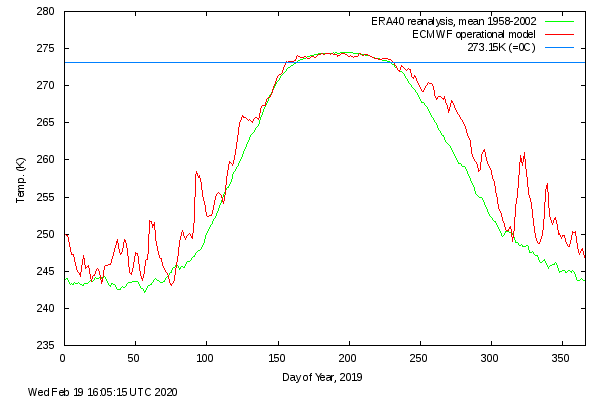
January, 2019 Arctic not warm

What does Rahmstorf explain to us further?

Several studies suggest that this has to do with the dwindling sea ice cover on the Arctic Ocean, especially on the Barents-Kara Sea."

Rahmstorf is not changing the scene unnoticed: What he means is a suspected phenomenon: a warmer Arctic with less ice in winter produces colder temperatures over the northern continents.

But that was certainly not the case in January 2019:

Fig. 2: Temperatures at the core of the Arctic north above 80°N for January, 2019 (red) and the long-term mean (green). Completely normal! Source here.

Another evaluation for the entire Arctic in the period in question finds: Temperature deviation for 66-90°N is 0.0. So it turns out Rahmstorf has no reliable climate explanation for the event between 20 and 29 January 2019. What he has to offer us are controversial studies that detect a change in circulation due to a warmer Arctic with less ice, with the result that it tends to become cooler over the continents in winter. There are papers that suspect this, and there are papers that reject it and which go unmentioned by Rahmstorf, of course.

"Made up" explanation

Under no circumstances is the state of research suitable for attributing the current "vortex" in the USA, or anywhere else, to climate change. It has always happened, and it isn't becoming more frequent. That's weather. Aa a result one meteorologist reacted rather harshly:

Thus the PIK has definitely gone off base among the scientific community and is only cherry picking. Freely made up that there would be an increase in frequency of weak polar vortices. This has always happened almost every winter."

Prominent Swiss meteorologist Jörg Kachelmann is quite annoyed by the nonsense. So are we. And we ask ourselves why is so much unproven and controversial material used to explain every current event in the world? Are real arguments like global warming at a rate of about 0.125 ° C / decade since 1950 (as to Cowtan & Way) too weak?

Huge PR campaign can't sell it

Is climate change something that requires a high advertising effort to sell?

These PR campaigns, however, turn out to be baseless: every advertisement that runs too often only ends up annoying the consumer. The background is not science, as the consumer is supposed to believe. Instead, political ambitions are playing the main role. This is truly thin ice!


from Climate Change Skeptic Blogs via hj on Inoreader http://bit.ly/2UAQfZK

Bob Ward, LSE and Booker

By Paul Homewood


Booker has a bit on the Bob Ward saga today, which should see the latter blow a few fuses!


image

 image

It has always seemed rather odd that two of London's most prestigious universities, Imperial College and the LSE, should include a "Grantham Institute", lavishly funded by an asset management billionaire to promote research supporting the belief in global warming.

An employee of the LSE branch is Bob Ward, much of whose job seems to consist of lodging long and tortuous complaints against any journalist daring to point out factual errors in claims made by warming propagandists. I have lost count of how many such complaints Ward has made against me over the years, most recently under the Independent Press Standards Organisation (IPSO). But not one has ever been upheld.

So enraged was Ward by IPSO's rejection of his latest complaint against me that he last week published a long rant on the LSE website, accusing me of "endangering lives" by producing scientific data to show why last summer's heatwave was not proof of global warming, and attacking IPSO for allowing the press to "promote climate change denial".

He seemed to be calling for a restriction on the freedom of the press. But isn't it odd that the LSE should be lending its prestige to such intemperate stuff?

https://www.telegraph.co.uk/opinion/2019/02/03/consistent-refusal-government-listen-rather-puts-one-mind-cassandra/


Unfortunately the following sentence was edited out by Booker's girlie sub editor:


Under the official system now run by the Independent Press Standards Organisation (IPSO), a serious occupational hazard for the few of us who do this is having to spend days or even weeks (unpaid), answering  these complaints in minute detail


As I mentioned in my post last week, I believe the real purpose of Ward's frequent complaints is to create so much work and hassle, both for authors like Booker and his editorial colleagues, that newspapers will eventually be discouraged from writing articles questioning warming orthodoxy.


from Climate Change Skeptic Blogs via hj on Inoreader http://bit.ly/2D5tW7o

Western Europe Power Mix In January

By Paul Homewood


h/t Joe Public


There is a useful site for collecting data on the European power sector, called Energodock:


image

http://energodock.com/germany/electricity-generation


It gives a variety of data by country. I have used it to analyse generation data across Western Europe for last month. (I have ignored Eastern Europe at this stage).

image


Some observations:

1) Fossil fuels still account for 33%, despite the dominance of nuclear in France (73%), and high renewables share in Germany.

2) Solar is to all intents and purposes irrelevant in winter months, even with some output from Spain.

Total solar capacity for Western Europe is 98GW. Output of 3049 GWh in January equates to just 4% of total capacity.

3) Wind at 16% is very similar to the UK level. About half of the total comes from Germany and the UK.

image

 image

As in the UK, wind output is extremely intermittent in Germany. Notably, output was very low in both countries for several days around 20th January, running at 38% of the average for the month as a whole.

According to BP, wind power capacity in the UK and Germany amounts to 75.7GW. With output down to 1575 GWh between 19th and 25th Jan, utilisation would have been down to 12%.

5) Nuclear generated 65 TWh during the month. France accounts for 40 TWh of this, and Germany a further 7 TWh.

With Germany already committed to close their nuclear capacity in the next few years, and uncertainty around French policy, it is evident that Western Europe as a whole will remain heavily dependent on fossil fuels for the foreseeable future..


from Climate Change Skeptic Blogs via hj on Inoreader http://bit.ly/2GcenPx

Gummer In £600K Conflict Of Interest Claim

By Paul Homewood


David Rose is back with a damning exposure of John Gummer:

image

Tory peer John Selwyn Gummer's private company has been paid more than £600,000 from 'green' businesses that stand to make millions from his advice to Ministers.

The Conservative grandee heads the Government's powerful Climate Change Committee that vigorously supports pumping billions of pounds in public subsidies into firms developing environmentally friendly technology.

Yet a Mail on Sunday investigation has discovered that his family-run consultancy has been paid huge sums by businesses that have cashed in on those lucrative taxpayer-funded handouts.

MPs say Gummer should have declared the payments – but he never has.

Last night, he vehemently denied any conflict of interest and insisted he had fully complied with disclosure rules.

He admitted his company received the payments, but insisted the work it undertook did not involve climate change issues.

Explosive documents leaked to this newspaper reveal that Sancroft International has been paid by at least nine businesses and campaign groups involved in projects to cut greenhouse gases.

That is the main aim of the committee 79-year-old Gummer leads – although policies it champions have been criticised for forcing up taxes and household energy bills.

Among the dossier's contents, we can reveal that:

  • Engineering giant Johnson Matthey, which makes batteries for electric cars, paid Gummer's firm nearly £300,000 over five years before he personally urged the Government to speed up plans to make all new cars on Britain's roads battery-powered;
  • Venture capitalists Temporis Capital – whose profits from windfarms and solar energy projects are bolstered by huge Government subsidies – paid the company £50,000 between 2012 and 2017;
  • Controversial green energy producer Drax, which gets £700 million a year in Government subsidies, paid Sancroft £15,500 while the Climate Change Committee was writing a report on its activities.

Last night Gummer, who was a Tory MP for 40 years before becoming Lord Deben in 2010, was facing calls to resign over what appear to be 'colossal' and 'scandalous' conflicts of interest exposed by this newspaper.

MPs also demanded an urgent inquiry by Parliament's standards watchdog. David Davies, the Conservative MP for Monmouth, said: 'Based on the information you have given me, he appears to be unfit to hold public office.

'As CCC chairman, he has been playing a hugely influential role, giving evidence to Parliament, making speeches, and issuing reports that have an enormous impact on both policy and household bills.'

Labour MP Graham Stringer, a member of the Science and Technology Committee in the Commons, said he was 'staggered and appalled' by the conflict of interest.

All MPs, peers and public officials must officially declare their outside earnings and interests to avoid conflicts of interest.

As the £1,000-a-day chairman of the Committee on Climate Change (CCC), Gummer is subject to a strict Cabinet Office code of conduct, which clearly states that officials should declare publicly 'any private interests which may, or may be perceived to, conflict with your public duties'.

And a spokesman for the CCC said: 'There is a clear policy on conflicts of interest and a register of committee members' interests. It is the responsibility of members to comply with this policy and to declare any potential conflict.'

Gummer does declare his chairmanship of Sancroft, but official records show the former Agriculture Minister –who famously fed his four–year-old daughter a beefburger on TV during the BSE crisis in 1990 – has not publicly declared any payments made by 'green' firms to his company.

A statement from his solicitor insisted: 'Allegations of conflict of interest and other improprieties are wholly false and misconceived… [he] has, at all times, made disclosures in accordance with the advice he has been given by the House of Lords and the CCC.'

The Committee on Climate Change, established by the 2008 Climate Change Act, is a supposedly independent quango which advises the Government on how to achieve Britain's target of reducing greenhouse gas emissions by 80 per cent by 2050.

Chaired by Gummer since 2012, it has urged Ministers to fund vast subsidies paid to 'renewable' energy companies.

The cost is met by adding 'green' levies to household and industry fuel bills, currently totalling £8.6 billion a year.

The CCC supports green taxes that feed the coffers of renewable energy firms. It has also argued in favour of a new carbon tax – a move that would benefit the companies paying Sancroft International.

Read the full story here.

Gummer's claim that all of this income is purely incidental really does not stack up. With annual turnover of £1.2m, the figure of £600,000 equates to 10% of turnover, clearly a significant proportion of income, which Sancroft could not afford to do without.

Gummer's position as Chair of the CCC is clearly no longer tenable. But questions must also now be raised about the workings of the CCC, which clearly is not independent by any definition.

In particular, most of its members are so heavily compromised by their own outside interests, that their objectivity must also be called into question.

Just one example. One of the members of the CCC is Rebecca Heaton, and this is the profile provided by the CCC:

image

https://www.theccc.org.uk/about/committee-on-climate-change/

Drax would be bankrupt without the massive subsidies, amounting to £729m a year in their latest accounts, all paid for by energy users.

On what planet can she be regarded as an independent or objective advisor on matters of renewable or decarbonisation policy?


from Climate Change Skeptic Blogs via hj on Inoreader http://bit.ly/2TuebxI

Summary Against Modern Thought: God Preserves All Things In Being

Previous post.

Being didn't happen for no reason, and the so-called laws of physics, or whatever is being claimed to be at base, such as quantum "fluctuations", cannot account for themselves.

THAT GOD PRESERVES THINGS IN BEING

1 Now, from the fact that God rules things by His providence it follows that He preserves them in being.

2 Indeed, everything whereby things attain their end pertains to the governance of these things. For things are said to be ruled or governed by virtue of their being ordered to their end. Now, things are ordered to the ultimate end which God intends, that is, divine goodness, not only by the fact that they perform their operations, but also by the fact that they exist, since, to the extent that they exist, they bear the likeness of divine goodness which is the end for things, as we showed above. Therefore, it pertains to divine providence that things are preserved in being.

3 Again, the same principle must be the cause of a thing and of its preservation, for the preservation of a thing is nothing but the continuation of its being. Now, we showed above that God, through His understanding, and will, is the cause of being for all things. Therefore, He preserves all things in being through His intellect and will.

4 Besides, no particular univocal agent can be the unqualified cause of its species; for instance, this individual man cannot be the cause of the human species, for he would then be the cause of every man, and, consequently, of himself—which is impossible. But this individual man is the cause, properly speaking, of that individual man.

Now, this man exists because human nature is present in this matter, which is the principle of individuation. So, this man is not the cause of a man, except in the sense that he is the cause of a human form coming to be in this matter. This is to be the principle of the generation of an individual man. So, it is apparent that neither this man, nor any other univocal agent in nature, is the cause of anything except the generation of this or that individual thing. Now, there must be some proper agent cause of the human species itself; its composition shows this, and also the ordering of its parts, which is uniform in all cases unless it be accidentally impeded. And the same reasoning applies to all the other species of natural things.

Now, this cause is God, either mediately or immediately. For we have shown that He is the first cause of all things. So, He must stand in regard to the species of things as the individual generating agent in nature does to generation, of which he is the direct cause. But generation ceases as soon as the operation of the generative agent ceases. Therefore, all the species of things would also cease as soon as the divine operation ceased. So, He preserves things in being through His operation.

Notes What this means for evolution, especially of man, is obvious.

5 Moreover, though motion may occur for any existing thing, motion is apart from the being of the thing. Now, nothing corporeal, unless it be moved, is the cause of anything, for no body acts unless by motion, as Aristotle proves. Therefore, no body is the cause of the being of anything, in so far as it is being, but it is the cause of its being moved toward being, that is, of the thing's becoming.

Now, the being of any thing is participated being, since no thing is its own act of being, except God, as we proved above. And thus, God Himself, Who is His own act of being, must be primarily and essentially the cause of every being. So, divine operation is related to the being of things as the motion of a corporeal mover is to the becoming and passive movement of the things that are made or moved. Now, it is impossible for the becoming and passive movement of a thing to continue if the motion of the mover cease. Therefore, it is impossible for the being of a thing to continue except through divine operation.

6 Furthermore, just as art work presupposes a work of nature, so does a work of nature presuppose the work of God the creator. In fact, the material for art products comes from nature, while that of natural products comes through creation by God. Moreover, art objects are preserved in being by the power of natural things; a home, for instance, by the solidity of its stories. Therefore, all natural things are preserved in being by nothing other than the power of God.

7 Again, the impression of an agent does not continue in the product, if the agent's action ceases, unless the impression be converted into the nature of the product. Indeed, the forms of things generated, and their properties, remain in them after generation until the end, since they become natural to them. And likewise, habits are difficult to change because they are turned into a nature. But dispositions and passions, whether of the body or soul, endure for a little while after the action of the agent, but not forever, since they are present in a state transitional to nature.

Now, whatever belongs to the nature of a higher type of being does not last at all after the action of the agent; light, for instance, does not continue in a diaphanous body when the source of light has gone away. Now, to be is not the nature or essence of any created thing, but only of God, as we showed in Book One [22]. Therefore, no thing can remain in being if divine operation cease.

8 Furthermore, there are two positions regarding the origin of things: one, from faith, holding that things have been brought into being by God, at the beginning; and the position of certain philosophers, that things have emanated from God eternally. Now, in either position one has to say that things are preserved in being by God. For, if things are brought into being by God, after they were not existing, then the being of things, and similarly their non-being, must result from the divine will; for He has permitted things not to be, when He so willed; and He made things to be, when He so willed. Hence, they exist just as long as He wills them to be. Therefore, His will is the preserver of things.

But, if things have eternally emanated from God, we cannot give a time or instant at which they first flowed forth from God. So, either they never were produced by God, or their being is always flowing forth from God as long as they exist. Therefore, He preserves things in being by His operation.

9 Hence it is said: "Upholding all things by the word of His Power" (Heb. 1:3). And Augustine says: "The power of the Creator, and the strength of the Omnipotent and All-sustaining is the cause of the subsistence of every creature. And, if this power were ever to cease its ruling of the things which have been created, their species would at once come to an end, and all nature would collapse. For the situation is not like that of a man who has built a house and has then gone away, and, while he is not working and is absent, his work stands. For, if God were to withdraw His rule from it, the world could not stand, even for the flick of an eye."

Notes A sobering thought and a hint, as we believe Peter, in what is to come. And also a proof that a physics which ignores the reason for physics, is a benighted physics.

10 Now, by this conclusion the position of the exponents of the Law of the Moors is refuted, for, in order to be able to maintain that the world needs God's preservation, they took the view that all forms are accidents, and that no accident endures through two instants.

So that, in this view, the informing of things would be in continuous process, as if a thing would not need an agent cause except while in the process of becoming. Hence, also, some of these people are said to claim that indivisible bodies (out of which, they say, all substances are composed and which alone, according to them, possess stability) could last for about an hour if God were to withdraw His governance from things. Also, some of them say that a thing could not even cease to be unless God caused in it the accident of "cessation." Now, all these views are clearly absurd.

Notes Amen.


from Climate Change Skeptic Blogs via hj on Inoreader http://bit.ly/2DQt34n

Variations in seafloor create freak ocean waves

Image credit: NASA


Researchers have an ambition to use 'new mathematics' to try and predict where and when these extreme events will occur.

Florida State University researchers have found that abrupt variations in the seafloor can cause dangerous ocean waves known as rogue or freak waves—waves so catastrophic that they were once thought to be the figments of seafarers' imaginations, Phys.org reports.

"These are huge waves that can cause massive destruction to ships or infrastructure, but they are not precisely understood," said Nick Moore, assistant professor of mathematics at Florida State and author of a new study on rogue waves.

The study is published in the journal Physical Review Fluids.

Once regarded as a myth, these waves have stumped the scientific community for several decades.

Over the years, researchers across the globe have examined a number of different factors they thought might contribute to these waves, including the seafloor, wind excitation and a phenomenon called Benjamin-Feir where deviations from a periodic waveform are reinforced by nonlinearity.

Most of the studies that focused on the seafloor considered only gentle slopes, and the few studies that pushed the slopes to greater extremes relied primarily on computer simulations.

"There was a relative underrepresentation of real-world data that you can get from laboratory experiments, where you can carefully control the various factors," Moore said. "Often you need this real-world data to see whether the computer simulations are giving you sensible predictions at all."

Moore's laboratory experiments were the first to examine the effect of abrupt seafloor variations on wave statistics.

Along with FSU's Geophysical Fluid Dynamics Institute Director Kevin Speer and now-former FSU student Tyler Bolles, Moore created a long chamber with a variable bottom. Using a motor to generate randomized waves, the research team tracked thousands of waves to see if any patterns emerged.

After the waves passed through several feet of a constant depth, they encountered a step in the bottom of the tank that represented an abrupt change in the seafloor. Moore and his colleagues found that initially the waves appeared normal, following a traditional bell curve. But when they passed over the step, the structures of the waves significantly changed.

The altered waves followed what's called a gamma distribution, a mathematics function describing certain patterns that defy the bell curve in a particular way.

Full report here.


from Climate Change Skeptic Blogs via hj on Inoreader http://bit.ly/2RxRozn

Heartland: Special Edition Devoted to the Green New Deal

Reposted from The Heartland Institute February 1, 2019 By H. Sterling Burnett Climate Change Weekly #313 The much-hyped Green New Deal (GND) is being pushed by a rump group of progressive-socialists in the Democratic Party, including prominent members of the Senate with stated presidential aspirations. If enacted, GND would constitute a complete socialist makeover/takeover of…

from Climate Change Skeptic Blogs via hj on Inoreader http://bit.ly/2TAVc4A

Graph Of Global Thermometers

Interesting view of the world as a plot of thermometer density by Latitude & Longitude. Continue reading

from Climate Change Skeptic Blogs via hj on Inoreader http://bit.ly/2G74WAy

Saturday, February 2, 2019

Weekend Unthreaded

Rating: 10.0/10 (1 vote cast)
gfx.php?value=10.0
Rating: 10.0/10 (1 vote cast)


from Climate Change Skeptic Blogs via hj on Inoreader http://bit.ly/2SlggyS

CBC admits it wrongly reported hyped-up insurance ‘climate risks’

http://bit.ly/2UzmZCQ Terence Corcoran The Insurance Bureau of Canada's decades-long campaign to raise alarms about the ravages of floods continued last week with an appearance by Blair Feltmate, a favourite star climate-change witness for the biggest insurers, at the Lake Simcoe Region Conservation Authority's annual meeting. Feltmate heads the industry-funded Intact Centre on Climate Adaptation at [...]

from Climate Change Skeptic Blogs via hj on Inoreader http://bit.ly/2TvGk7K

Collaboration request

Hi there How would you like to earn a 35% commission for each sale for life by selling SEO services Every website owner requires the ...