Wednesday, January 23, 2019

Early 20th century global warming

by Judith Curry

A careful look at the early 20th century global warming, which is almost as large as the warming since 1950.  Until we can explain the early 20th century warming, I have little confidence IPCC and NCA4 attribution statements regarding the cause of the recent warming.

This is an issue that has long interested me.  Peter Webster wrote a previous post Mid 20th Century Global(?) Warming, which focused on the warm bump that culminated in the 1940's.  My interest in this period was reignited while working on my report Sea Level and Climate Change.  Then, the recent paper by Zanna et al. discussed in Ocean Heat Content  Surprises further made the wheels turn.

In response to the Ocean Heat Content thread, David Appell posted a link to this paper on twitter:

The early 20th century warming: Anomalies, causes and consequences

Gabi Hegerl, Stefan Bronniman, Andrew Shurer, Tim Cowan

Abstract:  "The most pronounced warming in the historical global climate record prior to the recent warming occurred over the first half of the 20th century and is known as the Early Twentieth Century Warming (ETCW). Understanding this period and the subsequent slowdown of warming is key to disentangling the relationship between decadal variability and the response to human influences in the present and future climate. This review discusses the observed changes during the ETCW and hypotheses for the underlying causes and mechanisms. Attribution studies estimate that about a half (40–54%; p > .8) of the global warming from 1901 to 1950 was forced by a combination of increasing greenhouse gases and natural forcing, offset to some extent by aerosols. Natural variability also made a large contribution, particularly to regional anomalies like the Arctic warming in the 1920s and 1930s. The ETCW period also encompassed exceptional events, several of which are touched upon: Indian monsoon failures during the turn of the century, the "Dust Bowl" droughts and extreme heat waves in North America in the 1930s, the World War II period drought in Australia between 1937 and 1945; and the European droughts and heat waves of the late 1940s and early 1950s. Understanding the mechanisms involved in these events, and their links to large scale forcing is an important test for our understanding of modern climate change and for predicting impacts of future change."

HELLOOOOOO!

This paper 'shocked' me for several reasons.  First, I can't imagine how I missed this paper when it was first published in Oct 2017 – apparently it received no publicity (oops now I remember, this was when i messed up my neck/shoulder/hand). Second, every time in the context of an attribution argument that  I say 'but the early 20th century global warming (not to mention the mid century cooling) and all those heat waves and droughts,'  I (along with my argument) am dismissed.  I will paraphrase something I recall Gavin Schmidt saying: "We understand the late 20th century warming and have good forcing data, so no point to paying attention to the early warming where the data is far inferior."  And last but not least, the AMO and PDO are explicitly considered in Hegerl et al.'s attribution argument.

The Hegerl et al paper is actually pretty good (as far as it goes).  Lets take a closer look at their analysis and argument, then I will take it a bit further.

Hegerl et al. provides a summary of forcing from CO2, volcanoes and solar (Figure 4, below).  In 1910, the atmospheric CO2 concentration has been estimated to be 300.1 ppm; in 1950 it was 311.3 ppm; and in 2018 it is 408 ppm. So, the warming during the period 1910-1945 was associated with a CO2 increase of 10 ppm, whereas a comparable amount of warming during the period 1950 to 2018 was associated with a 97 ppm increase in atmospheric CO2 concentration – almost an order of magnitude greater CO2 increase for a comparable amount of global ocean warming.  Back when CO2 concentrations were lower, each molecule had a greater radiative impact – but not THAT much.
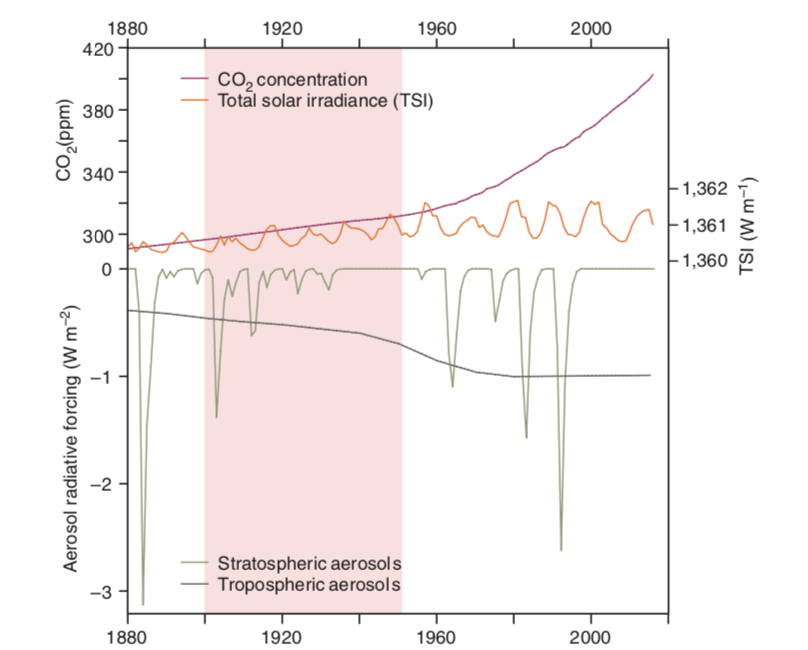
Clearly, there were other factors in play besides CO2 emissions in the early 20th century global warming. In terms of external radiative forcing (Figure 4, above), a period of relatively low volcanic activity during the period 1920-1960 would have a relative warming effect, although the period from 1945 to 1960 was a period of slight overall cooling. Solar forcing in the early 20th century is uncertain, with estimates of warming of varying magnitude, although the magnitudes are insufficient for solar to have been a major direct contributor to the early 20th century global warming.

Exactly how Hegerl et al.come up with 40-54% attribution to external forcing isn't clear.  My own back-of-envelope calculations suggest a smaller number.

Hegerl et al. analyzed the internal variability associated with ocean circulations during the period since 1900. They found that the unusual cold anomaly circa 1910 originated in the South Atlantic, and then spread globally in the subsequent decade, leading to cold anomalies in both Atlantic and Pacific.  This is very interesting, and something I hadn't seen before.

This rarely discussed cold period was followed by strong warming in the Northern Hemisphere, which was particularly pronounced in high latitudes. Hegerl et al. summarized some previous research that might account for mechanisms of the strong high latitude warming in the Northern Hemisphere, including multi-decadal ocean oscillations.

Hegerl et al. focus their arguments regarding internal variability associated with large-scale ocean circulations on the Atlantic Multidecadal Oscillation (AMO) and the Pacific Decadal Oscillation (PDO). Warm phases of the both the AMO and PDO contributed to warming particularly during the 1930's and 1940's. They also consider atmospheric circulation impacts from the Pacific Walker cell, North Atlantic Oscillation and Arctic Dipole Model.

Concluding statement:

"These anomalous events occurred during a period of strong global-scale warm- ing, which can be attributed to a combination of external forcing (particularly, greenhouse gas increases, combined with a hiatus in volcanic events) and internal decadal variability. The exact contribution of each factor to large-scale warming remains uncertain, largely due to uncertainty in the role of aerosols in the cooling or stabilization of climate following the middle of the 20th century."

The data

Let's look at the data.  First the surface temperature data.  It is instructive to consider land and ocean separately, and also to look at the hemispheres separately.

Looking at the land surface temperatures, the various data sets show discrepancies during this period, as per this image from Berkeley Earth:
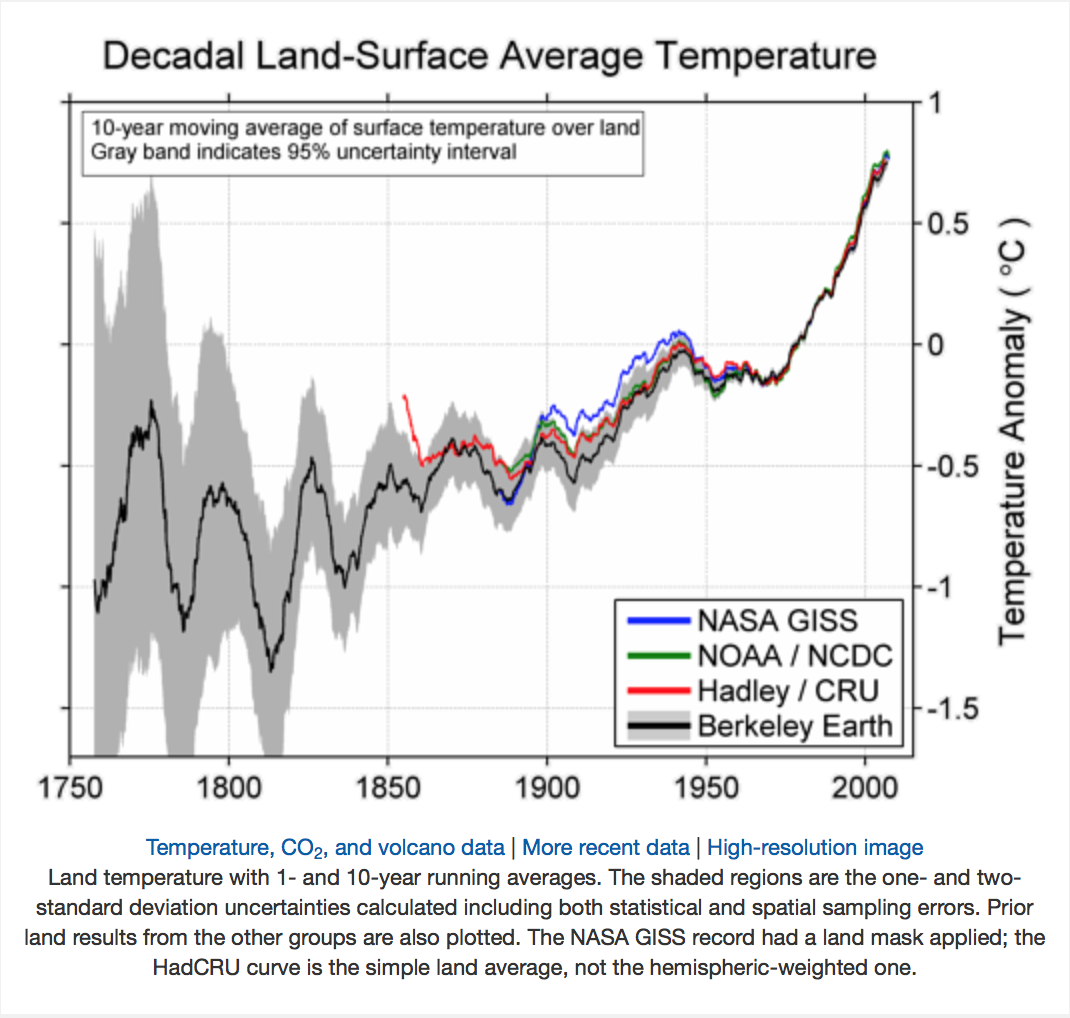
Note, Berkeley Earth land values are lowest circa 1910 (of the values plotted above, I suspect Berkeley Earth is most reliable over land in early 20th century).  I would be interested in a better diagram that also includes Cowtan and Way (the Arctic was very warm in the 1920's and 1930's), but I am not seeing much in the way of land-only comparisons.  Perhaps Zeke, Cowtan, or Robert Rohde has a better diagram.  Note: over land, the recent warming is substantially greater than the early 20th century warming.

And now the ocean temperatures, from HADISST:
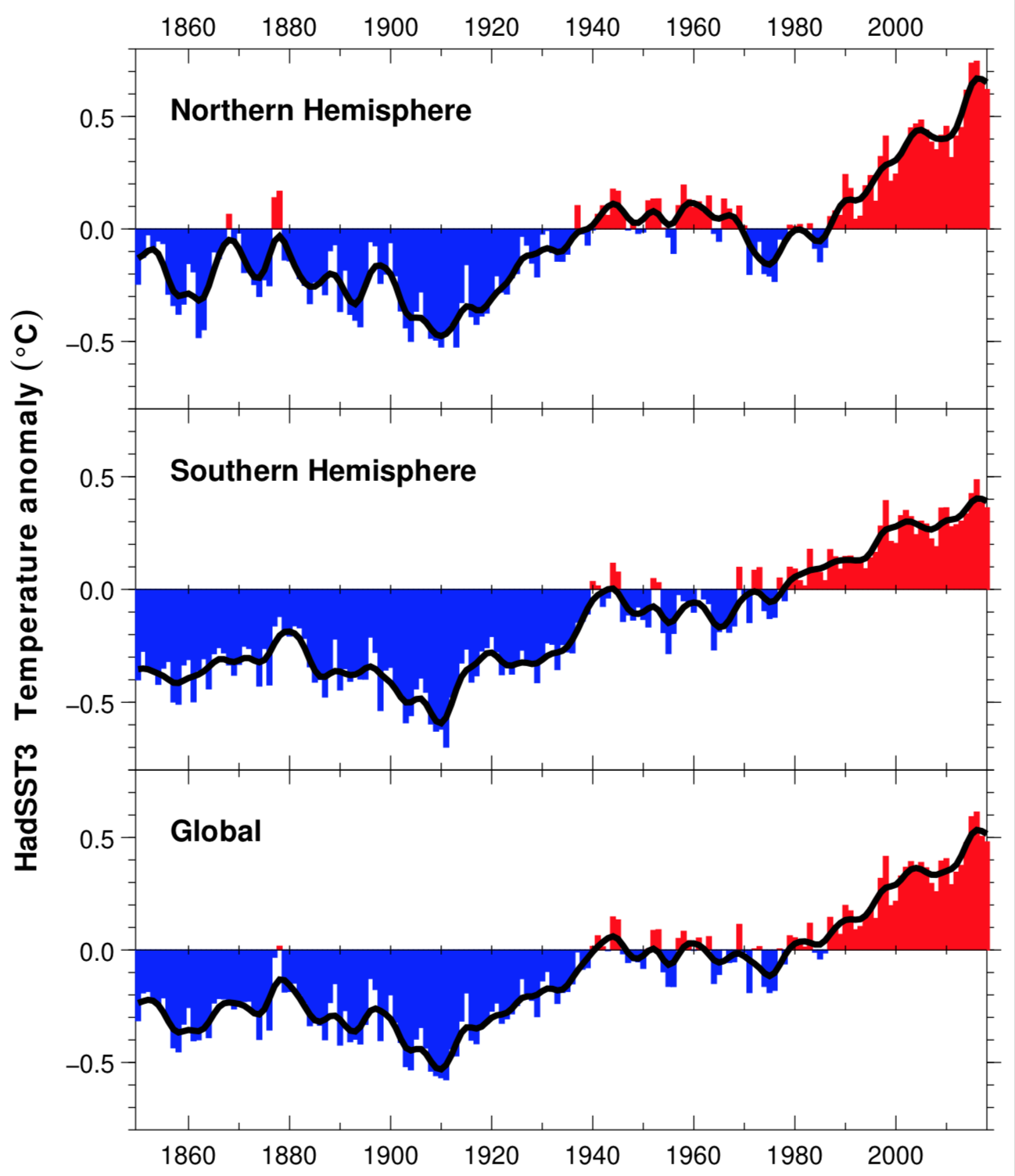
The 1910 cold anomaly is larger in the SH, but seems coincident with the timing of the NH cold anomaly (I have NO IDEA what kind of data 'adjustments' were made during this period, but i do know that data was very sparse in the Pacific and SH oceans during this period).  But globally, you can see that  the ocean warming between 1910 and 1945 was about the same magnitude as the warming from 1976 to present (recent warming is smaller in the SH).

Now, compare the ocean surface temperatures with the Zanna et al. global ocean heat content (note: inflection points in the Atlantic are generally the same as for global ocean):
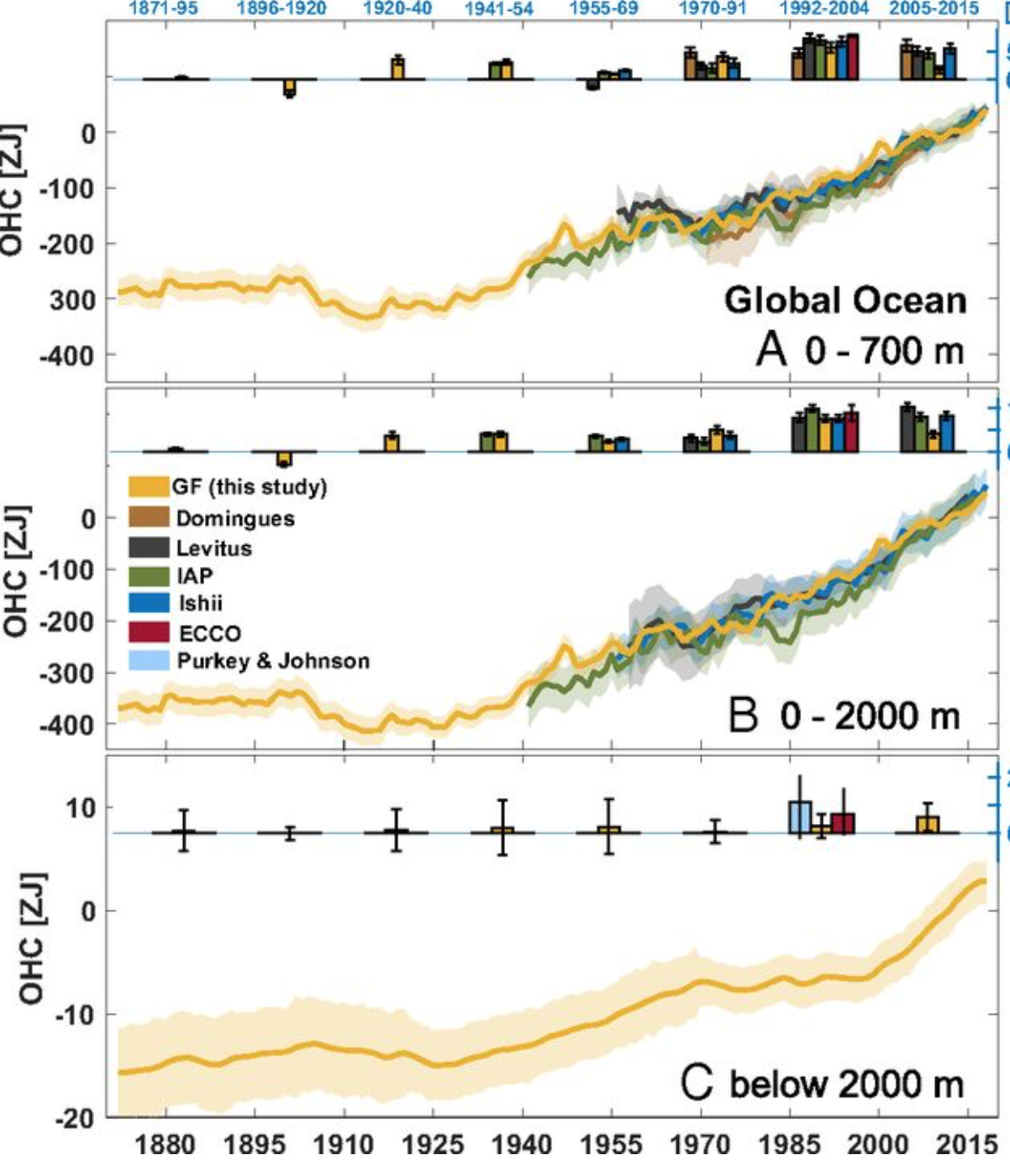
The dip circa 1910 starts at the surface, and is seen in the deep ocean circa 1925.

Now take a look at sea level and sea level rise data. Klaus Bitterman's post at RealClimate provides a useful summary:

screen-shot-2018-02-15-at-3-04-21-pm.png

The recent sea level rise is believed to have started in the mid-19th century (prior to these graphs.  Consideration of the rates of sea level rise in the early 20th century shows an increase in the rate of sea level rise starting in 1920 and peaking in the 1940's.
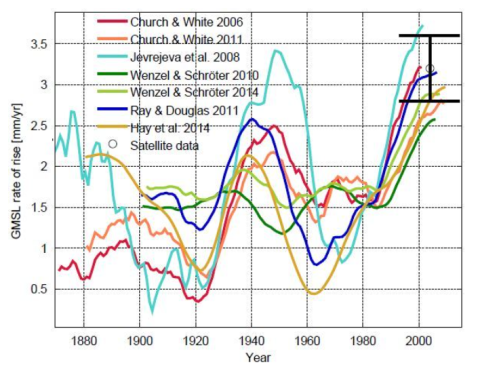
screen-shot-2018-02-15-at-3-04-32-pm.png

Clearly, ocean heat content is not the only thing driving sea level rise.

Things really get interesting when we look at the Arctic. The warming in the Arctic during the early 20th century is described by Polyakov et al:

polyakov.jpg?w=500

The Arctic warming began in 1915, with an increase of about 1.6 C between 1915 and 1940.

The mass balance of the Greenland ice sheet provides an additional line of evidence for Arctic warming, that also has direct relevance to sea level rise.  The following figure is from Fettweis et al. (2008) (note Fettweiss et al. have more recent analyses that are generally consistent with the 2008 paper, but I think the 2008 figure is best):

The impact of the early 20th century Arctic warming is seen in the negative mass balance for Greenland, from the 1920's to mid 1950's.  This Greenland mass loss is consistent with the increase in the rate of sea level rise circa 1920 – 1950.  While early estimates of Greenland mass balance are associated with substantial uncertainty, the early century mass loss is consistent with the early 20th century Arctic warming and increasing rate of sea level rise.

LeClerq et al. (2014) developed a new data set of worldwide glacier fluctuations.  The data set shows relatively small fluctuations until the mid-19th century, followed by a global retreat that was strongest in the first half of the 20th century. (note: the paper doesn't include a diagram that is useful the purpose here).

"Despite increasing global temperatures in the 20th century, this retreat is strongest in the period 1921– 1960 rather than in the last period 1961–2000, with a median retreat rate of 12.5 m/yr in 1921–1960 and 7.4 m/yr in the period 1961–2000."

There are too many independent lines of evidence to ignore the early 20th century global warming.

Attribution

The underlying reasoning behind their detection and attribution approach seems to be this:

1) an estimate of internal variability is derived from multi-century to multi-millennial climate model simulations without external forcing.  However the climate models have substantial deficiencies in simulating multi-decadal internal variability (e.g. Kravtsov et al) with regards to magnitude, spatial patterns and their sequential time development (and this is not to mention centennial to millenial scale internal variability).

2) Based on these model calculations of internal variability, they infer that the warming since 1950 exceeds the magnitude of natural internal variability . Therefore you cannot explain this warming from natural variability alone.

3) They then look at climate model simulations for the 20th century, with internal variability averaged out, so all you see is the forced response.  And 'miraculously', the forced response 'sort of' agrees with observations.  Therefore we are justified in assuming that all the warming is 'forced' (oops spot the flawed logic 2 –> 3).

The "fingerprinting" approach used by Hegerl et al. ignores the fingerprints of multi-decadal variability; multi-decadal variability is only invoked when the forcing is insufficient to explain the observations.

This attribution 'sort of' works, according to the principle that two 'wrongs' make a 'right' – neglect of multidecadal and longer internal variability plus climate model sensitivity to CO2 that is too high = 100% attribution of recent warming to anthropogenic causes.

As a case in point, from the 4th U.S. National Climate Assessment (p 118 and ff):

"Multi-century to multi-millennial-scale climate model integrations with unchanging external forcing provide a means of estimating potential contributions of internal climate variability to observed trends. Based on multimodel assessments, the likely range contribution of internal variability to observed trends over 1951–2010 is about ±0.2°F, compared to the observed warming of about 1.2°F over that period."

"A recent 5,200-year integration of the CMIP5 model having apparently the largest global mean temperature variability among CMIP5 models shows rare instances of multidecadal global warming approaching the observed 1951–2010 warming trend. However, even that most extreme model cannot simulate century-scale warming trends from internal variability that approach the observed global mean warming over the past century. Thus, using present models there is no known source of internal climate variability that can reproduce the observed warming over the past century without including strong positive forcing from anthropogenic greenhouse gas emissions."

Circular reasoning at its 'finest.'

Additional insights are provided by this paper:

Early 20th-century Arctic warming intensified by Pacific and Atlantic multidecadal variability

Tokinaga, Xie, Muk

Abstract: "With amplified warming and record sea ice loss, the Arctic is the canary of global warming. The historical Arctic warming is poorly understood, limiting our confidence in model projections. Specifically, Arctic surface air temperature increased rapidly over the early 20th century, at rates comparable to those of recent decades despite much weaker greenhouse gas forcing. Here, we show that the concurrent phase shift of Pacific and Atlantic interdecadal variability modes is the major driver for the rapid early 20th-century Arctic warming. Atmospheric model simulations successfully reproduce the early Arctic warming when the interdecadal variability of sea surface temperature (SST) is properly prescribed. The early 20th-century Arctic warming is associated with positive SST anomalies over the tropical and North Atlantic and a Pacific SST pattern reminiscent of the positive phase of the Pacific decadal oscillation. Atmospheric circulation changes are important for the early 20th-century Arctic warming. The equatorial Pacific warming deepens the Aleutian low, advecting warm air into the North American Arctic. The extratropical North Atlantic and North Pacific SST warming strengthens surface westerly winds over northern Eurasia, intensifying the warming there. Coupled ocean–atmosphere simulations support the constructive intensification of Arctic warming by a concurrent, negative-to-positive phase shift of the Pacific and Atlantic interdecadal modes. Our results aid attributing the historical Arctic warming and thereby constrain the amplified warming projected for this important region."

As summarized in my sea level report:  In general, years with positive AMO index are associated with relatively high Greenland runoff volume and vice versa (Hanna, 2013; Mernild and Liston, 2012; Mernild et al., 2017). Hofer et al. (2017) found that the reduction in Greenland's mass balance since 1995 is caused by decreasing summer cloud cover, which has a warming effect from increased solar radiation. The observed reduction in cloud cover is strongly correlated with a state shift in the North Atlantic Oscillation (NAO), promoting high-pressure conditions in summer that inhibits cloud formation and also reduces precipitation.

So what we  have is some very fine research on multi-decadal to millennial scale internal variability by Xie et al., Kravtsov, Huybers et al., Meehl et al and others.  And it all gets ignored by the circular reasoning of formal attribution studies.

JC reflections

In order to have any confidence in the IPCC and NCA attribution statements, much greater effort is needed to understand the role multi-decadal to millennial scales of internal climate variability.

Much more effort is needed to understand not only the early 20th century warming, but also the 'grand hiatus' from 1945-1975.  Attempting to attribute these features to aerosol (stratospheric or pollution) forcing haven't gotten us  very far.  The approach taken by Xie's group is providing important insights.

Once we do satisfactorily explain these 20th century features, then we need to tackle the 19th century — overall warming, with global sea level rise initiating ~1860, and NH glacier melt initiating ~1850.   And then we need to tackle the last 800 years – the Little Ice Age and the 'recovery'. (See my previous post 400 years(?) of global warming).  The mainstream attribution folk are finally waking up to the importance of multidecadal ocean oscillations — we have barely scratched  the surface re understanding century to millennial scale oscillations, as highlighted in the recent Gebbie and Huybers paper discussed on Ocean Heat Content Surprises.

There are too many climate scientists that expect global surface temperature, sea ice, glacier mass loss and sea level  to follow the 'forcing' on fairly short time scales.  This is not how the climate system works, as was eloquently shown by Gebbie and Huybers.  The Arctic in particular responds very strongly to multidecadal and longer internal variability, and also to solar forcing.

Until all this is sorted out, we do not have a strong basis for attributing anything close to  ~100% of the warming since 1950 to humans, or for making credible projections of 21st century climate change.


from Climate Change Skeptic Blogs via hj on Inoreader http://bit.ly/2DuKfw3

Wanted: Congressional Leadership on Climate Adaptation

smoky_sky_lamppost_august_2018_mik_with_


from Climate Change Skeptic Blogs via hj on Inoreader https://on.nrdc.org/2FUxWdV

Landmark Offshore Wind Agreement Protects Right Whales

blog_image_1_right-whale-mom-calf-2_0.jp


from Climate Change Skeptic Blogs via hj on Inoreader https://on.nrdc.org/2FJj8Q2

1,500 private jets fly in to save world at Davos

Where is your carbon footprint when you need it?

This week the same people who advertise their virtue with climate cloaks are advertising their status with a Bombardier 7500.

Don't call them hypocrites, it's completely consistent. Both are pretentious attempts to peck up the order.

More And Bigger Private Jets Landing at Davos as Leaders Discuss Climate Change

Erin Corbett, Fortune

Perhaps its all because of jet envy.

At least 1,500 private jets are slated to arrive in Davos. The number is up from last year's estimated 1,300, according to the Air Charter Service, which also found that this year's jets are larger and more expensive.

Why more and bigger jets?

"This is at least in part due to some of the long distances traveled, but also possibly due to business rivals not wanting to be seen to be outdone by one another," Andy Christie, the private jets director at ACS said in a statement.

 Would you like a helicopter with that?

Marketwatch

PrivateFly.com [points out] "The primary airport used by private jet customers flying to Davos is Zurich Airport. This is 148 kilometers [...]

gfx.php?value=0.0
Rating: 0.0/10 (0 votes cast)


from Climate Change Skeptic Blogs via hj on Inoreader http://bit.ly/2FTNEGe

Sterol A-ring plasticity in hedgehog protein cholesterolysis supports a primitive substrate selectivity mechanism

GA?id=C8CC09729A

Chem. Commun., 2019, Advance Article
DOI: 10.1039/C8CC09729A, Communication
Daniel A. Ciulla, Andrew G. Wagner, Xinyue Liu, Courtney L. Cooper, Michael T. Jorgensen, Chunyu Wang, Puja Goyal, Nilesh K. Banavali, John L. Pezzullo, José-Luis Giner, Brian P. Callahan
The enzymatic agent of hedgehog protein cholesterolysis accommodates substrate sterols with undersized, oversized and distorted ring systems relative to cholesterol.
To cite this article before page numbers are assigned, use the DOI form of citation above.
The content of this RSS Feed (c) The Royal Society of Chemistry


from Journals via hj on Inoreader https://rsc.li/2FS6huc

Unraveling the Single Atomic Active Site under Realistic Simulated Natural Heme-containing Enzymes

Chem. Commun., 2019, Accepted Manuscript
DOI: 10.1039/C9CC00199A, Communication
Chao Zhao, Can Xiong, Xiaokang Liu, Man Qiao, Zhijun Li, Tongwei Yuan, Jing Wang, Yunteng Qu, Xiaoqian Wang, FangYao Zhou, Qian Xu, Shiqi Wang, Min Chen, Wenyu Wang, Yafei Li, Tao Yao, Yuen Wu, Yadong Li
Herein, we report a heterogeneous single iron atom catalyst exhibit superduper peroxidase, oxidase and catalase enzyme-like activities (defined as single atom enzymes, SAEs), exceeding the Fe3O4 nanozymes by a factor...
The content of this RSS Feed (c) The Royal Society of Chemistry


from Journals via hj on Inoreader https://rsc.li/2FLRm5q

CNN: ‘Warmer temperatures bring sons’ – ‘Climate change will affect the ratio of male-to-female newborns’ – ‘Might mean thousands of ‘extra’ boys annually’

https://cnn.it/2MpxVQD (CNN) Global warming will have a variety of effects on our planet, yet it may also directly impact our human biology, research suggests. Specifically, climate change could alter the proportion of male and female newborns, with more boys born in places where temperatures rise and fewer boys born in places with other environmental changes, [...]

from Climate Change Skeptic Blogs via hj on Inoreader http://bit.ly/2sFxwAm

Flashback 2005: Men Warm Globe, Women Feel the Heat, Group Claims – The solution?! ‘Climate gender justice’

http://bit.ly/2MrquZ4 Men Warm Globe, Women Feel the Heat, Group Claims  CNS.com ^ | December 6, 2005 | By Marc Morano  The debate over climate change evolved into a battle of the sexes Monday at the 11th annual United Nations Climate Change Conference in Montreal. The spokesman for a feminist-based environmental group accused men of being the [...]

from Climate Change Skeptic Blogs via hj on Inoreader http://bit.ly/2sD2NUG

Benzyne-Mediated Trichloromethylation of Chiral Oxazolines

Chem. Commun., 2019, Accepted Manuscript
DOI: 10.1039/C9CC00557A, Communication
Xin Huang, Weizhao Zhao, De-Li Chen, Yaling Zhan, Tingting Zeng, Huiquan Jin, Bo Peng
A three-component reaction bewteen benzyne, oxazolines and chloroform was developed for the synthesis of trichloromethyalted chiral oxazolidines. Benzyne not only serves as an electrophile towards oxazolines but also acts as...
The content of this RSS Feed (c) The Royal Society of Chemistry


from Journals via hj on Inoreader https://rsc.li/2UbMIRo

[ASAP] Unveiling the Hydrogen Bonding Network of Intracellular Water by Fluorescence Lifetime Imaging Microscopy

TOC Graphic

The Journal of Physical Chemistry C
DOI: 10.1021/acs.jpcc.8b12439
jpccck?d=yIl2AUoC8zA


from Journals via hj on Inoreader http://bit.ly/2AWzDV2

[ASAP] Machine Learning Classical Interatomic Potentials for Molecular Dynamics from First-Principles Training Data

TOC Graphic

The Journal of Physical Chemistry C
DOI: 10.1021/acs.jpcc.8b09917
jpccck?d=yIl2AUoC8zA


from Journals via hj on Inoreader http://bit.ly/2AZHDEV

[ASAP] Direct Growth of Graphene on Fused Quartz by Atmospheric Pressure Chemical Vapor Deposition with Acetylene

TOC Graphic

The Journal of Physical Chemistry C
DOI: 10.1021/acs.jpcc.8b08806
jpccck?d=yIl2AUoC8zA


from Journals via hj on Inoreader http://bit.ly/2T9ydOb

[ASAP] In Situ Photoelectron Spectroscopy Study on the Buffer Role of Multiwalled Carbon Nanotubes against Thermal Degradation in Organic Conducting Composite Films with PEDOT:PSS

TOC Graphic

The Journal of Physical Chemistry C
DOI: 10.1021/acs.jpcc.8b10345
jpccck?d=yIl2AUoC8zA


from Journals via hj on Inoreader http://bit.ly/2T9ycK7

[ASAP] Energy Transfer Networks within Upconverting Nanoparticles Are Complex Systems with Collective, Robust, and History-Dependent Dynamics

TOC Graphic

The Journal of Physical Chemistry C
DOI: 10.1021/acs.jpcc.9b00161
jpccck?d=yIl2AUoC8zA


from Journals via hj on Inoreader http://bit.ly/2T9ybG3

Record private jet flights into Davos as leaders arrive for climate talk

By Paul Homewood


h/t Dave Ward


I'm lost for words!!

 image

David Attenborough might have urged world leaders at Davos to take urgent action on climate change, but it appears no one was listening. As he spoke, experts predicted up to 1,500 individual private jets will fly to and from airfields serving the Swiss ski resort this week.

Political and business leaders and lobbyists are opting for bigger, more expensive aircrafts, according to analysis by the Air Charter Service, which found the number of private jet flights grew by 11% last year.

"There appears to be a trend towards larger aircraft, with expensive heavy jets the aircraft of choice, with Gulfstream GVs and Global Expresses both being used more than 100 times each last year," said Andy Christie, private jets director at the ACS.

This is partly due to the long distances travelled, he said, "but also possibly due to business rivals not wanting to be seen to be outdone by one another". Last year, more than 1,300 aircraft flights were recorded at the conference, the highest number since ACS began recording private jet activity in 2013.

Countries with the highest number of arrivals and departures out of the local airports over the past five years included Germany, France, UK, US, Russia and the United Arab Emirates, according to ACS.

The World Economic Forum's global risk report, released ahead of this week's meeting, identified environmental challenges, including the failure to mitigate climate change, as top of the list of dangers facing the world economy.

On Monday, broadcaster and naturalist David Attenborough warned that "the Garden of Eden is no more", and urged political and business leaders to make a renewed push to tackle climate change.

"We have changed the world so much that scientists claim we are in a new geological age, the anthropocene, the age of humans," he said.

"What we do now, and in the next few years, will profoundly affect the next few thousand years," added Attenborough, who received a Crystal award from the WEF for his work.

Speaking to journalists after his speech, Attenborough warned that economic models needed to change. "Growth is going to come to an end, either suddenly or in a controlled way."

https://www.theguardian.com/global-development/2019/jan/22/record-private-jet-flights-davos-leaders-climate-talk?CMP=share_btn_tw


from Climate Change Skeptic Blogs via hj on Inoreader http://bit.ly/2RIk1id

Ramming the ‘Great Food Transformation’ Down Our Throats

key_messages_all_sectors_all_scales.png?

You'll eat those vegetables - or else.

from Climate Change Skeptic Blogs via hj on Inoreader http://bit.ly/2Wd7Jx1

[ASAP] Effect of Molecular Conformation Restriction on the Photophysical Properties of N^N Platinum(II) Bis(ethynylnaphthalimide) Complexes Showing Close-Lying 3MLCT and 3LE Excited States

TOC Graphic

Inorganic Chemistry
DOI: 10.1021/acs.inorgchem.8b02558
inocaj?d=yIl2AUoC8zA


from Journals via hj on Inoreader http://bit.ly/2MqezdV

[ASAP] Predictable Substituent Control of CoIII/II Redox Potential and Spin Crossover in Bis(dipyridylpyrrolide)cobalt Complexes

TOC Graphic

Inorganic Chemistry
DOI: 10.1021/acs.inorgchem.8b03457
inocaj?d=yIl2AUoC8zA


from Journals via hj on Inoreader http://bit.ly/2sCTJ26

Self-assembled peptide nucleic acid-microRNA nanocomplex for dual modulation of cancer-related microRNAs

Chem. Commun., 2019, Accepted Manuscript
DOI: 10.1039/C9CC00002J, Communication
Xingxing Wang, Xiao Xiao, Bingsen Zhang, Jinbo Li, Yan Zhang
Here, we report a new strategy to construct peptide nculeic acid -microRNA nanocomplex with dual function to simultaneously suppress oncogenic microRNA and upregulate tumor-suppressive microRNA in target cancer cells.
The content of this RSS Feed (c) The Royal Society of Chemistry


from Journals via hj on Inoreader https://rsc.li/2S23BAD

Latest Fake Claims About Greenland Ice Loss

It's worse than we thought, says the Guardian:

image
Enlarged

Greenland is melting faster than scientists previously thought, with the pace of ice loss increasing four-fold since 2003, new research has found.

Enormous glaciers in Greenland are depositing ever larger chunks of ice into the Atlantic ocean, where it melts. But scientists have found that the largest ice loss in the decade from 2003 actually occurred in the southwest region of the island, which is largely glacier-free.

This suggests surface ice is simply melting as global temperatures rise, causing gushing rivers of meltwater to flow into the ocean and push up sea levels. South-west Greenland, not previously thought of as a source of woe for coastal cities, is set to "become a major future contributor to sea level rise" the research states.

"We knew we had one big problem with increasing rates of ice discharge by some large outlet glaciers," said Michael Bevis, lead author of the paper (no doubt with Butthead) and a professor of geodynamics at Ohio State University. "But now we recognize a second serious problem: increasingly, large amounts of ice mass are going to leave as meltwater, as rivers that flow into the sea.

The research provides fresh evidence of the dangers posed to vulnerable coastal places as diverse as Miami, Shanghai, Bangladesh and various Pacific islands as climate change shrinks the world's land-based ice.

"The only thing we can do is adapt and mitigate further global warming - it's too late for there to be no effect," Bevis said. "This is going to cause additional sea level rise. We are watching the ice sheet hit a tipping point.

"We're going to see faster and faster sea level rise for the foreseeable future. Once you hit that tipping point, the only question is: How severe does it get?"

The study, published in Proceedings of the National Academy of Sciences, used data from NASA's gravity recovery and climate experiment (known as Grace) and GPS stations scattered across Greenland to analyze changes in ice mass.

This showed that Greenland lost around 280bn tons of ice per year between 2002 and 2016, enough to raise the worldwide sea level by 0.03 inches annually. If all of Greenland's vast ice sheet, 3km thick in places, was to melt, global sea levels would rise by seven meters, or more than 20ft, drowning most coastal settlements.

image
Enlarged

When the long term numbers are not scary enough, concentrate on one year's weather instead!

I will explain.

Science Daily has more detail on the Bevis paper here. For some reason, it does not appear on the PNAS site yet.

Science Daily elaborate on the "faster than 2003" claim:

Bevis' team used data from GRACE and from GPS stations scattered around Greenland's coast to identify changes in ice mass. The patterns they found show an alarming trend - by 2012, ice was being lost at nearly four times the rate that prevailed in 2003.

Bevis said a natural weather phenomenon - the North Atlantic Oscillation, which brings warmer air to West Greenland, as well as clearer skies and more solar radiation - was building on man-made climate change to cause unprecedented levels of melting and runoff. Global atmospheric warming enhances summertime melting, especially in the southwest. The North Atlantic Oscillation is a natural - if erratic - cycle that causes ice to melt under normal circumstances. When combined with man-made global warming, though, the effects are supercharged.

"These oscillations have been happening forever," Bevis said. "So why only now are they causing this massive melt? It's because the atmosphere is, at its baseline, warmer. The transient warming driven by the North Atlantic Oscillation was riding on top of more sustained, global warming."

But what happened in 2012?

Due to that weather event, the NAO, Greenland experienced an unusually mild year, with in particular a sunny summer.

Bevis asks:

"These oscillations have been happening forever. So why only now are they causing this massive melt? "

Because we have only been monitoring the melt for the last decade or two!

We know that global sea level rise was just as great in the early to mid 20th century, and there is therefore no evidence whatsoever that melting of the Greenland ice sheet was not just as great back then.

image
Enlarged

Unsurprisingly, therefore, the Surface Mass Balance of the Greenland ice sheet shrank slightly, due to both reduced snowfall and ice melt:

image
Enlarged

image
Enlarged

However, that was the exception. Last year, for instance, the SMB grew much more than the long term mean, as it did the year before.

Bevis' claim that ice loss in 2012 was greater than in 2003 is based on one year's weather, and not the long term trend.

It is worth emphasizing here that the SMB reflects both snowfall and ice melt, but not calving of glaciers. It is, of course, ice melt that Bevis is mainly concerned about here.

As we can see from the above temperature chart for SW Greenland, with the exception of 2012, temperatures since 2003 are little different to the 1920s to 40s, the last time the AMO was in warm phase, as it presently is.

There is simply no evidence at all of Greenland's climate getting any warmer over the long term.

As for the lurid threats of multi meter sea level rise, according to DMI loss of ice from the Greenland ice sheet (from all causes) since 2003 has accounted for about 0.65mm a year of global sea level rise, little more than 2 inches per century.


from Climate Change Skeptic Blogs via hj on Inoreader http://www.icecap.us/

What’s With The Sudden Push Against Meat?

Lots of animals eat nothing but or nearly all meat and suffer no ill effects because of it. Man, an animal, eats a lot of it, too, and the evidence is that a meat-based diet is good for man. And, vice versa, that an entirely plant-based diet is not so good. An all-veggie diet becomes more and more dubious for animals who are more designed (by evolution or whatever) to eat meat.

Of course, it matters where the meat comes from. It's right to be suspicious of whatever it is processed food companies push as meat (to man or beast) in raw or cooked forms. Surely at least some of that stuff can't be good to eat. I don't know of anybody who disagrees with that, so we'll let it pass.

Quality meat, including that which you stalk, kill, and process yourself is exceptionally healthy. Meat produced by many quality farmers might be second best, not for the quality of the meat, but because the thrill of the hunt is missing.

Even with all this good news, there is an increasing push by our elites against eating meat. Why?

There are, as I see it, two thrusts: (1) Meat should not be eaten because animals are people, too, and (2) meat is bad for "the planet".

Now (1) is just silly. If we ban rising up, killing and eating, because animals must die, and animals have "rights" (or whatever), then we'd have to police the entire animal kingdom to stop the relentless, continuous, bloody red slaughter. Didn't anybody pay attention to those nature documentaries? Meat-eaters rule. It is an ineradicable built-in fact of our fallen world that in order for some animals to live other animals must die.

It's organizations like PETA who push bans on man eating meat. They argue it would make men manlier. Yet who would want to look like the PETA fellow in the picture heading this post? If you can stomach it, they have an entire video (complete with lousy music) with him and others in it.

Strange PETA would claim celery makes men manly, especially in a climate that condemns masculinity. All elites say it's "toxic." Increasing masculinity would thus increase toxicity. Thus we're right to doubt PETA is telling the truth about wanting more manliness. Incidentally, the Babylon Bee wins the best headline: "Least Masculine Society In Human History Decides Masculinity Is A Growing Threat".

Push (2), where meat must be eschewed and not chewed because it is "bad" for "the planet" is being backed by organizations like Kellogs. It is probably just a coincidence companies who back the organization pushing veganism do not sell meat. Anyway, somehow man eating meat will harm "the planet", but that other animals eat meat won't.

The organization that wants you to buy the products by global food companies because these products are supposedly better for "the planet" is EAT: "a global, non-profit startup dedicated to transforming our global food system through sound science, impatient disruption and novel partnerships."

Impatient disruption?

Don't we hear that kind of thing from social justice warriors? Answer: Yes, we do.

EAT says don't eat meat. "Human diet causing 'catastrophic' damage to planet: study."

It is, as it should go without saying, impossible that eating meat will cause "catastrophic" damage to "the planet." The planet will be just fine, and will survive whatever it is we might be able to do to it. We, however, may not survive what our elites want us to do to each other.

EAT says their planet-saving " diet allows for about seven grammes (a quarter of an ounce) of red meat per day." That's about as much meat as you can balance on your pinkie fingernail, maybe less if you have large manly hands like I do.

Even this won't save us, say these scientists. "'We can no longer feed our population a healthy diet while balancing planetary resources,' said The Lancet editor-in-chief Richard Horton."

This is like saying "It's us or the planet, and I choose the planet."

It again should be obvious and go without saying that if so many people are so sick because farming practices are so bad, that the mostly veggies and carbohydrate processed food diet they're taking is much more likely a culprit than unprocessed meat. So why not fix that problem? Stopping eating the vast majority of products grocery stores sell in the middle aisles would fix health and bad farming practices, too, since there would not be a need for all processed grains and oils and low-quality meat. Do you think we can get woke corporations and scientists to back that kind of initiative?

And incidentally, if we care so much about farming, do we really need to grow corn for the express purpose of turning it into automobile fuel?

Well, you can shrug all this EAT stuff off as the nonsense it is. But then don't claim surprise when laws based on their "scientific" findings start being passed. And you'll start seeing the media pushing the idea that health is right wing and white supremacist.


from Climate Change Skeptic Blogs via hj on Inoreader http://bit.ly/2Hss0eO

Claim: Record snow ‘likely a consequence of global warming’

Alps weather: Heavy snow cuts off ski resorts
[image credit: BBC News]


'Here we go again' says Climate Depot. 'Climate activists are once again claiming that *global warming* is causing record-breaking snow.' Forgetting perhaps that it has to be cold to snow, otherwise moisture falls as rain. Also forgetting their earlier claims that Alpine snow would tend to disappear for exactly the reason that is now supposed to make it worse.  

UK Guardian By Kate Ravilious
Excerpt: Look at all that snow in the Alps; has global warming taken a break?

Alas, no, it turns out that the recent record-breaking dumps of snow across much of southern Germany, Switzerland and Austria are more likely a consequence of global warming.

Why? Balmy temperatures in the North Sea and Baltic Sea are cooking up the ideal conditions to create snow.

Right now, average surface water temperatures in the North Sea are about 8C (46F), while the Baltic Sea is hovering at about 3C (37F).

It might sound bracing, but as data from the Danish Meteorological Institute shows, these numbers are a good couple of degrees warmer than average for the time of year.

And herein lies the problem. "Global warming enhances the current snowfall … Anomalously high sea surface temperatures in the North Sea and Baltic are loading winds from the north with moisture," tweeted Stefan Rahmstorf of the University of Potsdam last week.

Continued here.


from Climate Change Skeptic Blogs via hj on Inoreader http://bit.ly/2FHjXch

Room temperature, liquid-phase Al2O3 surface coating approach for Ni-rich layered oxide cathode material

Chem. Commun., 2019, Accepted Manuscript
DOI: 10.1039/C8CC09618J, Communication
Open Access Open Access
Creative Commons Licence  This article is licensed under a Creative Commons Attribution 3.0 Unported Licence.
Sven Neudeck, Florian Strauss, Grecia Garcia, Hannes Wolf, Juergen Janek, Pascal Hartmann, Torsten Brezesinski
A room temperature, atomic-layer-deposition-like coating strategy for NCM811 (80% Ni) is reported. Trimethylaluminum is shown to readily react with adsorbed moisture, leading both to Al2O3 surface layer formation on NCM811...
The content of this RSS Feed (c) The Royal Society of Chemistry


from Journals via hj on Inoreader https://rsc.li/2U8OOBB

Compostables Were Meant To Save Us From Plastics. They’re Overflowing Landfills

Compostable-Cups.jpg?is-pending-load=1

From The Daily Caller Jason Hopkins | Energy Investigator Originally intended to help alleviate plastic waste, compostable products are instead filling up landfills and wreaking havoc on recycling plants. Compostable bags, cups and cutlery are designed to be even more environmentally friendly than their standard biodegradable counterparts. Like biodegradables, they are capable of breaking down…

from Climate Change Skeptic Blogs via hj on Inoreader http://bit.ly/2FLN666

Midweek Unthreaded

Rating: 0.0/10 (0 votes cast)
gfx.php?value=0.0
Rating: 0.0/10 (0 votes cast)


from Climate Change Skeptic Blogs via hj on Inoreader http://bit.ly/2sEEVQt

Electrochemical oxidative C–H/N–H cross-coupling for C–N bond formation with hydrogen evolution

GA?id=C8CC09899A

Chem. Commun., 2019, Advance Article
DOI: 10.1039/C8CC09899A, Communication
Yi Yu, Yong Yuan, Huilin Liu, Min He, Mingzhu Yang, Pan Liu, Banying Yu, Xuanchi Dong, Aiwen Lei
We herein report an electrochemical oxidative C–H/N–H cross-coupling reaction in an undivided cell.
To cite this article before page numbers are assigned, use the DOI form of citation above.
The content of this RSS Feed (c) The Royal Society of Chemistry


from Journals via hj on Inoreader https://rsc.li/2Hv54vk

What Ocean Warming?

Does the Argo float data show a cooling ocean, or is the graph a cherry pick of some kind? Continue reading

from Climate Change Skeptic Blogs via hj on Inoreader http://bit.ly/2HF3VSb

Procedural Languages, MySQL, Massively Parallel, and Climate Modeling

A Modest Suggestion of a different way to build an iterative computer model of geographic climate cells using MySQL as the grid defining data store and as the "flow of control" "lock" in parallel processing, plus an interesting video about the very old roots of "modern" programming concepts. Continue reading

from Climate Change Skeptic Blogs via hj on Inoreader http://bit.ly/2S3Vzaz

Effects of cadmium exposure on antioxidant enzymes and histological changes in the mud shrimp Austinogebia edulis (Crustacea: Decapoda)

Abstract

The trace metal cadmium (Cd) is a toxic pollutant known to induce oxidative stress and other sublethal to lethal effects on aquatic organisms. We exposed the marine mud shrimp Austinogebia edulis to Cd concentrations of 0, 0.5, and 5 mg/kg for up to 4 days (24, 48, 72, 96 h). We studied the activity of antioxidant enzymes in the hepatopancreas, gill, and muscle of A. edulis. Antioxidant enzymes (SOD, CAT, and GPx) decreased with increasing Cd concentration and extended exposure time in these three organs of the mud shrimp A. edulis. Increasing Cd concentration led to an increase in ROS and resulted ultimately in membrane lipid peroxidation at higher Cd concentrations. Significant damage of the hepatopancreas of A. edulis was noticed at higher concentrations of Cd, showing damages like the disappearance of epithelial cell boundaries, detachment of cells from the basal lamina, cellular swelling, necrosis, and reduction of glycogen. In conclusion, Cd caused oxidative damage by reducing the activities of antioxidant enzymes and by damaging the tissue structure in major organs of the mud shrimp A. edulis.


from Climate Change Skeptic Blogs via hj on Inoreader http://bit.ly/2T9mZZI

Deployment of olive-stone waste as a substitute growing medium component for Brassica seedling production in nurseries

Abstract

In the Mediterranean region, olive-stone waste (OSW) is accumulated and considered of environmental and human health constraints. In this study, OSW was used for peat (P) replacement in growing media for Brassica seedling production. Cauliflower, broccoli, and cabbage were seeded in growing media consisted of 0–20–40–60% OSW. The mixture of OSW with peat increased growing media bulk density and reduced the total pore space and available water and air at root system. A Considerable amount of minerals were provided into the growing media with the OSW, while their availability was increased with the raised pH values. Seed emergence percentage decreased with high ratio of OSW which also increased mean emergence time. The addition of OSW decreased plant height, leaf number, and fresh weight in all three examined species. The OSW decreased stomatal conductance (in cauliflower and cabbage) and chlorophylls content (including broccoli). The insertion of OSW affected the mineral accumulation in plants with decreases in nitrogen and sodium content and increases in potassium and calcium. OSW increased to some extent for cauliflower and broccoli or unchanged for cabbage polyphenolic content and antioxidant activity (ABTS, FRAP). Cellular damage was caused by the addition of OSW by increasing the lipid peroxidation and the production of hydrogen peroxide, and as a consequence, the plant antioxidative (catalase, superoxide dismutase) enzyme metabolism increased. The current study demonstrates that up to 20% of OSW can substitute peat for cauliflower, broccoli, and cabbage seedling production while cabbage was performed better under the increased OSW-caused stress.


from Climate Change Skeptic Blogs via hj on Inoreader http://bit.ly/2AYI5TP

Fate and toxicity of silver nanoparticles in freshwater from laboratory to realistic environments: a review

Abstract

The fate and risk assessment of silver nanoparticles (Ag NPs) is an important environmental health issue. The toxic effects, mechanisms, and modes of action of Ag NPs on aquatic organisms have been extensively determined in the laboratory. However, knowledge gaps and discrepancies exist between laboratory studies and realistic environmental research; such inconsistencies hinder the development of health and safety regulations. To bridge these gaps, this review summarizes how environmental conditions and the physicochemical properties of Ag NPs affect the inconsistent findings between laboratory studies and realistic environmental research. Moreover, this paper systematically reviews different toxic effects of Ag NPs in a realistic environment and compares these effects with those in the laboratory, which is helpful for assessing the environmental fate and risk of Ag NPs. The hazardous effects of Ag NPs on the whole aquatic ecosystem with low concentrations (μg L−1) and long-term periods (months to years) are detailed. Furthermore, two perspectives of future toxicity studies of Ag NPs in realistic freshwater environments are emphasized.


from Climate Change Skeptic Blogs via hj on Inoreader http://bit.ly/2T9t5JJ

China’s coal output hits highest in over 3 years as mines start up

From Reuters BEIJING (Reuters) – China's December coal output climbed 2.1 percent from the year before, government data showed, hitting the highest level in over three years as major miners ramped up production amid robust winter demand and after the country started up new mines. Cranes unload coal from a cargo ship at a port…

from Climate Change Skeptic Blogs via hj on Inoreader http://bit.ly/2AVhg2I

Tuesday, January 22, 2019

Correction to: Potential revenue and breakeven of energy storage systems in PJM energy markets

The original publication of this paper contains a mistake.


from Climate Change Skeptic Blogs via hj on Inoreader http://bit.ly/2FSCT79

High efficiency inactivation of microalgae in ballast water by a new proposed dual-wave UV-photocatalysis system (UVA/UVC-TiO 2 )

Abstract

A new synergistic method was developed to inactivate marine microalgae using combined longwave ultraviolet (UVA) and shortwave ultraviolet (UVC)-photocatalysis (UVA/UVC-TiO2) technology. Five kinds of representative marine microalgae in three phyla were used as inactivating targets to examine the inactivation effect. Compared with the photocatalytic systems using UVA or UVC alone as the light source, the algae inactivation ratio in the newly developed system increased by 0.31 log or 0.19 log, and the chlorophyll a removal rate increased by 17.5% or 9.7%, respectively. Total suspended solids (TSS) of the seawater did not cause remarkable impact on the inactivation process, and the increase of UV radiation intensity improved the treatment effect significantly. Further, UVA/UVC-TiO2 treatment causes irreversible damage to microalgae cell membrane. The content of lipid peroxidation product malondialdehyde (MDA) increased rapidly within a short period of time, and a large number of proteins leaked out. The results of this study indicated that UVA/UVC-TiO2 was an effective method to solve the challenge of efficient inactivation of plankton in ballast water containing a high density of suspended matter.


from Climate Change Skeptic Blogs via hj on Inoreader http://bit.ly/2WbEfj1

Radio frequency alternating electromagnetic field enhanced tetraruthenium polyoxometalate electrocatalytic water oxidation

GA?id=C8CC07642A

Chem. Commun., 2019, 55,1032-1035
DOI: 10.1039/C8CC07642A, Communication
Shuntaro Tsubaki, Shogo Hayakawa, Tadaharu Ueda, Satoshi Fujii, Ei-ichi Suzuki, Jie Zhang, Alan Bond, Yuji Wada
RF-enhanced electrocatalytic water oxidation by protonated tetraruthenium polyoxometalate.
The content of this RSS Feed (c) The Royal Society of Chemistry


from Journals via hj on Inoreader https://rsc.li/2sIdFjX

Multi-colour bipolar electrochemiluminescence for heavy metal ion detection

GA?id=C8CC08472F

Chem. Commun., 2019, 55,1024-1027
DOI: 10.1039/C8CC08472F, Communication
Mohammad Reza Moghaddam, Serena Carrara, Conor F. Hogan
We report a new approach to heavy metal ion detection based on bipolar electrochemiluminescence (BP-ECL), which is simple and low cost yet highly sensitive.
The content of this RSS Feed (c) The Royal Society of Chemistry


from Journals via hj on Inoreader https://rsc.li/2MunHP2

Collaboration request

Hi there How would you like to earn a 35% commission for each sale for life by selling SEO services Every website owner requires the ...