
Chemistry of Materials
DOI: 10.1021/acs.chemmater.8b04051


from Journals via hj on Inoreader http://bit.ly/2BxWczA



Quoting from the report: 'Mörner, meanwhile, cautioned promoters of the man-made warming hypothesis that they were going to ultimately be exposed, with catastrophic consequences for the scientific community.'
The United Nations Intergovernmental Panel on Climate Change (UN IPCC) is misleading humanity about climate change and sea levels, explained Dr. Nils-Axel Mörner, the retired head of the paleogeophysics and geodynamics at Stockholm University. By Alex Newman @ The New American.
– – –
STOCKHOLM, Sweden — The United Nations Intergovernmental Panel on Climate Change (UN IPCC) is misleading humanity about climate change and sea levels, a leading expert on sea levels who served on the UN IPCC told The New American.
In fact, it is more likely that sea levels will decline, not rise, explained Dr. Nils-Axel Mörner, the retired head of the paleogeophysics and geodynamics at Stockholm University. A new solar-driven cooling period is not far off, he said.
But when Mörner tried to warn the UN IPCC that it was publishing false information that would inevitably be discredited, they simply ignored him. And so, dismayed, he resigned in disgust and decided to blow the whistle.
Asked if coastal cities such as Miami would be flooding due to sea-level rise caused by alleged man-made global warming, Mörner was unequivocal: "Absolutely not." "There is no rapid sea-level rise going on today, and there will not be," he said, citing observable data. "On the contrary, if anything happens, the sea will go down a little."
The widely respected scientist, who has been tracking sea levels in various parts of the globe for some 50 years, blasted those who use incorrect "correction factors" in their data to make it appear that seas are rising worldwide. That is just wrong, he said.
Indeed, even speaking of something called "global sea level" is highly misleading, the expert explained. "It is different in different parts of the world," Mörner said, noting that sea levels can rise in one part of the world and decline in another depending on a variety of factors.
For instance, the interview took place right next to an 18th-century Baltic sea-level marker in Saltsjöbaden near Stockholm that showed the Baltic sea level at the time it was made. Because the ground is rising, the marking is now higher up from sea level than it was when it was made. Mörner has personally been measuring and tracking sea levels in equatorial regions of the world — Bangladesh, the Maldives, Southern India, New Caledonia, Fiji, and beyond.
Mörner's conclusion is that solar activity and its effects on the globe have been the "dominant factor" in what happens to both the climate and the seas. Meanwhile, the UN claims the current changes in climate and sea level are attributable to human emissions of carbon dioxide (CO2).
Man's emissions of this essential gas, required by plants and exhaled by people, makes up a fraction of one percent of all so-called greenhouse gases present naturally in the atmosphere. "Absolutely not," Mörner said about the CO2 argument, noting there was "something basically sick" in the blame-CO2 hypothesis. "CO2, if it has any effect, it is minute — it does not matter. What has a big effect is the sun."
Obviously, while he was serving on the UN IPCC, Mörner tried to warn his colleagues on the UN body that the politically backed hypothesis about CO2 driving temperature changes, and the subsequent claims regarding dangerous sea-level rise, were totally incorrect.
"They just ignored what I was saying," he recounted. "If they were clever — if they had facts on their hands — they could show that, 'no, you're wrong.' But that is not the case. They just will not discuss it. I will try to discuss it. I will show with their own data that they are wrong. Because in science, we discuss. We don't forbid or neglect."
When asked about the frequently repeated (and easily debunked) claims of an alleged 97-percent consensus supporting the man-made global-warming hypothesis, Mörner said it was simply not true — and even if it were, it would be irrelevant. "Why does anybody say something when it is not correct?" he asked. "They say it because they have applied excellent lobbyists. They are working with lobbyists in their hand; 'say this, do that.' We don't do that."
In the field of physics, Mörner estimated that 80 to 90 percent of physicists know the hypothesis is wrong. And among geologists and astronomers, he said probably 80 percent know it is wrong.
"They claim that there are 97 percent who are for it," Mörner said. "I claim that it is 97 percent of scientific facts against them."
Continued here.
http://bit.ly/2TMnAkr By Craig Rucker The billion dollar boondoggle train no one wanted to ride appears to have reached the end of the line. California Governor Gavin Newsom announced yesterday that he was terminating former Governor Jerry Brown's pet Green project; a high speed bullet train connecting Los Angeles to San Francisco. California's new Governor was [...]
from Climate Change Skeptic Blogs via hj on Inoreader http://bit.ly/2BzUnlX
http://bit.ly/2WXNWly By David Krayden New Jersey Democratic Sen. Cory Booker is not only a potential 2020 presidential candidate; he's a vegan who says the world "can't sustain" people eating meat. Booker told the February issue of VegNews that he became a vegetarian in 1992 when, after a few days of trying the new lifestyle, he said, "Oh my [...]
from Climate Change Skeptic Blogs via hj on Inoreader http://bit.ly/2SN2uVR

http://bit.ly/2IcpAkJ Rep. Alexandria Ocasio-Cortez / Getty Images BY: Brent Scher Follow @brentscher February 13, 2019 4:59 am After fretting about whether she'd be able to afford rent, Rep. Alexandria Ocasio-Cortez (D., N.Y.) has moved into a luxury apartment building in the District of Columbia's Navy Yard neighborhood, the Washington Free Beaconhas learned. Ocasio-Cortez, a member of the [...]
from Climate Change Skeptic Blogs via hj on Inoreader http://bit.ly/2GE4vgJ
Visible light–responsive Pt-loaded coral-like BiFeO3 (Pt-BFO) nanocomposite at different Pt loadings was synthesized via a two-step hydrothermal synthesis method. The as-synthesized photocatalyst was characterized using X-ray diffraction (XRD), field emission scanning electron microscopy (FESEM), energy dispersive X-ray (EDX), transmission electron microscopy (TEM), high-resolution transmission electron microscopy (HRTEM), UV–vis diffuse reflectance spectroscopy (UV–vis DRS), photoluminescence (PL) spectroscopy, Fourier transform infrared (FTIR) spectroscopy, and magnetic hysteresis loop (M-H loop) analyses. The FESEM images revealed that Pt nanoparticles were evenly distributed on the coral-like BFO. The UV–vis DRS results indicated that the addition of Pt dopant modified the optical properties of the BFO. The as-synthesized Pt-BFO nanocomposite was effectively applied for the photodegradation of malachite green (MG) dye under visible light irradiation. Specifically, 0.5 wt% Pt-BFO nanocomposite presented boosted photocatalytic performance than those of the pure BFO and commercial TiO2. Such a remarkably improved photoactivity could be mainly attributed to the formation of good interface between Pt and BFO, which not only boosted the separation efficiency of charge carriers but also possessed great redox ability for significant photocatalytic reaction. Moreover, the strong magnetic property of the Pt-BFO nanocomposite was helpful in the particle separation along with its great recyclability. The radical scavenger test indicated that hole (h+), hydroxyl (·OH) radical, and hydrogen peroxide (H2O2) were the main oxidative species for the Pt-BFO photodegradation of MG. Finally, the Pt-BFO nanocomposite was revealed high antibacterial activity towards Bacillus cereus (B. cereus) and Escherichia coli (E. coli) microorganisms, highlighting its potential photocatalytic and antibacterial properties at different industrial and biomedical applications.


Bisphenol A (BPA) is a key endocrine-disrupting chemical (EDC) in the manufacturing industry. It is found in the structure of compounds such as polycarbonate and epoxy in combination with other chemicals. Our objective was to investigate the effect of BPA on rat ovaries. A total of 32 female rats were divided into four equal groups: In group 1 (control), vehicle was administered; in group 2, BPA 50 μg/day was administered intraperitoneally; in group 3, BPA 100 mg/kg/day was administered intraperitoneally; and in group 4, BPA 100 mg/kg/day and vitamin C (50 mg/kg) were administered intraperitoneally, while vitamin E (50 mg/kg) was administered intramuscularly. Thirty days after the treatment, the effects of BPA on the ovaries were evaluated by terminal deoxynucleotidyltransferase [TdT]-mediated dUTP-biotin nick end labeling (TUNEL) assay. There was no difference in the number of apoptotic cells between group 2 and group 4. In addition, there was no significant difference between control group and group 2, 4. However, the number of apoptotic cells per unit area was significantly increased in group 3 compared with all groups (p < 0.01, p < 0.05). In conclusion, this study showed that high doses of BPA (100 mg/kg/day) have a toxic effect on the ovaries. The fact that the number of apoptotic cells in the group administered with high dose of BPA + 50 mg/kg/day vitamin C + 50 mg/kg/day vitamin E was lower than that of the high-dose BPA-administered group shows that these vitamins may have a protective effect.

http://bit.ly/2Dy7Wm2 GWPF Newsletter 13/02/19 Green Taxes Are Killing Europe's Economy, Sir Jim Radcliffe Warns Democrats' 'Green New Deal' Will Turn America Into Venezuela Dear President Juncker, Nobody but nobody in my business seriously invests in Europe. They haven't for a generation. Europe is no longer competitive. It has the worlds most expensive energy and labour [...]
from Climate Change Skeptic Blogs via hj on Inoreader http://bit.ly/2SuYav7
https://washex.am/2GG5L2J by Naomi Lim Possible independent presidential candidate and Democratic spoiler Howard Schultz on Tuesday dumped on Rep. Alexandria Ocasio-Cortez' "Green New Deal," warning it would be "immoral" to spend trillions of dollars on an "unrealistic" solution. The billionaire former Starbucks CEO and executive chairman urged Democrats to be "truthful" about their environmental initiatives rather than just [...]
from Climate Change Skeptic Blogs via hj on Inoreader http://bit.ly/2TO5zlJ
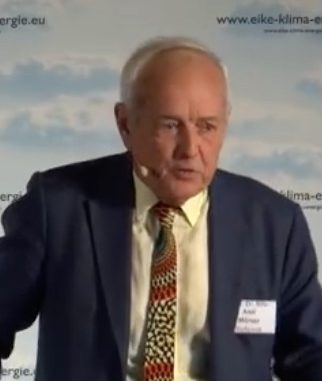 Prof. em. Nils Axel Mörner auf der 12. IKEK München, Bild EIKE
By EIKE
Mörner studied the Kattegat Sea between Denmark and Sweden. In this region sea level has not increased as announced by climate alarmists, but instead decreased. The actual oceanic increase in the past 125 years can be estimated as modest at 0.9 mm per year.
Stockholm's tide record is the second longest in Europe; the mean long-term change in sea level is a decline of 3.8 mm per year. The country itself is rising 4.9 mm per year due to the post-glacial rise of the continental landmass. The difference of 1.1 mm per year is the true oceanic component.
Nova Scotia: sea level 700mm higher back in 16th century
In addition to European locations, Mörner also looks at the Indian Ocean and the Pacific. He has just returned from the Ouvéa area off Nova Scotia. In the 17th century, the sea level was 70 cm higher, as confirmed by immutable geomorphological facts.
At that time, the "Little Ice Age" with larger glaciers prevailed in the Alps (as Professor Patzelt showed). How could more liquid water be present at the equatorial area at the same time?
Video of the lecture (in English!) by Prof. em. Axel Mörner at the 12th IKEK in Munich.
The phenomenon thus proves that the IPCC is wrong.
In warm times, the sea level does not rise globally. The reason for this is the so-called rotational eustasy of the planet: In the north, the volume of water increases a bit, at the equator it remains about the same.
Sea level at Fiji Islands, Maldives, Goa has dropped since 1950s
Also other islands or coastal regions show a sea level change, such as the island Ouvéa, also the Fiji Islands, the Maldives and Goa in India. Here, too, the oceans sank around 1700, rose around 1800 and sank again after 1950.
Solar driven
Global sea level changes followed the moon's tidal super cycles, which in turn stem from the large solar cycles. The sun also affects the Gulf Stream in the North Atlantic, which brings warmth to Western and Northern Europe. At maximum solar activity, the Gulf Stream flows northeast and sea level rises. During a solar minimum, the Gulf Stream flows from east to southeast and sea level drops to the north.
"CO2 no factor"
Mörner emphasized that the solar cycles and gravity of our neighboring planets, the solar wind and the moon, determined our climate and our environment. The carbon dioxide greenhouse effect has no place.
IPCC climate science in part "anti-scientific nonsense"
With his presentation in Munich, the speaker wanted to send a message to the world climate conference COP24 in Katowice / Poland, which took place shortly after the EIKE conference. That message is: "Some of their statements fall into the area of anti-scientific nonsense. The polar ice does not melt so quickly and the sea level does not rise in a short time. "
Mörner recommends observing physical laws and the evidence from nature for the procedure of determining sea level.
….
Rating: 0.0/10 (0 votes cast)


Only a minor point about GMOs today. Here's how the Ars Technica "On GMO safety, the fiercest opponents understand the least" opens: "Science is our most effective means of understanding the natural world, yet the public doesn't always accept the understanding that it produces." (Thanks to Ken Steele for the tip.)
If we start with scientism, as we do here, we're not likely to escape from it. Here we have the implicit premise that whatever scientists say about the "natural world" goes, and how dare you not accept their word for it. This implies we need to know who is a scientist and who isn't.
Researchers have been trying to figure out why there's a gap between science and the public for decades, an effort that is becoming increasingly relevant as the US seems to have a growing discomfort with facts in general. In some cases, the issue is clearly cultural: politics and religion appear to have strong influences on whether people accept the science on climate change and evolution, respectively.
The writer is either ignorant that disagreement among scientists on these topics exist, and therefore it is difficult for a citizen to know what to believe if all he has to go on is the words of disagreeing scientists, or the writer knows full well about the disagreements, but chooses to dismiss those scientists who do not agree with him as not real scientists. The No True Scientist Fallacy.
Enough. The writer is of no use in outlining the problem of uncertainty in GMOs, except where he points us to the Nature: Human Behavior paper "Extreme opponents of genetically modified foodsknow the least but think they know the most" by Philip M. Fernbach et al. Abstract:
There is widespread agreement among scientists that genetically modified foods are safe to consume and have the potential to provide substantial benefits to humankind. However, many people still harbour concerns about them or oppose their use. In a nationally representative sample of US adults, we find that as extremity of opposition to and concern about genetically modified foods increases, objective knowledge about science and genetics decreases, but perceived understanding of genetically modified foods increases. Extreme opponents know the least, but think they know the most. Moreover, the relationship between self-assessed and objective knowledge shifts from positive to negative at high levels of opposition. Similar results were obtained in a parallel study with representative samples from the United States, France and Germany, and in a study testing attitudes about a medical application of genetic engineering technology (gene therapy). This pattern did not emerge, however, for attitudes and beliefs about climate change.
This member of "humankind" (i.e. me) realizes this is yet another survey trying to be passed off as science, and so will be filled at least in large part with opinion masking as indisputable fact. If we removed surveys from the armamentarium of researchers, journals would be drained dry.
Skip that and let's think about arguments and evidence for and against GMOs.
Nassim Nicholas Taleb is agin them. Speaking about their (and other) potential evils, he and some pals said, "It is at the core of both scientific decision making and ancestral wisdom to take seriously absence of evidence when the consequences of an action can be large."
I publicly teased him about this absurd stance, saying that if his proposition were true then we should marshal all of mankind to protect against Black Swans From Outer Space. There is a complete absence of evidence such Black Swans exist, yet if they did, they would certainly peck every man, woman, and in-between, to death. This pecking would be a mighty large consequence. Send your donations to the Stop the Swans today. Your ancestors demand it.
Taleb's argument is the core of the so-called precautionary principle, which is the last refuge of the busybody who wants to ban or regulate something without having to point to evidence of the real need of the ban.
Now Taleb's error does not mean GMOs are safe in every potential aspect. Indeed, his argument says nothing about GMOs, or about anything else, either, and can't, because whatever the thing is can't have any evidence for it, or even against it. The precautionary principle is ever empty.
The authors of the Nature paper say "Genetically modified (GM) foods are judged by the majority of scientists to be as safe for human consumption as conventionally grown foods". This sentence is consistent with saying some scientists judge GMOs as unsafe for human consumption.
Very well, some scientists say yes, others now. How then does a civilian pick whom to believe? Should he trust the majority of scientists running around waving their wee p-values at us, or should instead trust Mary Shelley?
The authors of the paper are on the cheerleading side of science, naturally enough. They remember all the good things scientists have done, and there are many, and forget the bad. Some civilians are gloomier and recall all those ads for drugs that seem to spend an inordinate amount of time warning of side effects, effects which invariably include a worse state of the disease the scientific marvel was supposed to cure, ads followed seconds later by ads for lawyers: "Call us if you've taken this pill."
It can't be that scientists at this point understand all the long-term consequences of GMOs, for the pretty reason that we haven't got to the long term yet. This is no argument against GMOs, but if we accept that scientists make mistakes, and that the corporations who push these things want to make a buck, then caution is in order. Add to that all the dietary advice scientists have given us over the years that turned out to be absolute inversions of the truth. But then add to that the many benefits to farming and food production.
Point being, it's not absurd to take either side in this.


Natural steroid estrogens (NSEs), including free estrogens (FEs) and conjugated estrogens (CEs), are of emerging concern globally among public and scientific community due to their recognized adverse effects on human and wildlife endocrine systems in recent years. In this review, the properties, occurrence, sorption process, and transformation pathways of NSEs are clarified in the environment. The work comprehensively summarizes the occurrence of both free and conjugated estrogens in different natural and built environments (e.g., river, WWTPs, CAFOs, soil, and sediment). The sorption process of NSEs can be impacted by organic compounds, colloids, composition of clay minerals, specific surface area (SSA), cation exchange capacity (CEC), and pH value. The degradation and transformation of free and conjugated estrogens in the environment primarily involves oxidation, reduction, deconjugation, and esterification reactions. Elaboration about the major, subordinate, and minor transformation pathways of both biotic and abiotic processes among NSEs is highlighted. The moiety types and binding sites also would affect deconjugation degree and preferential transformation pathways of CEs. Notably, some intermediate products of NSEs still remain estrogenic potency during transformation process; the elimination of total estrogenic activity needs to be addressed in further studies. The in-depth researches regarding the behavior of both free and conjugated estrogens are further required to tackle their contamination problem in the ecosystem.
Graphical abstract

 Open Access
 This article is licensed under a Creative Commons Attribution-NonCommercial 3.0 Unported Licence.
| The hypothalamic-spinal dopaminergic system: a target for pain modulation Michelino Puopolo Neural Regeneration Research 2019 14(6):925-930 Nociceptive signals conveyed to the dorsal horn of the spinal cord by primary nociceptors are subject to extensive modulation by local neurons and by supraspinal descending pathways to the spinal cord before being relayed to higher brain centers. Descending modulatory pathways to the spinal cord comprise, among others, noradrenergic, serotonergic, γ-aminobutyric acid (GABA)ergic, and dopaminergic fibers. The contributions of noradrenaline, serotonin, and GABA to pain modulation have been extensively investigated. In contrast, the contributions of dopamine to pain modulation remain poorly understood. The focus of this review is to summarize the current knowledge of the contributions of dopamine to pain modulation. Hypothalamic A11 dopaminergic neurons project to all levels of the spinal cord and provide the main source of spinal dopamine. Dopamine receptors are expressed in primary nociceptors as well as in spinal neurons located in different laminae in the dorsal horn of the spinal cord, suggesting that dopamine can modulate pain signals by acting at both presynaptic and postsynaptic targets. Here, I will review the literature on the effects of dopamine and dopamine receptor agonists/antagonists on the excitability of primary nociceptors, the effects of dopamine on the synaptic transmission between primary nociceptors and dorsal horn neurons, and the effects of dopamine on pain in rodents. Published data support both anti-nociceptive effects of dopamine mediated by D2-like receptors and pro-nociceptive effects mediated by D1-like receptors. |
| Characteristics and advantages of adeno-associated virus vector-mediated gene therapy for neurodegenerative diseases Yuan Qu, Yi Liu, Ahmed Fayyaz Noor, Johnathan Tran, Rui Li Neural Regeneration Research 2019 14(6):931-938 Common neurodegenerative diseases of the central nervous system are characterized by progressive damage to the function of neurons, even leading to the permanent loss of function. Gene therapy via gene replacement or gene correction provides the potential for transformative therapies to delay or possibly stop further progression of the neurodegenerative disease in affected patients. Adeno-associated virus has been the vector of choice in recent clinical trials of therapies for neurodegenerative diseases due to its safety and efficiency in mediating gene transfer to the central nervous system. This review aims to discuss and summarize the progress and clinical applications of adeno-associated virus in neurodegenerative disease in central nervous system. Results from some clinical trials and successful cases of central neurodegenerative diseases deserve further study and exploration. |
| Gene expression changes in dorsal root ganglia following peripheral nerve injury: roles in inflammation, cell death and nociception Sarah L Martin, Adam J Reid, Alexei Verkhratsky, Valerio Magnaghi, Alessandro Faroni Neural Regeneration Research 2019 14(6):939-947 Subsequent to a peripheral nerve injury, there are changes in gene expression within the dorsal root ganglia in response to the damage. This review selects factors which are well-known to be vital for inflammation, cell death and nociception, and highlights how alterations in their gene expression within the dorsal root ganglia can affect functional recovery. The majority of studies used polymerase chain reaction within animal models to analyse the dynamic changes following peripheral nerve injuries. This review aims to highlight the factors at the gene expression level that impede functional recovery and are hence are potential targets for therapeutic approaches. Where possible the experimental model, specific time-points and cellular location of expression levels are reported. |
| Nicotinamide adenine dinucleotide phosphate oxidase activation and neuronal death after ischemic stroke Jiamei Shen, Radhika Rastogi, Xiaokun Geng, Yuchuan Ding Neural Regeneration Research 2019 14(6):948-953 Nicotinamide adenine dinucleotide phosphate oxidase (NOX) is a multisubunit enzyme complex that utilizes nicotinamide adenine dinucleotide phosphate to produce superoxide anions and other reactive oxygen species. Under normal circumstances, reactive oxygen species mediate a number of important cellular functions, including the facilitation of adaptive immunity. In pathogenic circumstances, however, excess reactive oxygen species generated by NOX promotes apoptotic cell death. In ischemic stroke, in particular, it has been shown that both NOX activation and derangements in glucose metabolism result in increased apoptosis. Moreover, recent studies have established that glucose, as a NOX substrate, plays a vital role in the pathogenesis of reperfusion injury. Thus, NOX inhibition has the potential to mitigate the deleterious impact of hyperglycemia on stroke. In this paper, we provide an overview of this research, coupled with a discussion of its implications for the development of NOX inhibition as a strategy for the treatment of ischemic stroke. Both inhibition using apocynin, as well as the prospect of developing more specific inhibitors based on what is now understood of the biology of NOX assembly and activation, will be highlighted in the course of our discussion. |
| Autophagy: novel insights into therapeutic target of electroacupuncture against cerebral ischemia/ reperfusion injury Ya-Guang Huang, Wei Tao, Song-Bai Yang, Jin-Feng Wang, Zhi-Gang Mei, Zhi-Tao Feng Neural Regeneration Research 2019 14(6):954-961 Electroacupuncture is known as an effective adjuvant therapy in ischemic cerebrovascular disease. However, its underlying mechanisms remain unclear. Studies suggest that autophagy, which is essential for cell survival and cell death, is involved in cerebral ischemia reperfusion injury and might be modulate by electroacupuncture therapy in key ways. This paper aims to provide novel insights into a therapeutic target of electroacupuncture against cerebral ischemia/reperfusion injury from the perspective of autophagy. Here we review recent studies on electroacupuncture regulation of autophagy-related markers such as UNC-51-like kinase-1 complex, Beclin1, microtubule-associated protein-1 light chain 3, p62, and autophagosomes for treating cerebral ischemia/reperfusion injury. The results of these studies show that electroacupuncture may affect the initiation of autophagy, vesicle nucleation, expansion and maturation of autophagosomes, as well as fusion and degradation of autophagolysosomes. Moreover, studies indicate that electroacupuncture probably modulates autophagy by activating the mammalian target of the rapamycin signaling pathway. This review thus indicates that autophagy is a therapeutic target of electroacupuncture treatment against ischemic cerebrovascular diseases. |
| Lessons from glaucoma: rethinking the fluid-brain barriers in common neurodegenerative disorders Francisco Javier Carreras Neural Regeneration Research 2019 14(6):962-966 Glaucoma has been recently characterized as a member of the group of anoikis-related diseases. Anoikis, a form of apoptosis, can be triggered by the unfastening of adherent junctions present in astrocytes. In those areas of the central nervous system in which the soma of the neurons or their axons and dendrites are metabolically dependent on the activity of astrocytes, a derangement of the lactate shuttle caused by a separation between the plasma membranes of neurons and astrocytes would result in metabolic impairment of the neurons themselves. In glaucoma, the triggering event has been attributed to the posterior deviation of aqueous humor towards the astrocyte-rich prelaminar tissue of the optic nerve head. The mean calcium content in the aqueous is able to interfere with calcium-dependent adherent junctions and induce anoikis of the astrocytes. As the cerebrospinal fluid has a similar base calcium concentration, a shunt of cerebrospinal fluid through the cerebral parenchyma would be able to interfere in the astrocytic architecture with dire consequences to the metabolically dependent neurons. Here the similitude between glaucoma, amyotrophic lateral sclerosis and Alzheimer’s disease are discussed and the concept of the break in the fluid-brain barrier, as an event separated from the blood-brain barrier, is stressed. |
| Busting the myth: more good than harm in transgenic cells Gonzalo Piñero, Patricia Setton-Avruj Neural Regeneration Research 2019 14(6):967-968 |
| Muscle secretion of toxic factors, regulated by miR126-5p, facilitates motor neuron degeneration in amyotrophic lateral sclerosis Roy Maimon, Eran Perlson Neural Regeneration Research 2019 14(6):969-970 |
| Preliminary in vitro evaluation of neuroprotective and monoamine oxidase type B inhibitory effects of newly synthesized 8-aminocaffeines Magdalena Kondeva-Burdina, Maya Georgieva, Alexandra Kasabova-Angelova, Virginia Tzankova, Alexander Zlatkov Neural Regeneration Research 2019 14(6):971-972 |
| Therapeutic exploitation of the S-nitrosoglutathione/S-nitrosylation mechanism for the treatment of contusion spinal cord injury Mushfiquddin Khan, Inderjit Singh Neural Regeneration Research 2019 14(6):973-974 |


