Thursday, January 3, 2019

Chemical and Mechanistic Analysis of Photodynamic Inhibition of Alzheimer’s β-Amyloid Aggregation

Chem. Commun., 2019, Accepted Manuscript
DOI: 10.1039/C8CC09288E, Communication
Minkoo Ahn, Byung Il Lee, Sean Chia, Johnny Habchi, Janet Kumita, Michele Vendruscolo, Christopher M Dobson, Chan Beum Park
The self-assembly of the beta-amyloid peptide (Aβ) into amyloid aggregates is a central phenomenon associated with Alzheimer's disease. Here, we report chemical modifications of key amino acid residues of Aβ42...
The content of this RSS Feed (c) The Royal Society of Chemistry


from Journals via hj on Inoreader https://rsc.li/2SxTu3y

Successful start-up of the anammox process in constructed wetland microcosms: influence of the electron acceptors on performance, microbial community, and functional genes

Abstract

Nitrogen removal by anammox process has been recognized as efficient, cost-effective, and low-energy alternative removal. The longer start-up periods of anammox process hindered the widespread application of anammox-based technology. In this study, four identical unplanted subsurface-flow constructed wetlands (USFCWs) were built up to investigate the effects of electron acceptors (Fe3+, Mn4+, SO42−) on the start-up of anammox process. Results indicated that the start-up time of anammox process was shortened to 105 days in R1 (with Fe3+ addition) and 110 days in R2 (with Mn4+ addition) with nitrogen removal efficiencies of above 75%, compared with 148 days in R0 (control). The addition of SO42− had no significant effect on start-up process. High-throughput sequencing results demonstrated that Shannon index increased significantly from 2.87 (R0) to 5.08 (R1) and 5.00 (R2), and the relative abundance of Candidatus Anammoxoglobus rose from 3.6 to 5.3% in R1. Denitratisoma increased significantly in R2 under addition of Mn4+, which was beneficial for the occurrence of anammox process. The functional genes that related to signal transduction mechanisms and secondary metabolite biosynthesis, transport, and catabolism were upregulated after addition of electron acceptors. These results demonstrated that adding electron acceptors Fe3+ or Mn4+ could be an effective way to accelerate the start-up of anammox process.

Graphical abstract

ᅟ


from Climate Change Skeptic Blogs via hj on Inoreader http://bit.ly/2QjcHnH

The role of the estuarine zone on the river particulate toxicity

Abstract

Annually, a great volume of sediment and suspended particulate matters (SPMs) enters into the seas through estuaries. In the estuarine zone, metals present in SPMs may undergo conservative or non-conservative changes. In the present study, oxidation-reduction potential (ORP) as the most complex chemical parameter of open sea water and its relationship with the behavior of t metals in the estuarine area were investigated. Dissolved oxygen was used as a strong oxidant to increase the ORP. According to the absorption and desorption experiment, Mn and Cu are desorbed from SPMs during estuarine mixing. However, Zn and Pb are absorbed into the SPMs. In addition, the analysis results were indicative of the conservative behavior of Ni. The results of the three-step chemical partitioning of the SPMs revealed that Mn and Cu are desorbed from the SPMs physically, whereas Zn is absorbed into the SPMs chemically. Also, results showed that Pb is physically desorbed from the SPMs, while it is absorbed into SPMs chemically. All metals, except for Ni and Zn, whose reactions with the SPMs are not affected by an increase in the ORP, are affected by the escalation of this parameter.


from Climate Change Skeptic Blogs via hj on Inoreader http://bit.ly/2VrVjkr

Removal of azo dye from water via adsorption on biochar produced by the gasification of wood wastes

Abstract

It was the aim of this work to evaluate the adsorptive performance of the biochar obtained from the gasification of wood residues onto a solution of Indosol Black NF1200 dye. The study was performed by means of factorial design 22, having as control variables: pH and adsorbent's granulometry. Batch tests were carried out at 200 rpm for 3 h (T = 28 °C). As output variable, the percentage removal of dye was determined. The best operating conditions were pH = 2 and 100 mesh granulometry. Also, adsorbent dosage studies were carried out, as well as equilibrium and adsorption kinetics. Both kinetics and equilibrium of adsorption tests were proceeded in basic and acid medium. For a basic pH value (pH = 12), it was concluded the equilibrium was reached in about 3 h of experiment, the experimental qmax value was near 12 mg g−1, and the equilibrium data fitted the Langmuir model. On the other hand, for tests with pH = 2, the equilibrium was reached after 5 min of experiment, the experimental qmax value was over 185 mg g−1, and the equilibrium data fitted both the Langmuir and Freundlich models. Thus, the biochar produced via gasification of wood wastes appears to be a promising adsorbent for the removal of azo dyes from textile wastewater, especially when working at lower pH values. Also, for a 10-kg/h consumption of wood residue, approximately 10 kW of energy is generated and 1 kg of biochar is produced, which represents another advantage from the environmentally friendly point of view.

Graphical abstract


from Climate Change Skeptic Blogs via hj on Inoreader http://bit.ly/2Qld7do

Global climate change is political not scientific

"The whole aim of practical politics is to keep the populace alarmed (and hence clamorous to be led to safety) by menacing it with an endless series of hobgoblins, all of them imaginary." H. L. Mencken

"The urge to save humanity is almost always a false front for the urge to rule." H. L. Mencken

Well before the climate change scare started, we were warned in 1961:

"… [In] the technological revolution during recent decades… research has become central ... complex, and costly. A steadily increasing share is conducted for, by, or at the direction of, the Federal government ... the solitary inventor ... has been overshadowed by task forces of scientists in laboratories and testing fields ... the free university, historically the fountainhead of free ideas and scientific discovery, has experienced a revolution in the conduct of research. Partly because of the huge costs involved, a government contract becomes virtually a substitute for intellectual curiosity. The prospect of domination of the nation's scholars by Federal employment, project allocations, and the power of money is ever present and is gravely to be regarded."
- President Eisenhower in his Farewell address

~~~~~~~~~~~~~

His words have been proven remarkably prophetic. What follows are quotes from some of the leaders in that movement. It exposes their true motivations and intentions. It proves this is political not scientific.

ONE WORLD GOVERNANCE IDEAS BASED ON POPULATION AND RESOURCE WORRIES

"The common enemy of humanity is man. In searching for a new enemy to unite us, we came up with the idea that pollution, the threat of global warming, water shortages, famine and the like would fit the bill."
- The Club of Rome Premier environmental think-tank and consultants to the United Nations.

~~~~~~~~~~~~~~~~~~~

"We've got to ride this global warming issue. Even if the theory of global warming is wrong, we will be doing the right thing in terms of economic and environmental policy."
- Timothy Wirth, President of the UN Foundation

~~~~~~~~~~~~~~~~~~~

"No matter if the science of global warming is all phony...climate change provides the greatest opportunity to bring about justice and equality in the world."
- Christine Stewart, former Canadian Minister of the Environment

~~~~~~~~~~~~~~~~~~~

THE USE OF MODELS TO HYPE THREATS

"The data doesn't matter. We're not basing our recommendations on the data. We're basing them on the climate models."
- Prof. Chris Folland, Hadley Centre for Climate Prediction and Research

~~~~~~~~~~~~~~~~~~~

"The models are convenient fictions that provide something very useful."
- Dr David Frame, climate modeler, Oxford University

~~~~~~~~~~~~~~~~~~~

"I believe it is appropriate to have an 'over-representation' of the facts on how dangerous it is, as a predicate for opening up the audience."
- Al Gore, Climate Change activist

~~~~~~~~~~~~~~~~~~~

"It doesn't matter what is true, it only matters what people believe is true."
- Paul Watson, co-founder of Greenpeace

~~~~~~~~~~~~~~~~~~~

"The only way to get our society to truly change is to frighten people with the possibility of a catastrophe."
- Emeritus professor Daniel Botkin

~~~~~~~~~~~~~~~~~

"We are on the verge of a global transformation. All we need is the right major crisis..."
- David Rockefeller, Club of Rome executive member

~~~~~~~~~~~~~~~~~

'The goal now is a socialist, redistributionist society, which is nature's proper steward and society's only hope."

- David Brower, founder of Friends of the Earth

~~~~~~~~~~~~~~~~~

"If we don't overthrow capitalism, we don't have a chance of saving the world ecologically. I think it is possible to have an ecologically sound society under socialism.  I don't think it is possible under capitalism"
- Judi Bari, Principal organizer of Earth First!

~~~~~~~~~~~~~~~~~

"Isn't the only hope for the planet that the industrialized civilizations collapse? Isn't it our responsibility to bring that about?"
- Maurice Strong, Founder of the UN Environment Programme

~~~~~~~~~~~~~~~~~

"A massive campaign must be launched to de-develop the United States. De-development means bringing our economic system into line with the realities of ecology and the world resource situation."

- Paul Ehrlich, Professor of Population Studies

~~~~~~~~~~~~~~~~~

"The only hope for the world is to make sure there is not another United States. We can't let other countries have the same number of cars, the amount of industrialization, we have in the US. We have to stop these Third World countries right where they are."
- Michael Oppenheimer, Environmental Defense Fund, Princeton Professor

~~~~~~~~~~~~~~~~~~

"Global Sustainability requires the deliberate quest of poverty, reduced resource consumption and set levels of mortality control."

- Professor Maurice King

~~~~~~~~~~~~~~~~~~

"We must make this an insecure and inhospitable place for capitalists and their projects. We must reclaim the roads and plowed land, halt dam construction, tear down existing dams, free shackled rivers and return to wilderness millions of acres of presently settled land."
- David Foreman, co-founder of Earth First!

~~~~~~~~~~~~~~~~~~~

"Complex technology of any sort is an assault on human dignity. It would be little short of disastrous for us to discover a source of clean, cheap, abundant energy, because of what we might do with it."
- Amory Lovins, Rocky Mountain Institute

~~~~~~~~~~~~~~~~~~~

"Giving society cheap, abundant energy would be the equivalent of giving an idiot child a machine gun."

- Prof Paul Ehrlich, Stanford University

~~~~~~~~~~~~~~~~~~~~

"The future is to be [One] World Government with central planning by the United Nations. Fear of environmental crises - whether real or not - is expected to lead to compliance."
- Former Washington State Democratic governor Dixy Lee Ray

~~~~~~~~~~~~~~~~~~~~

"Urgent and unprecedented environmental and social changes challenge scientists to define a new social contract...a commitment on the part of all scientists to devote their energies and talents to the most pressing problems of the day, in proportion to their importance, in exchange for public funding."
NOAA's Administrator Jane Lubchenko, when she was president of AAAS in 1999

~~~~~~~~~~~~~~~~~~~~~

"Our aim is not to save the world from ecological calamity but to change the global economic system… This is probably the most difficult task we have ever given ourselves, which is to intentionally transform the economic development model, for the first time in human history." In simpler terms, replace free enterprise, entrepreneurial capitalism with UN-controlled centralized, One World government and economic control.
- UN Climate Chief Christiana Figueres

~~~~~~~~~~~~~~~~~~~~~

"One has to free oneself from the illusion that international climate policy is environmental policy. "It is not. It is actually about how "we redistribute de facto the world's wealth."
- IPCC official Ottmar Edenhofer

~~~~~~~~~~~~~~~~~~~~~

THE FACT THE MODELS AND ALARMIST CLAIMS ARE FAILING MISERABLY IS IGNORED VIOLATING THE SCIENTIFIC METHOD

The great Nobel Laureate Physicist Richard Feynman taught students: "If a theory disagrees with experiment (or data), it's wrong… That simple statement is the key to science. It doesn't make any difference how beautiful your guess is, it doesn't matter how smart you are, or what your name is… If [your hypothesis] disagrees with experiment, it's wrong."

~~~~~~~~~~~~~~~~~~~~~

Einstein schooled his fellow scientists: "A model or a hypothesis cannot 'prove' anything. But data can invalidate a hypothesis or model. It takes only one experiment to prove me wrong."

~~~~~~~~~~~~~~~~~~~~~~

image
Enlarged

"Whenever you hear the consensus of scientists agrees on something or other, reach for your wallet, because you're being had. Let's be clear: the work of science has nothing whatever to do with consensus. Consensus is the business of politics. In science, consensus is irrelevant. What is relevant is reproducible results. The greatest scientists in history are great precisely because they broke with the consensus. (Galileo, Newton, Einstein, etc). There is no such thing as consensus science. If it's consensus, it isn't science. If it's science, it isn't consensus. Period."

See Dr. Patrick Moore, ecologist, radical environmental activist and co-founder of Greenpeace talk about his journey to the truth and skepticism. He speaks about the benefits of the demonized gas CO2.


Confessions of a Greenpeace Dropout - Dr Patrick Moore

~~~~~~~~~~~~~~~~~~~~~~~~~~

"The entire Apollo project to put a man on the moon cost less than $200 billion. We are spending twice that much every year on climate change. This tsunami of government money distorts science in hidden ways that even the scientists who are corrupted often don't appreciate. If you are a young eager-beaver researcher who decides to devote your life to the study of global warming, you're probably not going to do your career any good or get famous by publishing research that the crisis isn't happening."
- Stephen Moore, author of Trumponomics: Inside the America First Plan to Revive Our Economy

~~~~~~~~~~~~~~~~~~~~~~~~~~

"Future generations will wonder in bemused amazement that the early 21st century's developed world went into hysterical panic...on the basis of gross exaggerations of highly uncertain computer projections...proceeded to contemplate a roll-back of the industrial age."
- MIT professor of atmospheric science Richard Lindzen

~~~~~~~~~~~~~~~~~~~~~~~~~~


- Nobel Laureate physicist Ivar Giaever changes his mind on global warming, recognizes it as a psuedoscience.

-------------------

Above we have shown in their own words how the indoctrination of the world on the alleged perils of global warming evolved.

My philosophy when I taught college was to show my students how to think - not what to think. As Socrates said, "Education is the kindling of a flame, not the filling of a vessel." I told my students that data is king, and models are only useful tools. Any model's output or any theory needed to be examined and validated using data, and must always used with caution.  We have found no evidence here and here and even more here and here) that any of the claims are right.

See Stephen Moore' right-on assessment here.


from Climate Change Skeptic Blogs via hj on Inoreader http://www.icecap.us/

[ASAP] Computer Simulation of the Effect of Wetting Conditions on the Solvation Force and Pull-Off Force of Water Confined between Two Flat Substrates

TOC Graphic

The Journal of Physical Chemistry C
DOI: 10.1021/acs.jpcc.8b09907
jpccck?d=yIl2AUoC8zA


from Journals via hj on Inoreader http://bit.ly/2CMzlBB

[ASAP] Simultaneous Adsorption and Incorporation of Sr2+ at the Barite (001)–Water Interface

TOC Graphic

The Journal of Physical Chemistry C
DOI: 10.1021/acs.jpcc.8b08848
jpccck?d=yIl2AUoC8zA


from Journals via hj on Inoreader http://bit.ly/2COVFud

[ASAP] Effect of Electron Irradiation on the Transport and Field Emission Properties of Few-Layer MoS2 Field-Effect Transistors

TOC Graphic

The Journal of Physical Chemistry C
DOI: 10.1021/acs.jpcc.8b09089
jpccck?d=yIl2AUoC8zA


from Journals via hj on Inoreader http://bit.ly/2TtOblX

[ASAP] Understanding the Lithium Storage Mechanism of Ti3C2T MXene

TOC Graphic

The Journal of Physical Chemistry C
DOI: 10.1021/acs.jpcc.8b10790
jpccck?d=yIl2AUoC8zA


from Journals via hj on Inoreader http://bit.ly/2ToLFNN

[ASAP] Evidence, Manipulation, and Termination of pH ‘Nanobuffering’ for Quantitative Homogenous Scavenging of Monoclonal Antibodies

TOC Graphic

ACS Nano
DOI: 10.1021/acsnano.8b07202
ancac3?d=yIl2AUoC8zA


from Journals via hj on Inoreader http://bit.ly/2BXfHkC

[ASAP] Swimming to Stability: Structural and Dynamical Control Active Doping

TOC Graphic

ACS Nano
DOI: 10.1021/acsnano.8b07421
ancac3?d=yIl2AUoC8zA


from Journals via hj on Inoreader http://bit.ly/2Ra3gwj

[ASAP] Remarkable Electronic Effect on the Tetra(thienyl)porphyrins

TOC Graphic

Inorganic Chemistry
DOI: 10.1021/acs.inorgchem.8b01032
inocaj?d=yIl2AUoC8zA


from Journals via hj on Inoreader http://bit.ly/2BWyRa7

[ASAP] Enhancing the Plasmon Resonance Absorption of Multibranched Gold Nanoparticles in the Near-Infrared Region for Photothermal Cancer Therapy: Theoretical Predictions and Experimental Verification

TOC Graphic

Chemistry of Materials
DOI: 10.1021/acs.chemmater.8b04299
cmatex?d=yIl2AUoC8zA


from Journals via hj on Inoreader http://bit.ly/2s7WE2o

Optimization of a laccase-mediator system with natural redox-mediating compounds for pesticide removal

Abstract

This study proposed the optimization of a laccase-mediator system to reduce pesticide levels (bentazone, carbofuran, diuron, clomazone, tebuconazole, and pyraclostrobin) on aqueous medium. Firstly, the mediator concentration of 1 mM was established (average removal of 36%). After that, seven redox-mediating compounds, namely, 2,20-azino-bis(3-ethylbenzothiazoline-6-sulfonic acid) diammonium salt, caffeic acid, chlorogenic acid, p-coumaric acid, ferulic acid, gallic acid, protocatechuic acid, and vanillin, were compared regarding their removal efficiency. The highest removal (77%) was achieved with the laccase-vanillin system. After this screening, the optimization was carried out by a 22 full factorial design. Variables under study were the enzyme (laccase) activity and vanillin concentration. Maximum removal (53–85%) was achieved with 0.95 U/mL laccase and 1.8 mM vanillin. Pesticide removal in reaction media was fitted to the first-order kinetics equation with an average half-time life of 2.2 h. This is the first study of the use of this natural compound as a mediator in the degradation of the pesticides under investigation. The results of this study contribute, with alternative methods, to decrease pesticide levels since they are highly persistent in aqueous samples and, as a result, mitigate the environmental impact.


from Climate Change Skeptic Blogs via hj on Inoreader http://bit.ly/2VtQlnb

Modeling and performance improvement of an anaerobic–anoxic/nitrifying-induced crystallization process via the multi-objective optimization method

Abstract

The trade-off between energy savings and emission reductions of an activated sludge process is a multi-objective problem relating to several potentially conflicting objectives. Therefore, the optimal modification of an anaerobic–anoxic/nitrifying/induced crystallization (A2N-IC) process by multi-objective optimization method was studied in this work. The multi-objective optimization model comprised three evaluative indices, (effluent quality (EQ), operation cost (OC), and total volume (TV) of structures), and 14 process parameters (decision variables) solving by non-dominated sorting genetic algorithm II (NSGA-II) in MATLAB. The trade-off relationships among EQ, OC, and TV were investigated under 30 days of dynamic influent with different constraint conditions. A series of Pareto solutions were obtained, and one Pareto solution was selected for further analysis. Results showed improved effluent concentrations of chemical oxygen demand (COD), total nitrogen (TN), ammonia-nitrogen (NH4+-N), and total phosphorous (TP) under the optimized strategy compared to the original strategy, where the average effluent concentrations decreased by 2.22, 0.47, 0.13, and 0.02 mg/L, respectively. The values of EQ and OC decreased from 0.015 kg/day and 0.15 ¥/m3 to 0.0023 kg/day and 0.12 ¥/m3, respectively, while the TV increased from 0.31 to 0.33 m3. These results indicated that the multi-objective optimization method is useful for modifying activated sludge processes.


from Climate Change Skeptic Blogs via hj on Inoreader http://bit.ly/2Qm6Td1

High-throughput analysis of the effects of different fish culture methods on antibiotic resistance gene abundances in a lake

Abstract

Freshwater lakes are important reservoirs for antibiotic resistance genes (ARGs). In this study, we determined the ARG profiles in water samples from Ying Lake, China, using high-throughput quantitative PCR. The high prevalence of ARGs suggested significant pollution with ARGs in the study area, where the ARG diversity and abundance were greater in an area with box-type fish farming than an area with fenced fish farming. Network analysis indicated the widespread co-occurrence of ARGs and mobile genetic elements. cphA-01, blalMP02, and blaCMY202 were identified as adequate indicator genes for estimating the total ARG abundances. Redundancy analysis indicated that changes in the microbial communities caused by variations in the physicochemical parameters with different fish culture methods mainly determined the ARGs in the lake system. Thus, analyzing the factors that affect ARGs provided novel insights into the mechanisms responsible for the maintenance and propagation of ARGs in a lake.


from Climate Change Skeptic Blogs via hj on Inoreader http://bit.ly/2Vuu4pE

How do fungal communities and their interaction with bacterial communities influence dissolved organic matter on the stability and safety of sludge compost?

Abstract

This study was conducted to assess the effect of fungal communities and their interaction with bacterial communities on the dissolved organic matter (DOM) transformation for the stability and safety of sludge composting. The results showed that fungal community had strong shifts in diverse stages of sludge composting along with the changes of temperature. Correlation analysis demonstrated that fungal communities had significant connections with bacterial communities during composting but were not directly related to the indicators of phytotoxicity and maturity. Variance partitioning analysis suggested that the interactions of fungal and bacterial communities had the biggest contribution (49.75%) to composting stability and safety. Based on structural equation modeling, the possible way of fungal community participated in the transformation of DOM components and the formation of humic-like substances of DOM by interacting with bacterial community was proposed, which will provide important information for understanding the biotic interaction in composting and improving composting fermentation process.


from Climate Change Skeptic Blogs via hj on Inoreader http://bit.ly/2Qj6SXn

A new remote sensing index based on the pressure-state-response framework to assess regional ecological change

Abstract

Ecological indicators have widespread appeal to scientists, environmental managers, and the general public. Remote sensing is unique in its capability to record variety of spatio-temporal information on land surface with complete coverage, especially with regard to larger spatial scales, which has been proven to be an effective data source to create indicators to rapidly identify regional eco-environment. In this paper, a new index, remote sensing based ecological index (RSEI) based on the pressure-state-response (PSR) framework, was applied to assess regional ecological changes in Fuzhou City of Fujian Province, southeastern China, using Landsat ETM+/OLI/TIRS images. Taking the advantages of being totally free of artificial interference in the calculation using principal components analysis (PCA) to assign weights of each variable, the RSEI can assess the regional ecological status more objectively and easily. The effectivity of the new index was validated by four approaches, including point-based, classification-based, correlation-based, and urban-rural-gradient-based comparisons. The case study showed that Fuzhou has witnessed ecological improvement during the study period, with the value of RSEI increasing from 0.663 in 2000 to 0.675 in 2016. Spatial variation analysis showed that the poor level of RSEI distributed mostly in the central urban areas, and the ecological degradation was attributed to the fast expansion of the built-up area, characterized by increasing greatly in the value of the normalized differential built up and soil index (NDBSI) in such areas.


from Climate Change Skeptic Blogs via hj on Inoreader http://bit.ly/2VtQiaZ

Magnetic Fe 3 O 4 assembled on nZVI supported on activated carbon fiber for Cr(VI) and Cu(II) removal from aqueous solution through a permeable reactive column

Abstract

Magnetic Fe3O4 assembled on nanoscale zero-valent iron (nZVI) supported on an activated carbon fiber (ACF) to form nanoscale magnetic composites (nZVI-Fe3O4/ACF) for removing Cr(VI) and Cu(II) from aqueous solution through a permeable reactive column was synthesized via an in situ reduction method. The nZVI-Fe3O4/ACF composites and the interaction between nZVI-Fe3O4/ACF and both Cr and Cu ions were characterized by field emission scanning electron microscopy (FESEM) with EDX, TEM, XRD, and XPS. Batch experiments were used to analyze the effects of main factors on Cr(VI) removal and investigate the simultaneous removal of Cr(VI) and Cu(II) through a permeable reactive column. The results indicated that the ACF and Fe3O4 can inhibit the agglomeration and enhance the dispersibility of nZVI, and Fe3O4 and nZVI displayed good synergetic effects. The removal efficiency of Cr(VI) improved with the increase amount of Fe3O4 in the nZVI-Fe3O4/ACF composites. With low initial concentration of Cr(VI) and acidic conditions, ~ 90% of 20.0 mg·L−1 Cr(VI) in the solution was removed after 60 min. The removal of Cr(VI) was also affected by coexisting ions. The removal efficiency of 10.0 mg·L−1 Cu(II) was ~ 100% after 45 min of reaction, and the presence of Cu(II) can accelerate the reduction of Cr(VI). The simultaneous removal mechanisms of Cr(VI) and Cu(II) by the nZVI-Fe3O4/ACF composites also were proposed.


from Climate Change Skeptic Blogs via hj on Inoreader http://bit.ly/2Qhk7Id

Trump’s Science Adviser Confirmed And His Views On Climate Change Are Refreshing

Small believer maybe? [image credit: businessinsider.com / CNN]


Science is a general term, and opinions about what is or isn't good science can, and regularly do, differ so talking about 'the science' is a bit risky. The new adviser seems to have recognized this but the we-know-it-all climate crowd, who have been used to getting their own way, are unlikely to be impressed.

OU meteorologist Kelvin Droegemeier has been confirmed to be President Trump's top science adviser, the first time the position was held by a climatologist, says Climate Change Dispatch.

The Senate used a voice vote — an expedited process for uncontroversial nominees — to approve Droegemeier on Wednesday night, the final night of the current Congress.

Droegemeier was nominated Aug. 1 to be director of the Office of Science and Technology Policy. Trump has worked without a formal science adviser during the first two years of his presidency.

It will not be Droegemeier's first time advising a government executive. He was named Gov. Mary Fallin's secretary of science and technology in March 2017.

He also served for 12 years on the National Science Board under Presidents George W. Bush and Barack Obama.

In August, Droegemeier stepped down as vice president for research at the University of Oklahoma to prepare for the Senate confirmation process.

Later that month, he faced a confirmation hearing in the Senate Commerce Committee, where he defended scientific freedom.

"I welcome all points of view…science rarely provides immutable answers about anything," Droegemeier said in response to a question about climate change.

"I think science is the loser when we tend to vilify and marginalize other voices," he later added, "and I think we have to have everyone at the table talking about these things and let science take us where it takes us."

Continued here.


from Climate Change Skeptic Blogs via hj on Inoreader http://bit.ly/2RxOTRy

[ASAP] Nonresonant Photons Catalyze Photodissociation of Phenol

TOC Graphic

Journal of the American Chemical Society
DOI: 10.1021/jacs.8b11695
jacsat?d=yIl2AUoC8zA


from Journals via hj on Inoreader http://bit.ly/2CO7dhe

[ASAP] Direct Carbon Isotope Exchange through Decarboxylative Carboxylation

TOC Graphic

Journal of the American Chemical Society
DOI: 10.1021/jacs.8b12035
jacsat?d=yIl2AUoC8zA


from Journals via hj on Inoreader http://bit.ly/2Tr0GOW

Exaggerating Green Energy Supply

dave_gangland

As noted here before, public opinion surveys are often "push polls", raising issues like climate change as part of an effort to promote public concern.  Such surveys also inform activists how successfully or not has been the media messaging in generating belief and support for climate policy proposals.

Sometimes the questionnaires are manipulated to show the greatest possible public awareness and support..  For example, see:  The Art of Rigging Climate Polls.

Other times, the survey is used to chide the public for failing to buy into claims and propaganda prominently advanced in the media.  For example, see: "Hottest Year" Misdirection, where mainstream media claims 17 of the last 18 years were the hottest on record, while the public in 37 countries guessed only 9.  After checking the data, the correct answer is more likely 5.

That same survey, Perils of Perceptions, reported that in most countries the public overestimates how much green energy they consume.  That finding is the subject of this post.  As we will see, energy from renewables is perceived to be much higher than numbers from the World Bank.  And since those numbers are themselves exaggerated, the gap between virtuous green behavior and performance is even greater than stated.

The renewable energy finding from Ipsos (here):

The majority of countries overestimate the amount of energy used that comes from renewable sources in their country. The average guess is 26% when it's actually only 19%. Malaysia, Saudi Arabia, China and Singapore were the furthest out; some countries, though, actually underestimate how much progress they have made with renewables, such as Sweden and Montenegro.

Now, 19% of energy consumed coming from renewables looks high to me, so lets explore two of the countries:  Canada and the Netherlands.

First, The Canadian Story on Green Energy Supply

energyuse

Question is Framed to be Misleading

Note that wind and solar power are presented as examples of renewable energy sources, when in reality hydro and nuclear are much larger sources of power (electricity). Note also respondents are led to confuse power with total energy, which is a much larger amount.

What is the Reality of Canadian Energy Supply (Consumption)

World Bank shows 22% of Canada's total energy consumption was from renewables in 1990 and 2015.

Let test that number against the Canadian Energy Fact Book 2016–2017 (which presents 2015 as the latest statistics).  The categories are defined nicely in this diagram:
Energy FlowWorking from the top down, first is the mix of total primary energy supply by source:
Canada Primary Energy Supply
In this fact book, energy supply is equivalent to energy consumed, since it is calculated after adjusting for energy imports and exports. Note that 17.7% is the amount of energy from renewables, and hydro is 11.6%.   Let's see how much of renewable energy comes from wind and solar:
Canada Renewable EnergySo Canadians actually consume 4.35% of their renewable energy from wind and solar. 92% of Canadian renewable energy comes from the traditional sources:  Hydro dams and burning wood.

Combining the two tables, we see that 80% of the Other Renewables is solid biomass (wood), which leaves at most 1% of Canadian total energy supply coming from wind and solar.

Second, the Netherlands Green Energy Story

According to the Ipsos Perils of Perception survey, respondents from the Netherlands said on average 22% of their energy is Green, while the World Bank says only 6% comes from Green sources.  Last year there was a provocative and entertaining analysis of Dutch perceptions versus green energy realities broadcast on a popular Sunday morning TV show.  The episode was called Green Electrical Shocks, and is provided below for your enjoyment and edification.

Green Electrical Shocks

Reasons-why-you-are-Seeing-Sparks-on-You

On Sunday Feb.4, 2018, a weekly news program aired in the Netherlands on the titled subject. H/T Climate Scepticism. The video clip is below with English subtitles. For those who prefer reading, I provide the substantial excerpts from the program with my bolds.

How many of you have Green Electricity? I will estimate 69%
And how much nationally? Oh, 69%!
So we are very average, and in a good way, because the climate is very important.

Let me ask: Green electricity comes from . . .?
Yes, electricity produced from windmills and solar panels.
Nearly 2/3 of the Dutch are using it. That's the image.

Well I have green news and bad news.
The green news: Well done!
The bad news: It is all one big lie.
Time for the Green Electrical Shocks.

Shock #1: The green electricity from your socket is not green.
When I switched to green electricity I was very proud.
I thought, Yes, well done! The climate is getting warmer, but not any more thanks to me.

Well, that turned out to be untrue.
All producers deliver to one communal grid. Green and grey electricity all mix.
The electricity you use is always a mix of various sources.
OK. It actually makes sense not to have separate green and grey cables for every house.
So it means that of all electricity, 69% is produced in a sustainable way. But then:
GESCS_Colour_For_Roundel-280x280.png

Shock #2: Green Electricity is mostly fake.
Most of the green electricity we think we use comes from abroad.
You may think: So what. Green is green.

But that electricity doesn't come from abroad, it stays abroad.
If you have green electricity at home, it may mean nothing more than that your supplier has bought "green electricity certificates".

In Europe green electricity gets an official certificate,
Instead of selling on the electricity, they sell on those certificates.
Norway, with its hydro power, has a surplus of certificates.
Dutch suppliers buy them on a massive scale, while the electricity stays in Norway.

EJ-Basler-Renewable-Energy-Certificate-0

The idea was: if countries can sell those certificates, they can make money by producing more green electricity.
But the Norwegians don't produce more green electricity.
But they do sell certificates.

The Dutch suppliers wave with those certificates, and say Look! Our grey electricity is green.
Only one country has produced green electricity: Norway.
But two countries take the credit.
Norway, because they produce green electricity, and the Netherlands because, on paper, we have green electricity. Get it? That's a nice deal.

More and more countries sell those certificates. Italy is now the top supplier.
We buy fake green electricity from Italy, like some kind of Karma ham.

Now, let's look again at the green electricity we all think we use.
So the real picture isn't 69%. If you cancel the certificates, only 21% of electricity is really green.
Nowadays you can even order it separately if you don't want to be part of that Norway certificates scam.
You may think: 21% green is still quite a lot. But it is time for:

Netherlands-4.jpg

Shock #3: Not all energy is electricity.
If you talk about the climate, you shouldn't just consider electricity but all energy.
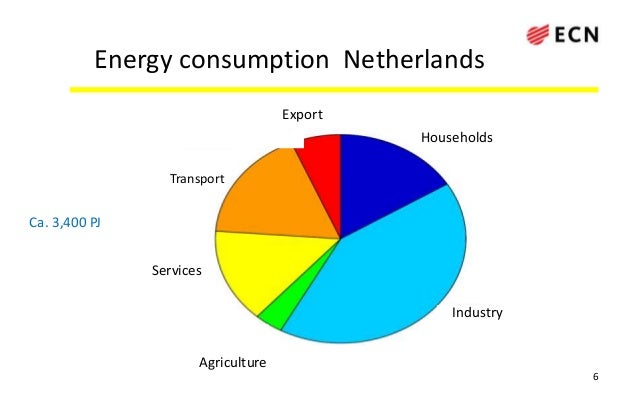
When you look at all energy, like factories, cars, trains, gas fires, then the share of consumer electricity is virtually nothing.
If you include everything in your calculation, it turns out that only 6% of all the energy we use in the Netherlands is green. It is a comedy, but wait:

Trees converted into pellets by means of petroleum powered machinery.

Shock #4: Most green energy doesn't come from sun or wind, like you might think.
Even the 6%, our last green hope, is fake. According to the CBS we are using more sun and wind energy, but most of the green energy is produced by the burning of biomass.
Ah, more than half of the 6% green energy is biomass.

Ridiculous. What is biomass really? It is organic materials that we encounter every day.
Like the content of a compost heap. How about maize leaves or hay?
The idea behind burning organic materials is that it will grow up again.
So CO2 is released when you burn it, but it will be absorbed again by new trees.

However, there is one problem. The forest grows very slowly and our power plants burn very fast.
This is the fatal flaw in the thinking about biomass. Power plants burn trees too fast, so my solution: slow fire. Disadvantage: it doesn't exist. So this is our next shock.

Shock#5: Biomass isn't all that sustainable.
It's getting worse. There aren't enough trees in the Netherlands for biomass.
We can't do it on our own. We don't have enough wood, so we get it from America.

article-2581887-1C5297C900000578-684_634

In the USA forests are cut at a high rate, Trees are shredded and compressed into pellets.
These are shipped to the Netherlands and end up in the ovens of the coal plants.
It's a disaster for the American forests, according to environmental groups.

So we transport American forests on diesel ships to Europe.
Then throw them in the oven because it officially counts as green energy.
Only because the CO2 released this way doesn't count for our total emissions.

In reality biomass emits more CO2 than natural gas and coal.
These are laws of nature, no matter what European laws say.
At the bottom line, how much sustainable energy do we really have in the Netherlands?
Well, the only real green energy from windmills, solar panels etc. Is only 2.2%. of all the energy we use.
mr-paul-van-den-oosertkamp-renewable-ene

In Conclusion
So the fact that 2/3 of the audience and of all Dutch people use green electricity means absolutely nothing. It's only 2.2%, and crazier still, the government says it should be at 14% by 2020.
They promised: to us, to Europe, to planet Earth: 14 instead of 2.2.

Instead of making a serious attempt to save the climate, they are only working on accounting tricks, like buying pieces of paper in Norway and burning American forests.
They are only saving the climate on paper.

Summary Comment

climate-stool.png?w=1000&h=716

As the stool above shows, the climate change package sits on three premises. The first is the science bit, consisting of an unproven claim that observed warming is caused by humans burning fossil fuels. The second part rests on impact studies from billions of research dollars spent uncovering any and all possible negatives from warming. And the third leg is climate policies showing how governments can "fight climate change."

It is refreshing to see more and more articles by people reasoning about climate change/global warming and expressing rational positions. Increasingly, analysts are unbundling the package and questioning not only the science, but also pointing out positives from CO2 and warming.  And as the Dutch telecast shows, ineffective government policies are also fair game.

More on flawed climate policies at Reasoning About Climate


from Climate Change Skeptic Blogs via hj on Inoreader http://bit.ly/2CMJMoF

A facile one-step grafting of polyphosphonium onto halloysite nanotubes initiated by Ce(IV)

GA?id=C8CC08667B

Chem. Commun., 2019, Advance Article
DOI: 10.1039/C8CC08667B, Communication
Hailei Zhang, Cong Cheng, Hongzan Song, Libin Bai, Yongqiang Cheng, Xinwu Ba, Yonggang Wu
Polyphosphonium was facilely grafted onto HNTs in an aqueous phase by a one-step method initiated by Ce(IV) at a mild temperature.
To cite this article before page numbers are assigned, use the DOI form of citation above.
The content of this RSS Feed (c) The Royal Society of Chemistry


from Journals via hj on Inoreader https://rsc.li/2F5gW4i

Collaboration request

Hi there How would you like to earn a 35% commission for each sale for life by selling SEO services Every website owner requires the ...