Sunday, September 25, 2022

Clinical‐based oral rehabilitation programme improved the oral diadochokinesis and swallowing function of older patients with dementia: A randomized controlled trial

alexandrossfakianakis shared this article with you from Inoreader

Abstract

Objective

To evaluate the effectiveness of a clinical-based oral function intervention on oral function and care behaviours in older patients with mild dementia.

Method

Participants were randomly assigned to the experimental group (EG) and control group (CG). Both groups received a leaflet on oral health-related knowledge, and the EG also received an oral function intervention, which was a brief one-on-one lesson concerning oral exercise and preventive oral care. Oral exercise included turning the head, pouting lips, bulging cheeks, stretching tongue, articulation exercise, and salivary gland massages. A reminder phone call was made every 2 weeks. Perceived xerostomia and dysphagia, plaque index (PI), Winkel tongue-coating index (WTCI), repetitive saliva-swallowing test (RSST), oral diadochokinesis (DDK), and oral care behaviours were recorded at baseline and at 3-month follow up. Generalized Estimating Equations (GEE) were used to analyze the indicated effects.

Results

The EG(n=59) exhibited greater improvement to the CG(n=55) in RSST [β= 0.7; effect size (ES) = 0.45], the syllables /pa/ (β = 3.1; ES = 0.37) and /ka/ (β = 2.7; ES = 0.40) in oral DDK, PI (β = −0.2; ES = 0.52), and WTCI (β = −0.8; ES = 0.38). Moreover, the EG exhibited better preventive behaviours in regular dental visits [adjusted odds ratio (aOR) = 2.2], daily mouth cleaning frequency (aOR = 1.6), and mouth cleaning before sleep (aOR = 1.3).

Conclusion

The brief clinical-based intervention was effective in improving the swallowing function, oral DDK, and plaque control of older patients with mild dementia at 3-month follow-up.

View on Web

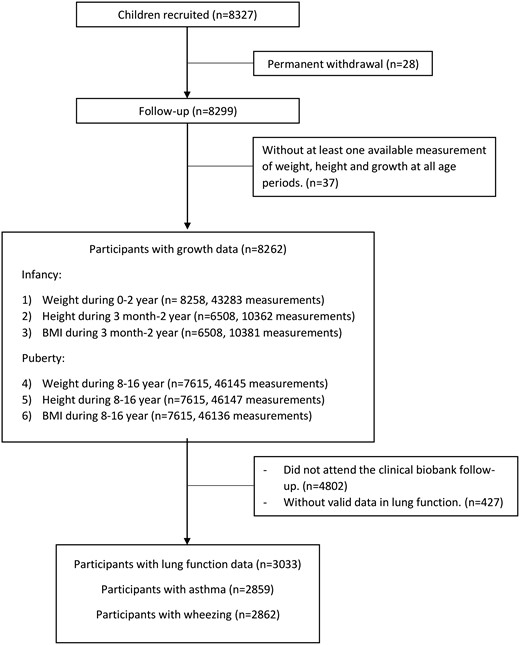
Association of growth patterns during infancy and puberty with lung function, wheezing and asthma in adolescents aged 17.5 years: evidence from ‘Children of 1997’ Hong Kong Chinese Birth Cohort

alexandrossfakianakis shared this article with you from Inoreader

m_dyac182f1.jpeg?Expires=1727190020&Sign

Abstract
BackgroundRapid growth is related to adverse respiratory outcomes although possibly confounded or limited by growth modelling methods. We investigated the association of infant and pubertal growth with lung function, wheezing and asthma in a non-Western setting.
Methods
In Hong Kong's 'Children of 1997' Chinese birth cohort (n = 8327), weight during infancy and weight, height and body mass index (BMI) during puberty were modelled using a super-imposition by translation and rotation model to identify (larger or smaller) size, (earlier or later) tempo and (slower or faster) velocity. Sex-specific associations with forced vital capacity (FVC), forced expiratory volume in the first second (FEV1), FEV1/FVC (Global Lung function Initiative z-score) and self-reported wheezing and asthma at ∼17.5 years were assessed.
Results
For each fraction higher than average weight growth velocity during infancy, FVC w as higher in boys (0.90 SD, 95% CI 0.35; 1.44) and girls (0.77 SD, 95% CI 0.24; 1.30), FEV1/FVC was lower (–0.74 SD, 95% CI –1.38; –0.10) and wheezing was higher (odds ratio 6.92, 95% CI 1.60; 29.99) in boys and an inverse association with FVC was observed for tempo but not for size. Associations for weight growth velocity in puberty were similar but weaker. Greater size and higher velocity of BMI growth was associated with higher FVC, lower FEV1/FVC and higher asthma and wheezing risk.
Conclusion
Accelerated infant and pubertal weight growth were associated with disproportionate lung size and airway growth, and higher risk of asthma; optimizing early-life growth patterns could be important.
View on Web

Thursday, September 22, 2022

Maternal health, pregnancy and offspring factors, and maternal thyroid cancer risk

alexandrossfakianakis shared this article with you from Inoreader

aje_ogimage.png

Abstract
Thyroid cancer incidence is higher in women than men, especially during the reproductive years, for reasons that remain poorly understood. Using population-based registry data from four Nordic countries through 2015, we examined associations of perinatal characteristics with risk of maternal thyroid cancer. Cases were women diagnosed with thyroid cancer ≥2 years after last birth (n=7,425, 83% papillary). Cases were matched to controls (n=67,903) by mother's birth year , country, and county of residence. Odds ratios (ORs) were estimated using conditional logistic regression models adjusted for parity. Older age at first pregnancy, postpartum hemorrhage (OR=1.18, 95% CI 1.08−1.29), and benign thyroid conditions (ORs ranging from 1.64 for hypothyroidism to 10.35 for thyroid neoplasms) were associated with increased thyroid cancer risk, as were higher offspring birth weight (per 1-kg increase, OR=1.17, 95% CI 1.12−1.22) and large-for-gestational-age (OR=1.26, 95% CI 1.11−1.43). Unmarried/non-cohabiting status (OR=0.91, 95% CI 0.84−0.98), maternal smoking (OR=0.75, 95% CI 0.67−0.84), and preterm birth (OR=0.90, 95% CI 0.83−0.98) were associated with reduced risk. Several factors (e.g., older age at first pregnancy, maternal smoking, goiter, benign neoplasms, postpartum hemorrhage, and hyperemesis gravidarum, neonatal jaundice) were associated with advanced thyroid cancer. These findings suggest that some perinatal exposures may influence m aternal thyroid cancer risk.
View on Web

Positive SARS‐CoV‐2 RT‐qPCR of a nasal swab spot after 30 days of conservation on filter paper at room temperature

alexandrossfakianakis shared this article with you from Inoreader

Abstract

We tested the use of nasal swabs spotted onto filter paper (Whatman 3M, Germany) for the molecular diagnosis of SARS-CoV-2 infection. Spots of a positive nasal swab in conservation medium (B.1.177 strain, 21Ct) were still positive (duo E-gene/IP4) after 10, 20, and 30 days of conservation at room temperature, with Ct values of 28, 27, and 26, respectively. Direct spotting of the swab at bedside (omicron strain) still gave a positive result after 10 days in two RT-qPCR systems: 33.7 Ct using duo E-gene/IP4, and 34.8 using a specific Omicron system. Spotting of a dilution range of media spiked with the Delta (strain 2021/FR/0610, lineage B 1.617.2) and Omicron strains (strain UVE/SARS-CoV-2/2021/FR/1514) showed a threshold of 0.04 TCID50 after 10 days of conservation. We show, for the first time, that this simple and low-cost conservation method can be used to store samples for RT-qPCR against SARS-CoV-2 for up to at least one month.

This article is prot ected by copyright. All rights reserved.

View on Web

Vaccine‐induced binding and neutralizing antibodies against Omicron 6 months after a homologous BNT162b2 booster

alexandrossfakianakis shared this article with you from Inoreader

Abstract

Introduction

Evidence about the long-term persistence of the booster-mediated immunity against Omicron is mandatory for pandemic management and deployment of vaccination strategies.

Methods

A total of 155 healthcare professionals (104 COVID-19 naive and 51 with a history of SARS-COV-2 infection) received a homologous BNT162b2 booster. Binding antibodies against the spike protein and neutralizing antibodies against Omicron were measured at several time points before and up to 6 months after the booster. Geometric mean titers of measured antibodies were correlated to vaccine efficacy against symptomatic disease.

Results

Compared to the highest response, a significant 10.2 and 11.5-fold decrease in neutralizing titers was observed after 6 months in participants with and without history of SARS-CoV-2 infection. A corresponding 2.5 and 2.9-fold decrease in binding antibodies was observed. The estimated T1/2 of neutralizing antibodies in pa rticipants with and without history of SARS-CoV-2 infection was 42 (95%CI, 25–137) and 36 days (95%CI, 25–65). Estimated T1/2 were longer for binding antibodies: 168 (95%CI, 116–303) and 139 days (95%CI, 113–180), respectively. Both binding and neutralizing antibodies were strongly correlated to vaccine efficacy (r = 0.83 and 0.89). However, binding and neutralizing antibodies were modestly correlated, and a high proportion of subjects (36.7%) with high binding antibody titers (i.e. > 8,434 BAU/mL) did not have neutralizing activity.

Conclusion

A considerable decay of the humoral response was observed 6 months after the booster, and was strongly correlated with vaccine efficacy. Our study also shows that commercial assays available in clinical laboratories might require adaptation to better predict neutralization in the Omicron era.

This article is protected by copyright. All rights reserved.

View on Web

Tracking Occupational Voice State with a Visual Analog Scale: Voice Quality, Vocal Fatigue, and Effort

alexandrossfakianakis shared this article with you from Inoreader
Tracking Occupational Voice State with a Visual Analog Scale: Voice Quality, Vocal Fatigue, and Effort

This study aimed to determine if the concurrent and construct validity of three visual analog scales (VASs) of voice quality and symptoms could be used as a screening tool in call center agents. VAS as a self-report instrument of vocal symptoms was related to psychosocial voice impairment and alterations of acoustic voice parameters in call center workers. Such instruments could be easily implemented to identify voice complaints in these populations.


Background

Due to elevated vocal health risk in industries such as call centers, there is a need to have accessible and quick self-report tools for voice symptoms. This study aimed to determine if the concurrent and construct validity of three visual analog scales (VASs) of voice quality and symptoms could be used as a screening tool in call center agents.

Methods

A cross-sectional study was carried out in three call center companies. The Voice Handicap Index-10 (VHI-10) and a vocal hygiene and symptoms survey were administered to 66 call center workers. Further, acoustic parameters including harmonics-to-noise ratio (HNR), smoothed cepstral peak prominence (CPPs), L1-L0 slope, and Alpha ratio were collected. Finally, workers completed three VASs capturing self-perception of vocal effort (VAS-1), voice quality (VAS-2), and vocal fatigue (VAS-3). Linear regression models with bootstrapping evaluated the possible relationship between the three VASs measurements, self-perceived vocal symptoms, and acoustic parameters.

Results

VAS-1 scores were associated with HNR and voice breaks, VAS-2 with voice breaks, and VAS-3 with Alpha ratio. Using the area under a receiver operating characteristic curve (AUC), the highest AUC for detecting an altered VHI-10 questionnaire score was observed for the three VASs. Also, the highest AUC for detecting altered CPPs was reached for the VAS-1.

Conclusions

VAS as a self-report instrument of vocal symptoms is related to psychosocial voice impairment and alterations of acoustic voice parameters in call center workers. Such instruments could be easily implemented to identify voice complaints in these populations.

Level of Evidence

Level 2 (Diagnosis research question) Laryngoscope, 2022

View on Web

Cetuximab-Based vs Carboplatin-Based Chemoradiotherapy for Patients With Head and Neck Cancer

alexandrossfakianakis shared this article with you from Inoreader

jamanetwork.com

This cohort study compares survival with cetuximab-based and carboplatin-based chemoradiotherapy in locally advanced head and neck squamous cell carcinoma.
View on Web

Validation of Pain Catastrophizing Scale on Breast Cancer Survivor

alexandrossfakianakis shared this article with you from Inoreader

Abstract

Introduction

Pain Catastrophizing Scale (PCS) is the most used scale to measure pain catastrophizing. In breast cancer survivors (BCS), pain catastrophizing is related to upper-limbs dysfunction and disability. This study aimed to assess the internal consistency, internal structure and convergent validity of the Spanish version of the PCS in Spanish BCS

Material and Methods

BCS were recruited from the service of Medical Oncology of the University Clinical Hospital Virgen de la Victoria, in Málaga (Spain). The psychometric properties were evaluated with analyses factor structure by maximum likelihood extraction (MLE), internal consistency, and construct validity by confirmatory factor analysis (CFA).

Results

Factor structure was three-dimensional, and one item was removed due to cross-loading. The new 12-items PCS showed a high internal consistency for the total score (α=0.91) and a good homogeneity, and CFA revealed a satisfactory fit. PCS showed an acceptable correlation with FACS (r=0.53, p<0.01)

Conclusion

PCS is a valid and reliable instrument to evaluate pain catastrophizing in Spanish BCS. This tool may help clinicians in the management of pain by assessing pain and by measuring the effect of interventions.

View on Web

Perspectives from recent advances of Helicobacter pylori vaccines research

alexandrossfakianakis shared this article with you from Inoreader

Abstract

Background

Helicobacter pylori (H. pylori) infection is the main factor leading to some gastric diseases. Currently, H. pylori infection is primarily treated with antibiotics. However, with the widespread application of antibiotics, H. pylori resistance to antibiotics has also gradually increased year by year. Vaccines may be an alternative solution to clear H. pylori.

Aims

By reviewing the recent progress on H. pylori vaccines, we expected it to lead to more research efforts to accelerate breakthroughs in this field.

Materials & Methods

We searched the research on H. pylori vaccine in recent years through PubMed®, and then classified and summarized these studies.

Results

The study of the pathogenic mechanism of H. pylori has led to the development of vaccines using some antigens, such as urease, catalase, and heat shock protein (Hsp). Based on these antigens, whole-cell, subunit, nucleic acid, vector, and H. pylori exosome vaccines have been tested.

Discussion

At present, researchers have developed many types of vaccines, such as whole cell vaccines, subunit vaccines, vector vaccines, etc. However, although some of these vaccines induced protective immunity in mouse models, only a few were able to move into human trials. We propose that mRNA vaccine may play an important role in preventing or treating H. pylori infection. The current study shows that we have developed various types of vaccines based on the virulence factors of H. pylori. However, only a few vaccines have entered human clinical trials. In order to improve the efficacy of vaccines, it is necessary to enhance T-cell immunity.

Conclusion

We should fully understand the pathogenic mechanism of H. pylori and find its core antigen as a vaccine target.

View on Web

Wednesday, September 21, 2022

Ad5‐nCoV booster and Omicron variant breakthrough infection following two doses of inactivated vaccine elicit comparable antibody levels against Omicron variants

alexandrossfakianakis shared this article with you from Inoreader

Abstract

Background

Little information is available for antibody levels against SARS-CoV-2 variants of concern induced by Omicron breakthrough infection and a third booster with an inactivated vaccine (InV) or Ad5-nCoV in people with completion of two InV doses.

Methods

Plasma was collected from InV pre-vaccinated Omicron infected patients (OIPs), unvaccinated OIPs between 0-22 days, and healthy donors (HDs) 14 days or 6 months after the second doses of an InV and 14 days after a homogenous booster or heterologous booster of Ad5-nCoV. Anti-Wuhan-, Anti-Delta-, and Anti-Omicron-receptor binding domain (RBD)-IgG titers were detected using enzyme-linked immunosorbent assay.

Results

InV pre-vaccinated OIPs had higher anti-Wuhan-, anti-Delta-, and anti-Omicron-RBD-IgG titers compared to unvaccinated OIPs. Anti-Wuhan-RBD-IgG titers sharply increased in InV pre-vaccinated OIPs 0-5 days post-infection (DPI), while the geometric mean titers (GMTs) of anti-Delta- and anti-Omicron-RBD-IgG were 3.3- and 12.0-fold lower. Then, the GMT of anti-Delta- and anti-Omicron-RBD-IgG increased to 35112 and 28186 during 11-22 DPI, about 2.6- and 3.2-fold lower, respectively, than the anti-Wuhan-RBD-IgG titer. The anti-Wuhan-, anti-Delta-, and anti-Omicron-RBD-IgG titers declined over time in HDs after two doses of an InV, with 25.2-, 5.6-, and 4.5-fold declination, respectively, at 6 months relative to the titers at 14 days after the second vaccination. Anti-Wuhan-, anti-Delta-, and anti-Omicron-RBD-IgG titers elicited by a heterologous Ad5-nCoV booster were significantly higher than those elicited by an InV booster, comparable to those in InV pre-vaccinated OIPs.

Conclusion

InV and Ad5-nCoV booster could improve humoral immunity against Omicron variants. Of these, the Ad5-nCoV booster is a better alternative.

This article is protected by copyright. All rights reserved.

View on Web

Collaboration request

Hi there How would you like to earn a 35% commission for each sale for life by selling SEO services Every website owner requires the ...