Thursday, May 5, 2022

International variations in central nervous system incidence in children and adolescents

alexandrossfakianakis shared this article with you from Inoreader
In order to compare the subtype distribution of central nervous system (CNS) and miscellaneous intracranial and intraspinal neoplasms in children and adolescents between Japan and other countries, we extracted information on cancer incidence in children and adolescents from the third volume of the International Incidence of Childhood Cancer series (IICC-3) (1). The IICC-3 reports the number or incidence rates of cancers occurring in childhood and adolescence, collected from cancer registries (regional or national) worldwide. We analyzed CNS and miscellaneous intracranial and intraspinal neoplasms incidence in four countries in Asia (Japan, China, the Republic of Korea and Thailand), two countries in Africa (Egypt and Uganda), four countries in the Americas (North: the USA and Canada, Latin and Caribbean: Brazil and Colombia), three countries in Europe (the UK, France and Germany) and two countries in Oceania (Australia and New Zealand). Information from the Republic of Korea, USA, UK, Australia and New Zealand was obtained at the national level, and those from the other countries were from one or multiple regional cancer registries. The years of incidence to be collected varied from country to country, but ranged from 1990 to 2014, with the shortest being 12 years (Egypt: 1999–2010, UK: 2000–2011) and the longest being 24 years (Japan and China: both 1990–2013). In this study, we compared the incidence and proportional distribution of subtype in children (0–14 years old) and adolescents (15–19 years old) between these countries.
View on the web

First-line therapy in non-small cell lung cancer patients with EGFR activating mutations: a consideration of the clinical position of osimertinib based on the subset of Japanese patients in the FLAURA study

alexandrossfakianakis shared this article with you from Inoreader
Abstract
Epidermal growth factor receptor tyrosine kinase inhibitors (EGFR-TKIs) have been established as the standard first-line treatment for patients with previously untreated advanced non-small cell lung cancer (NSCLC) with an EGFR activating mutation. In the FLAURA study, osimertinib, third-generation EGFR-TKI, resulted in significantly longer progression-free survival and overall survival (OS) than first-generation EGFR-TKIs (gefitinib or erlotinib) in patients with previously untreated advanced NSCLC with an EGFR activating mutation. Osimertinib is now widely used as first-line therapy for those patients. In Japanese subset analysis of the FLAURA study, the median progression-free survival was prolonged by osimertinib (19.1 months) relative to gefitinib (13.8 months). However, there was no apparent OS benefit, albeit at the level of an exploratory post-hoc analysis. Although the safety profile in the Japanese subset was generally consistent with the overall population, the incidence of liver enzyme increases in the gefitinib group and that of interstitial lung disease/pneumonitis in the osimertinib group was higher among Japanese patients. There is now an increasing number of first-line treatment options for NSCLC with EGFR mutations, including EGFR-TKIs in combination with platinum-doublet chemotherapy or anti-angiogenic drugs. These combinations show progression-free survival benefits similar to osimertinib regardless of the mutation type. Therefore, a first-line combination regimen followed by osimertinib remains an attractive strategy. We review data from the randomized clinical trials of first-line EGFR-TKIs including a subset of Japanese patients and discuss first-line therapies for patients with NSCLC harbouring EGFR mutations.
View on the web

Total Thyroidectomy vs Hemithyroidectomy for Treatment of Papillary Thyroid Microcarcinoma

alexandrossfakianakis shared this article with you from Inoreader

jamanetwork.com

This systematic review and meta-analysis compares surgical complication rates between total thyroidectomy and hemithyroidectomy in the treatment of papillary thyroid microcarcinomas.
View on the web

Thyroarytenoid botulinum toxin injection for refractory laryngeal contact granuloma

alexandrossfakianakis shared this article with you from Inoreader

1-s2.0-S0196070921X00075-cov150h.gif

Publication date: Available online 4 May 2022

Source: American Journal of Otolaryngology

Author(s): Yufei Pan, Jinrang Li, Jinhong Zhang, Xiaoyu Wang, Yuanyuan Jia

View on the web

Red meat consumption and risk factors for type 2 diabetes

alexandrossfakianakis shared this article with you from Inoreader

41430_2022_1150_Fig1_HTML.png

European Journal of Clinical Nutrition, Published online: 05 May 2022; doi:10.1038/s41430-022-01150-1

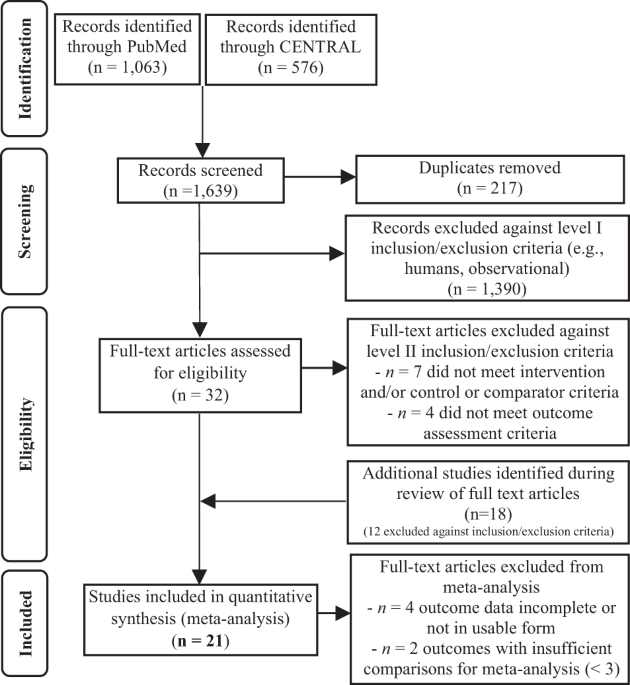
Red meat consumption and risk factors for type 2 diabetes: a systematic review and meta-analysis of randomized controlled trials
View on the web

Wednesday, May 4, 2022

Pharmacokinetics of bleomycin sclerotherapy in patients with vascular malformations

alexandrossfakianakis shared this article with you from Inoreader

Abstract

Bleomycin, a chemotherapy agent that inhibits synthesis of DNA, has been increasingly utilized in sclerotherapy for patients with vascular malformations. A serious long-term risk of intravenous bleomycin is dose-dependent interstitial pneumonitis. Little is known about absorption and circulating levels of bleomycin when used in sclerotherapy for patients with vascular malformations. This is an Institutional Review Board (IRB)-approved prospective study on patients receiving bleomycin sclerotherapy in the management of vascular malformations. Depending on the type of vascular malformation, bleomycin was administered either in the lumen or interstitial space of the involved lesion. A bleomycin assay measured serum bleomycin plasma concentrations versus time at seven intervals following treatment. Pharmacokinetic parameters were obtained for each participant and included peak plasma concentration (C max), time to reach peak plasma concentration (T max), volume of distribution (V d), elimination half-life (t 1/2), the volume of plasma cleared of the drug per unit time (CL), and total systemic exposure area under the curve (AUC). Fifteen patients were enrolled (5: lymphatic, 4: venous, 6: arteriovenous malformations). Bleomycin was administered interstitially (IS) in 11 patients and intraluminal (IL) in four; median age of 13 years (range: 2–67). Pharmacokinetic analysis revealed terminal elimination half-life (t 1/2λz) of 88.51 (±23.09) and 111.61 (±37.75) minutes for the IS and IL groups, respectively. V d was 4.86 L (±6.74) and 1.55 L (±0.54) for the IS and IL groups, respectively. AUC was 53.9 (±23.45) and 129.17 (±93.57) mg min/L for the IS and IL groups, respectively. There were no statistically significant differences in t 1/2λz, V d, or AUC parameters between groups. Bleomycin is absorbed systemically when used as a sclerosant for vascular malformations when injected either IS or IL.

View on the web

Local control of parameningeal rhabdomyosarcoma: An expert consensus guideline from the International Soft Tissue Sarcoma Consortium (INSTRuCT)

alexandrossfakianakis shared this article with you from Inoreader

Abstract

The International Soft Tissue Sarcoma Database Consortium (INSTRuCT) consists of a collaboration between the Children's Oncology Group (COG) Soft Tissue Sarcoma Committee, the European pediatric Soft Tissue Sarcoma Study Group (EpSSG), and the Cooperative Weichteilsarkom Studiengruppe (CWS). As part of the larger initiative of INSTRuCT to provide consensus expert opinions for clinical treatment of pediatric soft tissue sarcoma, we sought to provide updated, evidenced-based consensus guidelines for local treatment of parameningeal rhabdomyosarcoma using both existing literature as well as recommendations from the relevant cooperative group clinical trials. Overall, parameningeal rhabdomyosarcoma represents a distinctly challenging disease to treat, given its location near many critical structures in the head and neck, frequently advanced local presentation, and predilection for local failure. Definitive chemoradiation remains the standard treatment approach for parameningeal rhabdo myosarcoma, with surgery often limited to biopsy or salvage therapy for recurrent disease. In this consensus paper, we specifically discuss consensus guidelines and evidence for definitive local management with radiotherapy, with a focus on imaging for radiotherapy planning, dose and timing of radiation, approach for nodal irradiation, various radiation techniques, including proton therapy, and the limited role of surgical resection.

View on the web

68Ga‐DOTATATE PET and functional imaging in pediatric pheochromocytoma and paraganglioma

alexandrossfakianakis shared this article with you from Inoreader

Abstract

Pheochromocytoma and paraganglioma (PPGL) are rare neuroendocrine tumors in childhood. Up to 40% of PPGL are currently thought to be associated with a hereditary predisposition. Nuclear medicine imaging modalities such as fluorodeoxyglucose positron emission tomography (18F-FDG PET), 68Ga-DOTATATE PET, and 123I-metaiodobenzylguanidine (123I-MIBG) scintigraphy play an essential role in the staging, response assessment, and determination of suitability for targeted radiotherapy in patients with PPGL. Each of these functional imaging modalities targets a different cellular characteristic and as such can be complementary to anatomic imaging and to each other. With the recent US Food and Drug Administration approval and increasing use of 68Ga-DOTATATE for imaging in children, the purpose of this article is to use a case-based approach to highlight both the advantages and limitations of DOTATATE imaging as it is compared to current radiologic imaging techniques in the staging and response assessment of pediatric PPGL, as well as other neuroendocrine malignancies.

View on the web

A novel smartphone‐based intervention targeting sleep difficulties in individuals experiencing psychosis: A feasibility and acceptability evaluation

alexandrossfakianakis shared this article with you from Inoreader

Abstract

Objectives

Cognitive Behavioural Therapy (CBT) is an effective psychological intervention for sleep difficulties and has been used successfully in individuals with psychosis. However, access is restricted due to lack of resources and staff training. Delivering CBT for sleep problems using smartphone technology may facilitate wider access. This study aimed to evaluate the feasibility, acceptability and potential usefulness of a guided, smartphone-based CBT intervention targeting sleep disturbance for individuals with psychosis.

Design

Participants with psychosis spectrum diagnoses were recruited to a single-arm, uncontrolled study and engaged with the seven-module programme via smartphone app for six weeks with therapist support.

Method

Feasibility was assessed by rates of referral, recruitment and completion. Acceptability was assessed by app usage, a satisfaction questionnaire and qualitative analysis of participants' semi-structured interview. Pre- and post-intervention assessment of sleep, psychotic experiences, mood, well-being and functioning was conducted. Mean change confidence intervals were calculated and reported as an indication of usefulness.

Results

Fourteen individuals consented to participation, and eleven completed the post-intervention assessment. On average, each participant engaged with 5.6 of 7 available modules. Qualitative feedback indicated the intervention was considered helpful and would be recommended to others. Suggested improvements to app design were provided by participants. Potential treatment benefits were observed for sleep difficulties, and all outcomes considered, except frequency of hallucinatory experiences.

Conclusions

It is feasible and acceptable to deliver therapist-guided CBT for sleep problems by smartphone app for individuals with psychosis. This method provides a low-intensity, accessible intervention, which could be offered more routinely. Further research to determine treatment efficacy is warranted.

View on the web

Effect of a mouth rinse and a high-fluoride toothpaste on caries incidence in orthodontic patients: A randomized controlled trial

alexandrossfakianakis shared this article with you from Inoreader

1-s2.0-S0889540621X00066-cov150h.gif

Publication date: Available online 28 April 2022

Source: American Journal of Orthodontics and Dentofacial Orthopedics

Author(s): Hanna Enerbäck, Peter Lingström, Marie Möller, Cathrine Nylén, Cecilia Ödman Bresin, Ingrid Östman Ros, Anna Westerlund

View on the web

Differences in craniofacial morphology between platybasic and nonplatybasic patients with velopharyngeal dysfunction and control subjects

alexandrossfakianakis shared this article with you from Inoreader

1-s2.0-S0889540621X00066-cov150h.gif

Publication date: Available online 28 April 2022

Source: American Journal of Orthodontics and Dentofacial Orthopedics

Author(s): Ariela Nachmani, Muhamed Masalha, Ameen Biadsee, Ben Nageris, Tom Ben-Dov, Firas Kassem

View on the web

Medicine, Religion, and the Humanitarian Ethos:

alexandrossfakianakis shared this article with you from Inoreader
Abstract
Biographies of Walter B. Cannon (1871-1945) usually present two sides of his life: one, where he was an outstanding man of science in the United States during the so-called "Golden Age of Medicine," and the other, where he was a leading humanitarian activist engaged in myriad causes, notably in the defense of Spanish democracy during the Civil War (1936-1939). However, these biographies fail to take into account that the apparent link between these two sides of his life was his religious conviction.This study summarizes the aims and accomplishments of the American Medical Bureau to Aid the Spanish Democracy (AMBASD) of which Cannon was chair between 1937 and 1939. Then, it examines Cannon's inspirational role on the international relief work with Spanish Republican refugees in France, through the case of the Varsovie Hospital of Toulouse that between 1945 and 1949 was jointly managed by the Unitarian Service Committee (USC) and the Joint An ti-Fascist Refugee Committee (JAFRC), and renamed Varsovie Hospital/Walter B. Cannon Memorial in recognition of the Spanish Republicans' debt for his extraordinary contribution during the Spanish Civil War and beyond. Finally, the article investigates the Unitarian roots of Cannon's humanitarian ethos by exploring the historical relations of this religious movement with science and with many major actors at Harvard University as well as the links of Cannon's relatives to Unitarianism.The analysis reveals Unitarianism's influence on Cannon's views about science, democracy, and liberty, as well as on his remarkable involvement in the medical solidarity movement with the Second Spanish Republic and other similar commitments. In sum, it shows how important is to branch out in our studies of medical and scientific practice to include practitioners' broader social and religious communities in order to understand their motivations, achievements, and behavior.
View on the web

Collaboration request

Hi there How would you like to earn a 35% commission for each sale for life by selling SEO services Every website owner requires the ...