Sunday, May 15, 2022

Association of oral bacteria with oral hygiene habits and self‐reported gingival bleeding

alexandrossfakianakis shared this article with you from Inoreader

Abstract

Aims

To describe associations of gingival bacterial composition and diversity with self-reported gingival bleeding and oral hygiene habits in a Norwegian regional-based population.

Material and methods

We explored gingival fluid microbiome composition (16S amplicon sequencing) in 484 adult participants (47% females, median age, 28 years) in the RHINESSA study in Bergen, Norway. We explored bacterial diversity and abundance differences by Community Periodontal Index (CPI) score, self-reported frequency of gingival bleeding and oral hygiene habits.

Results

Gingival bacterial diversity increased with increasing frequency of self-reported gingival bleeding, with higher Shannon diversity index for 'always' β = 0.51 and 'often' β = 0.75 (p < 0.001) compared to 'never' gingival bleeding. Frequent gingival bleeding was associated with higher abundance of several bacteria, such as Porphyromonas endodontalis, Treponema denticola, and Fretibacterium spp, but lower abundance of bacteria within the gram-positive phyla, Firmicutes and Actinobacteria. Flossing and rinsing with mouth wash twice daily was associated with higher total abundance of bacteria in the Proteobacteria phylum, but with lower bacterial diversity compared to those who never flossed or never used mouth wash.

Conclusion

A high frequency of self-reported gingival bleeding was associated with higher bacterial diversity than that found in participants reporting no gingival bleeding, and with higher total abundance of known periodontal pathogens such as Porphyromonas spp, Treponema spp, and Bacteriodes spp.

View on Web

Ipriflavone suppresses NLRP3 inflammasome activation in host response to biomaterials and promotes early bone healing

alexandrossfakianakis shared this article with you from Inoreader

Abstract

Aim

Emerging studies have shown that immune response to biomaterial implants plays a central role in bone healing. Ipriflavone is clinically used for osteoporosis. However, the mechanism of ipriflavone in immune response to implants in early stage of osseointegration remains unclear. In this study, we aimed to investigate the potential role of ipriflavone in early bone healing process and uncover the underlying mechanism.

Materials and methods

Histological examination, proinflammatory cytokines, and NLRP3 inflammasome activation were analyzed in a tibial implantation mouse model with intraperitoneal injection of ipriflavone. In addition, we explored the mechanism of ipriflavone in the regulation of NLRP3 inflammasome activation in macrophages.

Results

In vivo, ipriflavone ameliorated host inflammatory response related to NLRP3 inflammasome activation at implantation sites characterized by reductions of inflammatory cells infiltration and proinflammatory cytokine IL-1β levels. Ipriflavone treatment also showed beneficial effects on early osseointegration. Further investigations of the molecular mechanism showed that the suppression of NLRP3 inflammasome acts upstream of NLRP3 oligomerization through abrogating the production of reactive oxygen species (ROS).

Conclusion

These results revealed an anti-inflammatory role of ipriflavone in NLRP3 inflammasome activation through improving mitochondrial function. This research provides a new strategy for the development of immune-regulated biomaterials and treatment options for NLRP3-related diseases.

View on Web

Comparison Between the STANDARD™ F S. pneumoniae Ag FIA and BinaxNOW S. pneumoniae Antigen Card for Detection of Streptococcus pneumoniae Urinary Antigen

alexandrossfakianakis shared this article with you from Inoreader

1-s2.0-S0732889322X00047-cov150h.gif

Publication date: Available online 15 May 2022

Source: Diagnostic Microbiology and Infectious Disease

Author(s): Hui-Jin Yu, Tae Yeul Kim, Hyang Jin Shim, Sun Ae Yun, Ji-Youn Kim, On Kyun Kang, Hee Jae Huh, Nam Yong Lee

View on Web

Thursday, May 12, 2022

Olfactory Impairment and Mortality

alexandrossfakianakis shared this article with you from Inoreader

jamanetwork.com

The COVID-19 pandemic has elevated the world's attention to olfactory impairment (OI). As a cardinal symptom of the many early variants of the SARS-CoV-2 virus, we have never seen such global attention toward one of our most important senses. Although the prevalence of OI has increased dramatically with COVID-19, OIs have long been a significant health concern. Prior to the COVID-19 pandemic, the median length of time from onset of OI to evaluation by a clinician was 13 months, with many individuals waiting up to 3 years before seeking evaluation. During that time, patients did not receive treatment or counseling, compounding the potential associations of OI with patient health.
View on Web

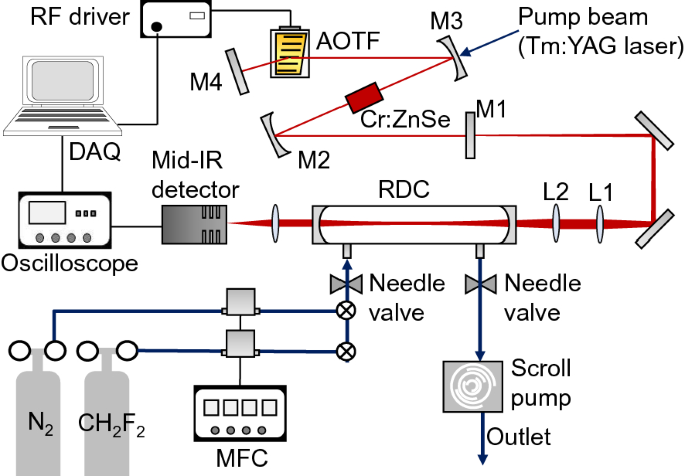
Mid-infrared-scanning cavity ring-down CH2F2 detection using electronically tuned Cr:ZnSe laser

alexandrossfakianakis shared this article with you from Inoreader

41598_2022_12019_Fig1_HTML.png

View on Web

Otoprotective Effects of Stephania tetrandra S. Moore Herb Isolate against Acoustic Trauma

alexandrossfakianakis shared this article with you from Inoreader
AbstractNoise is the most common occupational and environmental hazard, and noise-induced hearing loss (NIHL) is the second most common form of sensorineural hearing deficit. Although therapeutics that target the free-radical pathway have shown promise, none of these compounds is currently approved against NIHL by the United States Food and Drug Administration. The present study has demonstrated that tetrandrine (TET), a traditional Chinese medicinal alkaloid and the main chemical isolate of theStephania tetrandra S. Moore herb, significantly attenuated NIHL in CBA/CaJ mice. TET is known to exert antihypertensive and antiarrhythmic effects through the blocking of calcium channels. Whole-cell patch-clamp recording from adult spiral ganglion neurons showed that TET blocked the transient Ca2+...
View on Web

Effects of Masker Envelope Fluctuations on the Temporal Effect

alexandrossfakianakis shared this article with you from Inoreader
This study tests the hypothesis that small or absent temporal effects for narrowband maskers are due to the inherent temporal envelope fluctuations of Gaussian noise. Temporal effects were measured for narrowband noise maskers with fluctuating ( "fluctuating maskers") and flattened ("flattened maskers") temporal envelopes as a function of masker level (Exp. I) and in the presence of fluctuating and flattened precursors (Exp. II). The temporal effect was absent for fluctuating narrowband maskers and as large as ~ 7 dB for flattene d narrowband maskers. The AC-coupled power of the temporal envelopes of precursors and maskers accounted for 94 % of the variance in probe detection thresholds measured with fluctuating and flattened precursors and maskers. These results suggest that m...
View on Web

Effects of 3,3 ′-Iminodipropionitrile on Hair Cell Numbers in Cristae of CBA/CaJ and C57BL/6J Mice

alexandrossfakianakis shared this article with you from Inoreader
This study examines absolute hair cell numbers in the cristae of C57BL/6J mice and CBA/CaJ mice from weaning to adulthood as well as the dose required for 3,3 ′-iminodiproprionitrile (IDPN)-injury of the cristae in C57BL/6J mice and CBA/CaJ mice, the two mouse strains most commonly used by inner ear researchers. In cristae of CBA/CaJ and C57BL/6J mice, no loss of hair cells was observed up to 24 weeks. In both strains, dose-dependent loss of hair cells was observed 7 days after IDPN treatment of 2-month-old mice (IC50 = 16.1 mmol/kg in C57BL/6J mice vs. 25.21 mmol/kg in CBA/CaJ mice). Four-month-old C57BL/6J mice exposed to IDPN developed dose-dependent vestibular dysfunction as indicated by increased activity and circling behavior in open field tests and by failure to swim 7 da...
View on Web

Association of APACHE‐II Scores With 30‐Day Mortality After Tracheostomy: A Retrospective Study

alexandrossfakianakis shared this article with you from Inoreader
Association of APACHE-II Scores With 30-Day Mortality After Tracheostomy: A Retrospective Study

An APACHE-II score of 30 and above is a potentially useful clinical indicator of increased risk of mortality within 30 days of tracheostomy in patients with ventilator-dependent respiratory failure (VDRF). This tool may prove a valuable resource for ICU physicians, surgeons, and families who are considering tracheostomy for patients with VDRF.


Objective

The objective of this study was to assess whether the Acute Physiology, Age, Chronic Health Evaluation II (APACHE-II) score is a reliable predictor of 30-day mortality in the setting of adult patients with ventilator-dependent respiratory failure (VDRF) who undergo tracheostomy.

Methods

This is a retrospective, single-institution study. Potential subjects were identified using the current procedural terminology codes for the tracheostomy procedure and International Classification of Diseases, 10th Revision, codes for VDRF. APACHE-II scores were retrospectively calculated. Tracheostomies were performed in our population over an 18-month period (November 2018 through April 2020). Our study population did not include patients with novel coronavirus. The primary outcome was mortality at 30 days after tracheostomy.

Results

A total of 238 patients with VDRF who had a tracheostomy were included in this study. Twenty-eight (11.8%) patients died within 30 days of tracheostomy. The mean (standard deviation) APACHE-II score was 22.5 (10.2) for patients who died within 30 days of tracheostomy and 19.8 (7.4) for patients living within 30 days of tracheostomy (p = 0.30). Patients with APACHE-II scores greater than or equal to 30 showed higher odds of death within 30 days of tracheostomy (odds ratio, 3.0; 95% CI, 1.14–7.89, p = 0.03).

Conclusion

An APACHE-II score of 30 and above is associated with mortality within 30 days of tracheostomy in patients with VDRF. APACHE-II scores may be a promising tool for assessing risk of mortality in patients with VDRF after tracheostomy.

Level of Evidence

3 Laryngoscope, 2022

View on Web

Incidence of Persistent Tracheocutaneous Fistula After Pediatric Tracheostomy Decannulation

alexandrossfakianakis shared this article with you from Inoreader
Incidence of Persistent Tracheocutaneous Fistula After Pediatric Tracheostomy Decannulation

Two-thirds of children will develop a persistent tracheocutaneous fistula (TCF) after tracheostomy decannulation. Persistent TCF is correlated with longer duration of tracheostomy and congenital malformations.


Objectives

To determine the incidence of tracheocutaneous fistula (TCF) and identify characteristics associated with persistence.

Study Design

Prospective cohort.

Methods

All successfully decannulated children (<18 years) between 2014 and 2020 at a tertiary children's hospital were included. Revision tracheostomies, concomitant major neck surgery, or single-stage laryngotracheal reconstructions were excluded. A persistent TCF was defined as a patent fistula at 6 weeks after decannulation.

Results

A total of 77 children met inclusion criteria with a persistent TCF incidence of 65% (50/77). Children with a persistent TCF were younger at placement (1.4 years (SD: 3.3) vs. 8.5 years (SD: 6.5), p < 0.001) and tracheostomy-dependent longer (2.8 years (SD: 1.3) vs. 0.9 years (SD: 0.7), p < 0.001). On univariate analysis, placement under 12 months of age (86% vs. 26% p < 0.001), duration of tracheostomy more than 2 years (76% vs. 11% p < 0.001), short gestation (64% vs. 26%, p = 0.002), congenital malformations (64% vs. 33%, p = 0.02), newborn complications (58% vs. 26%, p = 0.009), maternal complications (40% vs. 11%, p = 0.009) and chronic respiratory failure (72% vs. 41%, p = 0.01) were associated with persistent TCF. Logistic regression analysis associated duration of tracheostomy (OR: 0.14, 95% CI: 0.05–0.35, p < ; 0.001) and congenital malformations (OR: 0.25, 95% CI: 0.06–0.99, p = 0.049) with failure to spontaneously close.

Conclusions

Two-thirds of children will develop a persistent TCF after tracheostomy decannulation. Persistent TCF is correlated with a longer duration of tracheostomy and congenital malformations. Anticipation of this event in higher-risk children is necessary when caring for pediatric tracheostomy patients.

Level of Evidence

3 Laryngoscope, 2022

View on Web

Collaboration request

Hi there How would you like to earn a 35% commission for each sale for life by selling SEO services Every website owner requires the ...