Sunday, February 3, 2019

Summary Against Modern Thought: God Preserves All Things In Being

Previous post.

Being didn't happen for no reason, and the so-called laws of physics, or whatever is being claimed to be at base, such as quantum "fluctuations", cannot account for themselves.

THAT GOD PRESERVES THINGS IN BEING

1 Now, from the fact that God rules things by His providence it follows that He preserves them in being.

2 Indeed, everything whereby things attain their end pertains to the governance of these things. For things are said to be ruled or governed by virtue of their being ordered to their end. Now, things are ordered to the ultimate end which God intends, that is, divine goodness, not only by the fact that they perform their operations, but also by the fact that they exist, since, to the extent that they exist, they bear the likeness of divine goodness which is the end for things, as we showed above. Therefore, it pertains to divine providence that things are preserved in being.

3 Again, the same principle must be the cause of a thing and of its preservation, for the preservation of a thing is nothing but the continuation of its being. Now, we showed above that God, through His understanding, and will, is the cause of being for all things. Therefore, He preserves all things in being through His intellect and will.

4 Besides, no particular univocal agent can be the unqualified cause of its species; for instance, this individual man cannot be the cause of the human species, for he would then be the cause of every man, and, consequently, of himself—which is impossible. But this individual man is the cause, properly speaking, of that individual man.

Now, this man exists because human nature is present in this matter, which is the principle of individuation. So, this man is not the cause of a man, except in the sense that he is the cause of a human form coming to be in this matter. This is to be the principle of the generation of an individual man. So, it is apparent that neither this man, nor any other univocal agent in nature, is the cause of anything except the generation of this or that individual thing. Now, there must be some proper agent cause of the human species itself; its composition shows this, and also the ordering of its parts, which is uniform in all cases unless it be accidentally impeded. And the same reasoning applies to all the other species of natural things.

Now, this cause is God, either mediately or immediately. For we have shown that He is the first cause of all things. So, He must stand in regard to the species of things as the individual generating agent in nature does to generation, of which he is the direct cause. But generation ceases as soon as the operation of the generative agent ceases. Therefore, all the species of things would also cease as soon as the divine operation ceased. So, He preserves things in being through His operation.

Notes What this means for evolution, especially of man, is obvious.

5 Moreover, though motion may occur for any existing thing, motion is apart from the being of the thing. Now, nothing corporeal, unless it be moved, is the cause of anything, for no body acts unless by motion, as Aristotle proves. Therefore, no body is the cause of the being of anything, in so far as it is being, but it is the cause of its being moved toward being, that is, of the thing's becoming.

Now, the being of any thing is participated being, since no thing is its own act of being, except God, as we proved above. And thus, God Himself, Who is His own act of being, must be primarily and essentially the cause of every being. So, divine operation is related to the being of things as the motion of a corporeal mover is to the becoming and passive movement of the things that are made or moved. Now, it is impossible for the becoming and passive movement of a thing to continue if the motion of the mover cease. Therefore, it is impossible for the being of a thing to continue except through divine operation.

6 Furthermore, just as art work presupposes a work of nature, so does a work of nature presuppose the work of God the creator. In fact, the material for art products comes from nature, while that of natural products comes through creation by God. Moreover, art objects are preserved in being by the power of natural things; a home, for instance, by the solidity of its stories. Therefore, all natural things are preserved in being by nothing other than the power of God.

7 Again, the impression of an agent does not continue in the product, if the agent's action ceases, unless the impression be converted into the nature of the product. Indeed, the forms of things generated, and their properties, remain in them after generation until the end, since they become natural to them. And likewise, habits are difficult to change because they are turned into a nature. But dispositions and passions, whether of the body or soul, endure for a little while after the action of the agent, but not forever, since they are present in a state transitional to nature.

Now, whatever belongs to the nature of a higher type of being does not last at all after the action of the agent; light, for instance, does not continue in a diaphanous body when the source of light has gone away. Now, to be is not the nature or essence of any created thing, but only of God, as we showed in Book One [22]. Therefore, no thing can remain in being if divine operation cease.

8 Furthermore, there are two positions regarding the origin of things: one, from faith, holding that things have been brought into being by God, at the beginning; and the position of certain philosophers, that things have emanated from God eternally. Now, in either position one has to say that things are preserved in being by God. For, if things are brought into being by God, after they were not existing, then the being of things, and similarly their non-being, must result from the divine will; for He has permitted things not to be, when He so willed; and He made things to be, when He so willed. Hence, they exist just as long as He wills them to be. Therefore, His will is the preserver of things.

But, if things have eternally emanated from God, we cannot give a time or instant at which they first flowed forth from God. So, either they never were produced by God, or their being is always flowing forth from God as long as they exist. Therefore, He preserves things in being by His operation.

9 Hence it is said: "Upholding all things by the word of His Power" (Heb. 1:3). And Augustine says: "The power of the Creator, and the strength of the Omnipotent and All-sustaining is the cause of the subsistence of every creature. And, if this power were ever to cease its ruling of the things which have been created, their species would at once come to an end, and all nature would collapse. For the situation is not like that of a man who has built a house and has then gone away, and, while he is not working and is absent, his work stands. For, if God were to withdraw His rule from it, the world could not stand, even for the flick of an eye."

Notes A sobering thought and a hint, as we believe Peter, in what is to come. And also a proof that a physics which ignores the reason for physics, is a benighted physics.

10 Now, by this conclusion the position of the exponents of the Law of the Moors is refuted, for, in order to be able to maintain that the world needs God's preservation, they took the view that all forms are accidents, and that no accident endures through two instants.

So that, in this view, the informing of things would be in continuous process, as if a thing would not need an agent cause except while in the process of becoming. Hence, also, some of these people are said to claim that indivisible bodies (out of which, they say, all substances are composed and which alone, according to them, possess stability) could last for about an hour if God were to withdraw His governance from things. Also, some of them say that a thing could not even cease to be unless God caused in it the accident of "cessation." Now, all these views are clearly absurd.

Notes Amen.


from Climate Change Skeptic Blogs via hj on Inoreader http://bit.ly/2DQt34n

Variations in seafloor create freak ocean waves

Image credit: NASA


Researchers have an ambition to use 'new mathematics' to try and predict where and when these extreme events will occur.

Florida State University researchers have found that abrupt variations in the seafloor can cause dangerous ocean waves known as rogue or freak waves—waves so catastrophic that they were once thought to be the figments of seafarers' imaginations, Phys.org reports.

"These are huge waves that can cause massive destruction to ships or infrastructure, but they are not precisely understood," said Nick Moore, assistant professor of mathematics at Florida State and author of a new study on rogue waves.

The study is published in the journal Physical Review Fluids.

Once regarded as a myth, these waves have stumped the scientific community for several decades.

Over the years, researchers across the globe have examined a number of different factors they thought might contribute to these waves, including the seafloor, wind excitation and a phenomenon called Benjamin-Feir where deviations from a periodic waveform are reinforced by nonlinearity.

Most of the studies that focused on the seafloor considered only gentle slopes, and the few studies that pushed the slopes to greater extremes relied primarily on computer simulations.

"There was a relative underrepresentation of real-world data that you can get from laboratory experiments, where you can carefully control the various factors," Moore said. "Often you need this real-world data to see whether the computer simulations are giving you sensible predictions at all."

Moore's laboratory experiments were the first to examine the effect of abrupt seafloor variations on wave statistics.

Along with FSU's Geophysical Fluid Dynamics Institute Director Kevin Speer and now-former FSU student Tyler Bolles, Moore created a long chamber with a variable bottom. Using a motor to generate randomized waves, the research team tracked thousands of waves to see if any patterns emerged.

After the waves passed through several feet of a constant depth, they encountered a step in the bottom of the tank that represented an abrupt change in the seafloor. Moore and his colleagues found that initially the waves appeared normal, following a traditional bell curve. But when they passed over the step, the structures of the waves significantly changed.

The altered waves followed what's called a gamma distribution, a mathematics function describing certain patterns that defy the bell curve in a particular way.

Full report here.


from Climate Change Skeptic Blogs via hj on Inoreader http://bit.ly/2RxRozn

Heartland: Special Edition Devoted to the Green New Deal

Reposted from The Heartland Institute February 1, 2019 By H. Sterling Burnett Climate Change Weekly #313 The much-hyped Green New Deal (GND) is being pushed by a rump group of progressive-socialists in the Democratic Party, including prominent members of the Senate with stated presidential aspirations. If enacted, GND would constitute a complete socialist makeover/takeover of…

from Climate Change Skeptic Blogs via hj on Inoreader http://bit.ly/2TAVc4A

Graph Of Global Thermometers

Interesting view of the world as a plot of thermometer density by Latitude & Longitude. Continue reading →

from Climate Change Skeptic Blogs via hj on Inoreader http://bit.ly/2G74WAy

Saturday, February 2, 2019

Weekend Unthreaded

…

Rating: 10.0/10 (1 vote cast)
gfx.php?value=10.0
Rating: 10.0/10 (1 vote cast)


from Climate Change Skeptic Blogs via hj on Inoreader http://bit.ly/2SlggyS

CBC admits it wrongly reported hyped-up insurance ‘climate risks’

http://bit.ly/2UzmZCQ Terence Corcoran The Insurance Bureau of Canada's decades-long campaign to raise alarms about the ravages of floods continued last week with an appearance by Blair Feltmate, a favourite star climate-change witness for the biggest insurers, at the Lake Simcoe Region Conservation Authority's annual meeting. Feltmate heads the industry-funded Intact Centre on Climate Adaptation at [...]

from Climate Change Skeptic Blogs via hj on Inoreader http://bit.ly/2TvGk7K

Wild claim: America colonisation ‘cooled Earth’s climate’

1-s2.0-S0277379118307261-gr1.jpg

O……K….. Earth system impacts of the European arrival and Great Dying in the Americas after 1492 Here's a link to the full paper. Highlights Combines multiple methods estimating pre-Columbian population numbers. Estimates European arrival in 1492 lead to 56 million deaths by 1600. Large population reduction led to reforestation of 55.8 Mha and 7.4 Pg…

from Climate Change Skeptic Blogs via hj on Inoreader http://bit.ly/2RAK2LF

UK Climate Change Committee head, @lorddeben facing calls to resign over what appear to be ‘colossal’ and ‘scandalous’ conflicts of interest

David Rose exposes another apparently corrupt green politician: Tory peer in £600,000 conflict of interest: Climate Change chief John Gummer faces calls to quit over payments from 'green businesses' to his family firm… Conservative peer's family-run consultancy been paid huge sums by businesses  MPs say Mr Gummer should have declared the payments – but he…

from Climate Change Skeptic Blogs via hj on Inoreader http://bit.ly/2BiztHC

UK Climate Committee head facing calls to resign over ‘scandalous’ conflicts of interest – ‘Payments from ‘green businesses’ to his family firm’

http://bit.ly/2BiztHC Anthony Watts / 58 mins ago February 2, 2019 David Rose exposes another apparently corrupt green politician: Tory peer in £600,000 conflict of interest: Climate Change chief John Gummer faces calls to quit over payments from 'green businesses' to his family firm… Conservative peer's family-run consultancy been paid huge sums by businesses  MPs say Mr Gummer should [...]

from Climate Change Skeptic Blogs via hj on Inoreader http://bit.ly/2WCBdVq

Bitter cold shows the reliable energy sources of coal, natural gas & nuclear are critical

http://strib.mn/2DKOALy By Isaac Orr This week's bitter cold had the potential to be deadly. But thanks to reliable forms of energy like coal, natural gas and nuclear power, it wasn't. Lawmakers considering doubling Minnesota's renewable energy mandate to 50 percent by 2030 should use this week's weather as a moment to reconsider their plans to [...]

from Climate Change Skeptic Blogs via hj on Inoreader http://bit.ly/2GgHiB4

Tips & Notices – February 2019

Tips & Notices for February 2019 Continue reading →

from Climate Change Skeptic Blogs via hj on Inoreader http://bit.ly/2MK4VTR

Cold Waves and CO2

To put this year's winter cold into perspective, there is an informative article by Jon Erdman at weather.com America's Coldest Outbreaks January 17 2018 Excerpts with my bolds and references to CO2 concentrations at the referenced dates. Note  that temperatures are in degrees Fahrenheit.
feb-1899-coldest-lows-map.jpg?v=ap&w=980
The Clear Number 1  February 1899: Atmospheric CO2 295 ppm.
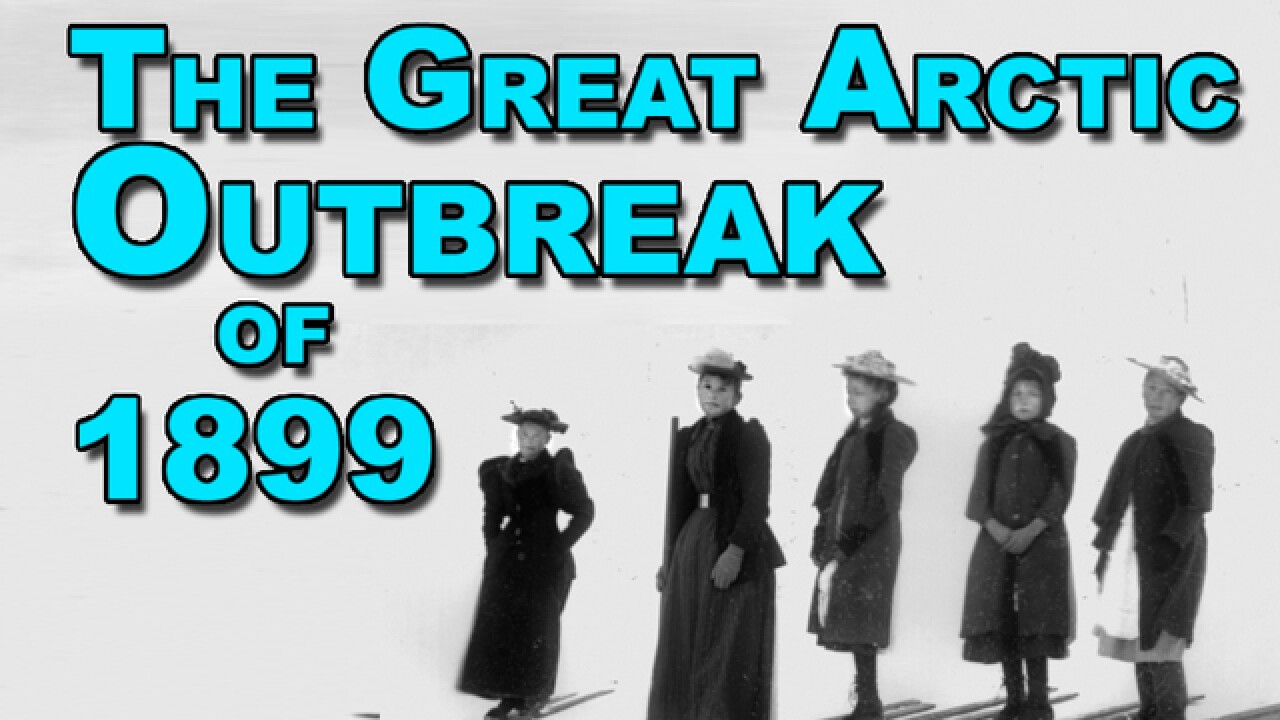
The cold wave during the first two weeks of February 1899 is by far and away the gold standard for cold outbreaks in U.S. history.

What made this outbreak worthy of its lofty status was the magnitude, areal coverage and longevity of the cold.

For the first and only time on record, every state in the Union (recall, there were only 45 states at the time) dipped below zero. Subzero cold invaded parts of south-central Texas, the Gulf Coast beaches and northwest Florida.

?url=http%3A%2F%2Fsharing.thedenverchann

Tallahassee, Florida, dipped to -2 degrees on Feb. 13, 1899, the only subzero low in the city's history. This remains the all-time record low for the Sunshine State.

All-time record lows were set in a dozen states, from the Plains to the Ohio Valley, Southeast and District of Columbia. In addition to Florida, state record lows in Louisiana (-16 in Minden), Nebraska (-47 in Camp Clarke) and Ohio (-39 in Milligan) still stand today.

Dozens of cities still hold onto their all-time record low from this cold wave, including Atlanta (-9), Grand Rapids, Michigan (-24), and Wichita, Kansas (-22). Temperatures as frigid as -61 degrees (Montana), -59 degrees (Minnesota) and -50 degrees (Wisconsin) were recorded.

The Mississippi River froze solid north of Cairo, Illinois, and ice not only clogged the river in New Orleans, but also flowed into the Gulf of Mexico a few days after the heart of the cold outbreak.

Ice jams triggered floods along parts of the Ohio, Tennessee, Cumberland and James Rivers. Ice skating was the activity of choice as the San Antonio River froze.

Lacking snow cover, the ground froze to a depth of 5 feet in Chicago, damaging water, gas and other pipes.

New York City engineers found trusses on the Brooklyn Bridge had contracted 14 feet due to the cold, according to Extreme American Weather, by Tim Vasquez. Due to frozen aqueducts from Catskills reservoirs, the city of Newark was forced to draw water from other rivers and bays.

Adding insult to injury, a massive snowstorm punctuated the cold outbreak from the Gulf Coast to New England Feb. 11-14.

Cape May, New Jersey, picked up 34 inches of snow, the nation's capital was buried by 21 inches and 15.5 inches fell in New York City, overwhelming city crews and isolating suburbs.

In Florida, snow fell in Fort Myers, Tampa saw measurable snow for one of only two times in its history, and Jacksonville picked up 1.9 inches of snow. New Orleans was blanketed by 3 inches of snow.

Here are some other notable cold outbreaks since the massive 1899 outbreak.

Winter 2013-2014 Atmospheric CO2 399 ppm

chicago-cold-jan2014-getty.jpg?v=ap&w=98

Ice builds up along Lake Michigan as temperatures dipped well below zero on January 6, 2014 in Chicago, Illinois. Chicago hit a record low of -16 degree Fahrenheit as an arctic air mass brought the coldest temperatures in about two decades into the city.
(Scott Olson/Getty Images)

– December 2013 – February 2014 was among the top 10 coldest such periods on record in seven Midwest states.

– An early January 2014 outbreak brought the coldest temperatures of the 21st century, to date, for some cities.

– The winter was among the top five snowiest on record in at least 10 major cities.

Late January-Early February 1996 Atmospheric CO2 363 ppm

– Minnesota state record: -60 degrees near Tower on Feb. 2, 1996. WCCO radio's Mike Lynch broadcasted live from Tower that morning, during which he blew soap bubbles which then froze on the ground as a crowd watched.

– All Minnesota public schools shut down.

– Fears of natural gas shortage in northern Illinois prompted requests to reduce consumption.

Mid-Late January 1994 Atmospheric CO2 359 ppm
– 14 cities set all-time record lows, including Indianapolis (-27), Cleveland (-20) and Harrisburg, Pennsylvania (-22). Pittsburgh (-22) beat its previous all-time record set during the February 1899 outbreak.

– Both Pittsburgh (52 hours) and Cleveland (56 hours) set their record stretch of subzero cold.

– Indiana state record low set: -36 degrees at New Whiteland on Jan. 19

– 35 counties in Ohio plunged to -30 degrees or colder on Jan. 19.

– Worcester, Massachusetts, had seven straight days with subzero lows, a record stretch.

– Crown Point, New York, dipped to -48 degrees on Jan. 27.

– Coldest month on record in Caribou, Maine, with an average temperature of -0.7 degrees.

December 1990 Atmospheric CO2 356 ppm
– Most destructive freeze in California since 1949. Fifty percent of California's citrus crop damaged.

– Record 18-day freeze streak in Salt Lake City

– 2,000 children stranded in Seattle schools due to heavy snow on Dec. 18

– Randolph, Utah, bottomed out at -45 degrees on Dec. 22.

December 1989 Atmospheric CO2 354 ppm
– All-time record lows in Kansas City (-23), Topeka, Kansas (-26), Lake Charles, Louisiana (-4), and Wilmington, North Carolina (0).

– First Christmas Day snow (trace) on record in Tallahassee. Miami had a rare freeze while Key West dipped to 44 degrees.

– 14 inches of snow fall at Myrtle Beach, South Carolina, on Christmas Eve.

– At the time, it was the fourth coldest December on record for the entire U.S.

Jan85Coldest.png

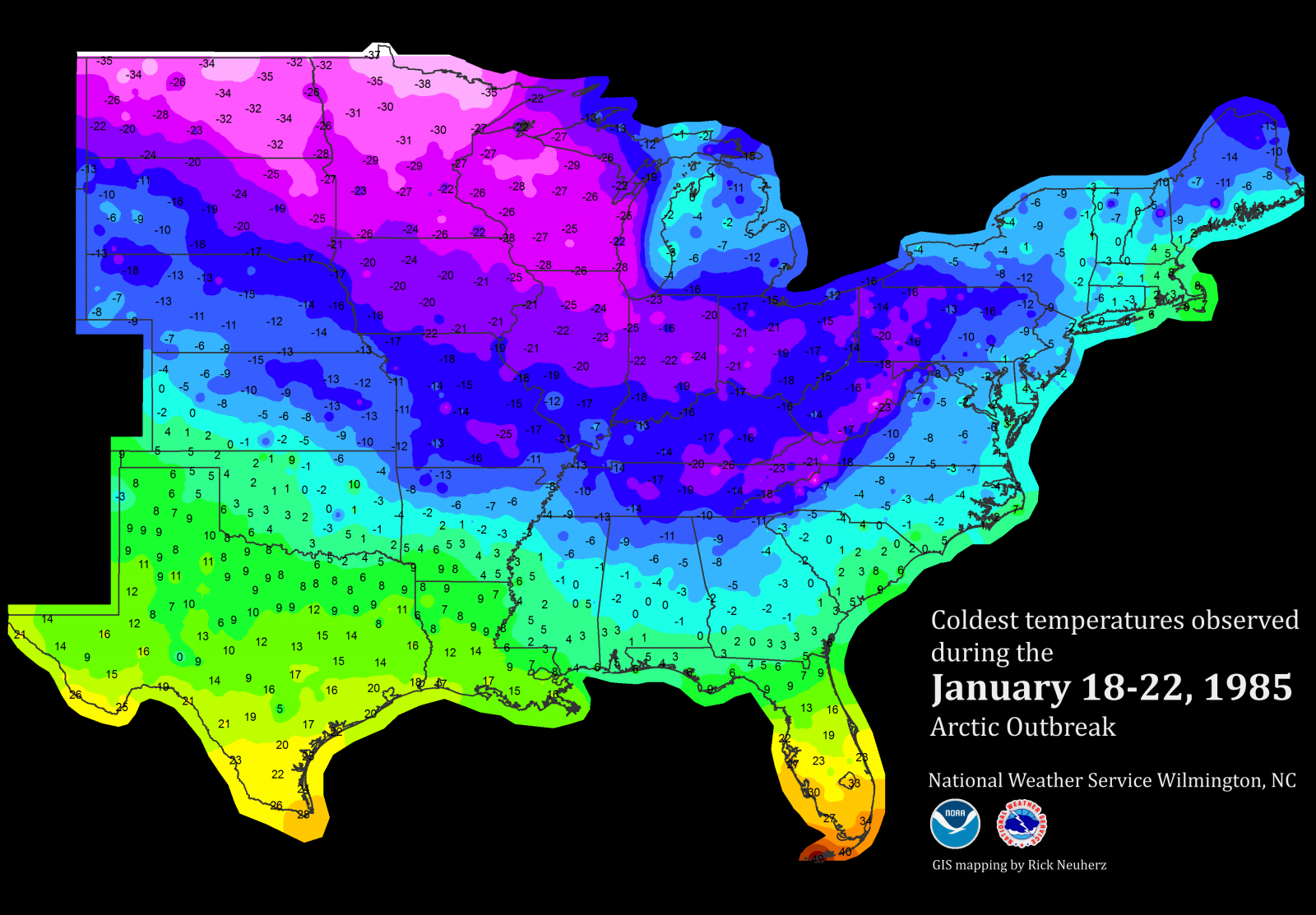
President Reagan Inauguration – Jan. 1985 Atmospheric CO2 346 ppm
Due to the cold, President Ronald Reagan takes the oath of office for his second term as President in the Capitol Rotunda on Jan. 21, 1985.

– 13.2 inches of snow in San Antonio, Texas (Jan. 12), crushed the previous 24-hour snow record, there. Austin and Houston (3 inches each) also were blanketed by this snowstorm.

– All-time record lows were set in Chicago (-27), Jacksonville, Florida (7), and Macon, Georgia (-6)

– State record lows were set in Virginia (-30 at Mountain Lake) and North Carolina (-34 atop Mt. Mitchell).

– $1.2 billion in damage to Florida's citrus crop

– Ronald Reagan's second inauguration was the coldest Inauguration Day on record (7 degrees). The ceremony was moved indoors and parade cancelled.

Late December 1983 Atmospheric CO2 343 ppm
– $2 billion damage to agriculture, mainly due to freezing temperatures in central and northern Florida.

– As measured using the old formula, wind chills reached 100 degrees below zero over much of North Dakota on Dec. 22.

– Williston, North Dakota tied its all-time record low (-50) on Dec. 23. (Check out the hourly observations from that day.)

– Sioux Falls, South Dakota, remained below zero from the morning of Dec. 16 until Christmas Day afternoon.

– Over 125 daily low-temperature records were broken on Christmas Day. Tampa's Christmas Day high was only 38 degrees.

freezer-bowl.jpg?fit=696%2C517&ssl=1

Remembering the "Freezer Bowl AFC Championship game in Cincinnati, Ohio on Jan. 10, 1982.

January 1982 Atmospheric CO2 341 ppm
– 85 deaths were attributed to the cold wave, according to the National Climatic Data Center.

– Chicago's O'Hare and Midway Airports set all-time record lows (-26).

– Milwaukee, Wisconsin, plunged to -26 degrees on Jan. 17, their coldest temperature in 111 years.

– Montgomery, Alabama (-2), Jackson, Mississippi (-5), and Atlanta (-5) each plunged below zero.

– Snow at rush hour on Jan. 11 slickened streets, stranding motorists in Atlanta.

– Natural gas lines froze, and up to 7 million experienced brownouts, according to Tim Vasquez.

– The second coldest game in National Football League history, the "Freezer Bowl", was played in Cincinnati, where a kickoff temperature of -9 degrees greeted the warm-weather San Diego Chargers.

– Hundreds of cases of frostbite were treated at the stadium, including Bengals quarterback Kenny Anderson's frosbitten ear.

30_Jan_1977_Tonawanda%2C_NY_%28Parker_Bl

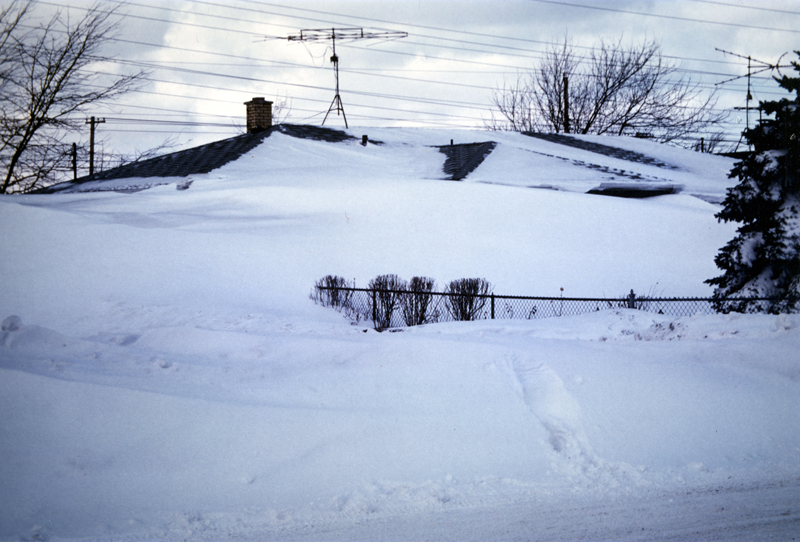
Tonawanda, New York – Post Blizzard of 1977
Photo of a house almost completely buried in snow in the aftermath of the "Blizzard of '77" in Tonawanda, New York.  (Jeff Wurstner/Wikipedia)

January 1977 Atmospheric CO2 334 ppm
– 69 first-order weather stations shivered through their record coldest month, according to Weather Underground's Christopher Burt.

– South Carolina state record set: -20 degrees near Long Creek

– Temperatures did not rise above freezing the entire month in a swath from eastern Iowa to western Pennsylvania northward, according to Burt.

– Snow fell as far south as Miami and Homestead, Florida, the farthest south occurrence of snow in the U.S. Two inches of snow fell in Winter Haven, Florida.

– 35 percent of Florida's citrus crop was damaged; rolling blackouts were needed in Florida due to heavy power demand.

– President Jimmy Carter walked 1.5 miles in the Inauguration Parade with temperatures just below freezing on Jan. 20.

– The "Buffalo Blizzard of '77" added a foot of snow to the 33 inches of snow on the ground, accompanied by wind gusts to 75 mph, producing snow drifts up to 30 feet high, paralyzing the city.

January 1949 Atmospheric CO2 311 ppm
– Coldest month on record in Boise, Idaho, and Spokane, Washington.

– Coldest winter at virtually every weather station in California, Nevada, Idaho and Oregon, according to Burt.

– A series of blizzards in the Great Basin and Plains claimed 150,000 sheep and cattle, isolating ranches from Wyoming to South Dakota.

– The Army airlifted supplies to snowbound ranchers.

– Snow fell in San Diego. One of only three measurable snowfalls on record in Downtown Los Angeles, as well.

– All-time record low set in San Antonio, Texas (0 degrees).

Winter of 1935-1936 Atmospheric CO2 310 ppm
– Coldest Plains winter of record.

– Low temperatures dropped below -50 degrees on four separate days in Malta, Montana.

– Parshall, North Dakota, plunged to -60 degrees on Feb. 15, still the state record low today.

– Langdon, North Dakota, remained below zero for an incredible 41 straight days, the longest stretch on record in the Lower 48 states, according to Burt.

Winter of 2019 Atmospheric CO2 409 ppm


Ice builds up along the shore of Lake Michigan as temperatures dipped to lows around -20 degrees on January 31st, 2019, in Chicago, Illinois. Businesses and schools closed, Amtrak suspended service into the city, more than a thousand flights were canceled, and mail delivery was suspended as the city coped with record-setting low temperatures.  (Photo: Scott Olson/Getty Images)


A cyclist rides through the falling snow in the Financial District, January 30th, 2019, in New York City
(Photo: Drew Angerer/Getty Images)


Frost forms on the back of Galloway cows on February 1st, 2019, in Crainlarich in Scotland. Temperatures plummeted to -15 degrees Celsius on the coldest night of the year. (Photo: Jeff J. Mitchell/Getty Images)

Summary

Clearly CO2 neither causes nor prevents outbreaks of arctic cold invading North America. Concerning ourselves with GHGs is no substitute for ensuring reliable, affordable energy and robust infrastructure.

Jonathan Erdman is a senior meteorologist at weather.com and has been an incurable weather geek since a tornado narrowly missed his childhood home in Wisconsin at age 7.


from Climate Change Skeptic Blogs via hj on Inoreader http://bit.ly/2DS3csR

Scientist who rejects warming named to advisory board

image_asset_47877.jpg?is-pending-load=1

From E & E News Scott Waldman, E&E News reporter Climatewire: Friday, February 1, 2019 John Christy, director of the University of Alabama, Huntsville, Earth System Science Center, will join EPA's Science Advisory Board. Michael Mercier/University of Alabama, Huntsville The Earth will benefit from burning more fossil fuels and regulations on greenhouse gases must be…

from Climate Change Skeptic Blogs via hj on Inoreader http://bit.ly/2S3oah0

Recycling of crushed waste rock as backfilling material in coal mine: effects of particle size on compaction behaviours

Abstract

Crushed waste rocks can be used as materials for backfilling goafs, so as to achieve the simultaneous goals of processing solid waste and controlling surface subsidence; however, particle size distribution directly affects the compaction of crushed waste rocks. Therefore, by employing a self-designed bidirectional loading test system for granular materials, this study tested compaction characteristics of crushed waste rocks with four different particle size distributions. Moreover, this research tested the changes of parameters in lateral and axial loading of crushed waste rocks and analysed the influence of particle size distribution on lateral strain, axial strain, porosity, lateral stress, and lateral pressure coefficient during compaction. The test results show that (1) particle size distribution affects porosity, strain, and lateral pressure coefficient of crushed waste rocks under lateral and axial loading. (2) For the samples under particle size distribution ranging from 0 to 10 mm, the initial porosity is low and deformations are small under axial loading, so that particles can make contact and bear effective stress in grain-grain contact. Therefore, more stress is transferred to the lateral direction. (3) After compaction, the curves of the samples of crushed waste rocks under four particle size distributions all shift upwards in comparison with those before compaction, indicating that particles are crushed and the proportion of small particles constantly increases. (4) A reasonable particle size distribution can significantly improve stress characteristics, reduce crushing of particles in the samples, and increase the stiffness of the samples, so as to achieve better compaction effects.


from Climate Change Skeptic Blogs via hj on Inoreader http://bit.ly/2t3Ugu6

Evidence of non-DDD pathway in the anaerobic degradation of DDT in tropical soil

Abstract

DDT transformation to DDD in soil is the most commonly reported pathway under anaerobic conditions. A few instances of DDT conversion to products other than DDD/DDE have been reported under aerobic conditions and hardly any under anaerobic conditions. In particular, few reports exist on the anaerobic degradation of DDT in African tropical soils, despite DDT contamination arising from obsolete pesticide stockpiles in the continent as well as new contamination from DDT use for mosquito and tsetse fly control. Moreover, the development of possible remediation strategies for contaminated sites demands adequate understanding of different soil processes and their effect on DDT persistence, hence necessitating the study. The aim of this work was to study the effect of simulated anaerobic conditions and slow-release carbon sources (compost) on the dissipation of DDT in two tropical clay soils (paddy soil and field soil) amenable to periodic flooding. The results showed faster DDT dissipation in the field soil but higher metabolite formation in the paddy soil. To explain this paradox, the levels of dissolved organic carbon and carbon mineralization (CH4 and CO2) were correlated with p,p-DDT and p,p-DDD concentrations. It was concluded that DDT underwent reductive degradation (DDD pathway) in the paddy soil and both reductive (DDD pathway) and oxidative degradation (non-DDD pathway) in the field soil.


from Climate Change Skeptic Blogs via hj on Inoreader http://bit.ly/2S75Cwo

Notes On Julia – The Language

So what's a good language for concurrent programming and parallel execution? Might it be Julia? Continue reading →

from Climate Change Skeptic Blogs via hj on Inoreader http://bit.ly/2HMTYlE

Sulfur dioxide induces apoptosis via reactive oxygen species generation in rat cardiomyocytes

Abstract

Epidemiological evidence suggests that the incidence and mortality of cardiovascular diseases are closely related to sulfur dioxide (SO2). In the present study, H9C2 cells were incubated with 100 μM NaHSO3 with or without pretreatment of an antioxidant, N-acetyl-l-cysteine (NAC). The changes of apoptosis rate, mitochondrial membrane potential (MMP), ATP content, caspase-3 activity, and reactive oxygen species (ROS) were detected. Rats were inhaled 7 mg/m3 SO2 and/or intraperitoneal injected with 50 mg/kg (bw) of NAC for 30 days. RT-PCR and Western blot were used to detect the mRNA and protein levels of apoptosis-related genes. We found that the apoptosis of H9C2 cells was induced by NaHSO3, which decreased the content of MMP and ATP, and induced the expression of caspase-3. NAC can inhibit the apoptosis induced by NaHSO3 treatment. SO2 and NaHSO3 decreased the expression of Bcl-2 and the ratio of Bcl-2/Bax, increased the expression of Bax and P53 accumulation and phosphorylation, and activated caspase-9 and caspase-3. Whereas NAC can reduce the changes of apoptosis-related proteins in rat heart. Our results suggest that SO2 induces ROS-mediated P53 and caspase-dependent mitochondrial signaling pathways in H9C2 cells and rat hearts. Antioxidant therapy can reduce the adverse reactions of SO2 and lead to a decline in the cardiovascular disease induced by SO2.


from Climate Change Skeptic Blogs via hj on Inoreader http://bit.ly/2TrjQEY

Endocrine disrupting pesticides in soil and their health risk through ingestion of vegetables grown in Pakistan

Abstract

A comprehensive study was conducted to appraise the concentrations of 30 endocrine disrupting pesticides (EDPs) in soil and vegetable samples collected from Khyber Pakhtunkhwa, Pakistan. The sum of 30 EDPs (Σ30EDPs) ranged from 192 to 2148 μg kg−1 in the collected soils. The selected EDP concentrations exceeded their respective limits in most of the tested soils and showed great variation from site to site. Similarly, high variations in Σ30EDP concentrations were also observed in vegetables with the highest mean concentration in lettuce (28.9 μg kg−1), followed by radish (26.6 μg kg−1), spinach (25.7 μg kg−1), onion (16.2 μg kg−1), turnip (15.6 μg kg−1), and garlic (14.7 μg kg−1). However, EDP levels in all studied vegetables were within FAO/WHO limits. The mean bioconcentration factor values were observed < 1 for all the studied vegetables. The health risk assessment revealed that the incremental lifetime cancer risk (ILCR) of Σ30EDPs associated with vegetable ingestion was below the acceptable risk level (1 × 10−6), showing no cancer risk to local inhabitants. However, exposure to endocrine disruptor and probable carcinogen heptachlor epoxide poses a potential non-cancer risk (hazard quotient (HQ > 1)) to children through vegetable consumption. The presence of banned EDPs in soils and vegetables of the study area indicates the stability of these legacy chemicals in the environment from over usage in the past or illegal current application for agricultural purposes.

Graphical abstract


from Climate Change Skeptic Blogs via hj on Inoreader http://bit.ly/2t2HMTy

Phytoextraction of heavy metals from contaminated soil, water and atmosphere using ornamental plants: mechanisms and efficiency improvement strategies

Abstract

Accumulation of heavy metals (HMs) in soil, water and air is one of the major environmental concerns worldwide, which mainly occurs due to anthropogenic activities such as industrialization, urbanization, and mining. Conventional remediation strategies involving physical or chemical techniques are not cost-effective and/or eco-friendly, reinforcing the necessity for development of novel approaches. Phytoextraction has attracted considerable attention over the past decades and generally refers to use of plants for cleaning up environmental pollutants such as HMs. Compared to other plant types such as edible crops and medicinal plants, ornamental plants (OPs) seem to be a more viable option as they offer several advantages including cleaning up the HMs pollution, beautification of the environment, by-product generation and related economic benefits, and not generally being involved in the food/feed chain or other direct human applications. Phytoextraction ability of OPs involve diverse detoxification pathways such as enzymatic and non-enzymatic (secondary metabolites) antioxidative responses, distribution and deposition of HMs in the cell walls, vacuoles and metabolically inactive tissues, and chelation of HMs by a ligand such as phytochelatins followed by the sequestration of the metal–ligand complex into the vacuoles. The phytoextraction efficiency of OPs can be improved through chemical, microbial, soil amending, and genetic approaches, which primarily target bioavailability, uptake, and sequestration of HMs. In this review, we explore the phytoextraction potential of OPs for remediation of HMs-polluted environments, underpinning mechanisms, efficiency improvement strategies, and highlight the potential future research directions.

Graphical Abstract

ᅟ


from Climate Change Skeptic Blogs via hj on Inoreader http://bit.ly/2HKcCu7

Obliquity, inclination and eccentricity of Earth – a model: Part 1

Earth's Axial Tilt, or Obliquity [Credit: Wikipedia]


First let's get the approximate target numbers for the model.

'The inclination of Earth's orbit varies with respect to the solar system's invariant plane with a period of roughly 71000 years.
. . .
Taken in conjunction with the 26000-year spin-axis precession, the 71000-year orbit precession causes a 41000-year oscillation in the tilt of the earth's axis, about plus or minus 1.3 degrees from its average value of 23.3 degrees. This number is not absolutely stable – it depends on the combined positions of all the planets through time.'

Astronomy: precession of Earth (Washington State University)
– – –
Origin of the 100 kyr Glacial Cycle: eccentricity or orbital inclination?

'Spectral analysis of climate data shows a strong narrow peak with period ~ 100 kyr, attributed by the Milankovitch theory to changes in the eccentricity of the earth's orbit. The narrowness of the peak does suggest an astronomical origin; however the shape of the peak is incompatible with both linear and nonlinear models that attribute the cycle to eccentricity or (equivalently) to the envelope of the precession. In contrast, the orbital inclination parameter gives a good match to both the spectrum and bispectrum of the climate data.'

Richard A. Muller — University of California, Berkeley and
Gordon J. MacDonald — University of California, San Diego

Let obliquity (tilt) = letter 'O'

Model assumption:
Inclination (estimated as 71000 years) = Geometric mean of 1*O and 3*O
Eccentricity (estimated as 100000 years) = Geometric mean of 2*O and 3*O

For two numbers, geometric mean = the square root of their multiplied value:
Square root of 1 * 3 = 1.7320508
Square root of 2 * 3 = 2.4494897

If O = 41000 years:
Inclination = O * 1.7320508 = 71014 years (~99.98% match to target)
Eccentricity = O * 2.4494897 = 100429 years (~99.57% match to target)
– – –
So that's the basic idea with Part 1 this model: inclination and eccentricity can be derived from obliquity, according to these results.

In Part 2 the orbital factor comes in, with relevant supporting numbers. It will also show where the idea of the obliquity multiples (2 and 3) originates from.


from Climate Change Skeptic Blogs via hj on Inoreader http://bit.ly/2RwxJ2J

Collaboration request

Hi there How would you like to earn a 35% commission for each sale for life by selling SEO services Every website owner requires the ...