Tuesday, January 1, 2019

More Tornadoes? Capital Weather Gang Plug Flawed NOAA Study

By Paul Homewood


image

 https://www.washingtonpost.com/weather/2018/12/26/will-be-first-year-with-no-violent-tornadoes-united-states/

As I noted earlier today, the Washington Post's Capital Weather Gang have reported that last year is the first on record to have no EF-4 and EF-5 tornadoes in the US.

The Capital Weather Gang long ago sold their souls to the global warming religion, and are usually very loathe to admit that sometimes the weather might be better because of a bit of warming.

At the very end of the above article, they get in their little dig:

Despite the downward trend in annual numbers, studies continue to find that more tornadoes are happening on fewer days. In that light, it is certainly possible this drought won't last much longer.

In fact the study they refer to is hopelessly flawed, as I proved at the time.

But just to rehash, this is the narrative Climate Central published in 2016:

image

The impact of climate change on tornadoes is still an active topic of study. Early research suggests that the warming earth will provide more energy to produce the storms that generate tornadoes, but less shear to give the necessary spin. Observations over the past few decades have yielded a couple of interesting trends. While there are now fewer days with tornadoes in a given year, there are more tornadoes on the days when they do occur.

A 2014 NOAA study examined trends in the tornado record for a possible climate change signal.

Since the early 1970s, the nationwide average annual number of days with at least one (E)F1 or stronger tornado has dropped from 150 to 100. Yet, there has been an increase in the number of days with a very high number of tornadoes. In the 1970s, the average number of days with more than 30 (E)F1 or stronger tornadoes was less than one. In the last decade, that number had jumped to 3.

Only two years in the record had more than 750 (E)F1+ tornadoes – 1973 and 2011. But even during the active year of 1973, only 2 of those days had more than 30 tornadoes that rated (E)F1 or stronger. In 2011, that number ballooned to 9. Further, 2011 had as many days with more than 30 (E)F1+ tornadoes than the entire period between 1961 and 1981. 

http://www.climatecentral.org/gallery/graphics/tornado-days-in-the-us

What the study did not reveal was the fact that many more of the weaker EF-1 tornadoes are now reported than in the past, because of changes in reporting practice, such as Doppler radar, storm chasers, cell phones and the rest.

It is well accepted that the historical numbers of the weakest EF-0 tornadoes should be ignored for this reason. For more detail, check out my post here.

But as NOAA themselves admit, the data on EF-1s was also unreliable in the past. Here is what they say:

Tornado reports have increased, especially around the installation of the NEXRAD Doppler radar system in the mid 1990s. This doesn't mean that actual tornado occurrence has gone up, however. The increase in tornado numbers is almost entirely in weak (EF0-EF1) events that are being reported far more often today due to a combination of better detection, greater media coverage, aggressive warning verification efforts, storm spotting, storm chasing, more developmental sprawl (damage targets), more people, and better documentation with cameras (including cell phones) than ever. Modern averages of roughly 1200 per year nationwide probably are as close to the truth as we've ever seen. Another few decades of well-documented tornadoes will tell us more. To compare tornado counts before Doppler radars, we have to either adjust historical trends statistically to account for the unreported weak tornadoes of before, or look only at strong to violent (EF2-EF5) tornadoes, whose records are much better documented and more stable. When we do that, very little overall change has occurred since the 1950s.

https://www.spc.noaa.gov/faq/tornado/index.html#Climatology

In fact, it is incorrect to say very little overall change has occurred since the 1950s. Below is the true picture:

image

https://www.spc.noaa.gov/wcm/#data

This is in direct contrast to the number of EF-1s, which indicate a broadly flat trend, with record numbers set in 2011 and 2017.

image

https://www.spc.noaa.gov/wcm/#data

The contrast is even more stark when we examine the proportion of EF-1 tornadoes of the total, which has gone up from the 50%s in the 1970s to the 70%s in recent years. It should be noted that the number of EF-1s dwarf the number of stronger ones – typically 400 pa of EF-1s, compared to about 100 of the rest.

image 

Reporting of EF-1s has probably only been consistent since the late 1990s. Prior to that, many EF-1s occurred without actually being reported.

Given the preponderance of EF-1s in overall totals, I find it astonishing that the authors of the NOAA 2014 study were allowed to get away with publishing a report using EF-1 data, and claiming that more tornadoes occur now on tornado days.

But, just supposing the EF-1 data is correct, the unmistakable conclusion is that, on average, tornadoes are becoming weaker.

But I doubt whether you will hear any of this from the Capital Weather Gang.


from Climate Change Skeptic Blogs via hj on Inoreader http://bit.ly/2QhpN4O

2018 is the first year with no violent tornadoes in the United States

By Paul Homewood


Last week, the Washington Post picked up on the likelihood that 2018 would be the first year on record without a violent (EF-4 and EF-5) tornado in the US. (There has apparently been one EF-4 in Manitoba).

I have been waiting for the year to actually finish, and can confirm that provisional NOAA data shows that this is true:


image

In the whirlwind that is 2018, there has been a notable lack of high-end twisters.

We're now days away from this becoming the first year in the modern record with no violent tornadoes touching down in the United States. Violent tornadoes are the strongest on a 0 to 5 scale, or those ranked EF4 or EF5.

It was a quiet year for tornadoes overall, with below normal numbers most months. Unless you're a storm chaser, this is not bad news. The low tornado count is undoubtedly a big part of the reason the 10 tornado deaths in 2018 are also vying to be a record low.

While we still have several days to go in 2018, and some severe weather is likely across the South to close it out, odds favor the country making it the rest of the way without a violent tornado.

If and when that happens, it will be the first time since the modern record began in 1950.

IAWHTYLSVZDNHFCKZOUUSXKQTY.png

https://www.washingtonpost.com/weather/2018/12/26/will-be-first-year-with-no-violent-tornadoes-united-states/

As we can see from the graph, this is not a one off event last year. There has been a definite trend to declining numbers of violent tornadoes. It is also significant that we have now completed five years without an EF-5 tornado. The longest such spell on record was seven years, between 2000 and 2006, but on average there are 0.8 EF-5s a year.

It also looks as if the number of EF-3 tornadoes will be a record low as well, with a provisional total of ten. The previous low was twelve in 1987.


Roger Pielke Jr has also updated his 2013 paper on tornado damage, to include data up to 2017:


image

https://twitter.com/RogerPielkeJr/status/1078312553892085761


His data mirrors the trends in violent tornadoes.


Final confirmation of total tornado numbers usually comes out in March, but preliminary data suggests that 2018 will be well below the 2005-15 average.


https://www.spc.noaa.gov/wcm/torngraph-big.png

https://www.spc.noaa.gov/wcm/#data


from Climate Change Skeptic Blogs via hj on Inoreader http://bit.ly/2GRqCSy

Top 12 Debunked Climate Scares of 2018

Screen-Shot-2018-12-31-at-08.38.09.png

Reposted from The GWPF January 2018:  Worst-case global warming scenarios not credible: Study PARIS (AFP) – Earth's surface will almost certainly not warm up four or five degrees Celsius by 2100, according to a study released Wednesday (Jan 17) which, if correct, voids worst-case UN climate change predictions. A revised calculation of how greenhouse gases…

from Climate Change Skeptic Blogs via hj on Inoreader http://bit.ly/2RlNP3p

Government Shutdown Delays UAH Global Temperature Update

The NOAA CLASS system we obtain our satellite orbit files (raw data) from has been taken offline until the government shutdown ends. As a result, our UAH monthly global temperature update is delayed.


from Climate Change Skeptic Blogs via hj on Inoreader http://bit.ly/2F0z1RM

Register Your Predictions For 2019!

As has been our tradition these many years, it's time to register our predictions for the coming year. We look at how well we did last year tomorrow.

Rules:

  1. Number your predictions, using numbers, like this.
  2. Limit your predictions to 5, a number less than 6 or more.
  3. No sports. Since it became woke and fully corperatized, it's boring. Have you ever heard sportsball talk on the radio? I'd rather listen to a Nancy Pelosi speech.
  4. Be specific and provide a way to verify your projections.
  5. Not only be specific, but feel free to attach a probability word (numbers are next to useless for scenarios/forecasts/predictions of our kind).
  6. Verified predictions of our coming Doom will receive very little weight, because we all understand that the end of the year will be worse than the beginning, and likely much worse: motus in fine velocior. Verified predictions of precise Doom receive high weight. Example: Donald Trump announces he will undergo sex "reassignment" surgery—and then he does it.

My attempts last year stank. But error does not slow me down. Here are my forecasts, numbered using numbers, and using numbers less than 6. I may add to these throughout the week as my intelligence and perspicacity grows.

My guesses:

  1. Trump will survive an assassination attempt. I think this has low probability (given many unarticulated reasons) for 2019, but modest for 2020. It edges past 50-50 if he institutes any policy perceived as against sexual deviancy or in forswearing all foreign entanglements.
  2. We will see among the evil chattering class at least seven strokes, a good dozen heart attacks, a burst spleen or two, and maybe even a suicide after the notorious RBG at last arrives at her fiery final destination and it is realized Trump gets to name another SCOTUS nominee. (Not, sadly, that the first two were in any way reactionary.)
  3. We will see a noticeable surge in dietary advice, recommendations, arguments, media harassment and government propaganda about "healthy" plant-based diets. Take this move by Panera Bread, a company that makes a good profit from same. More ominously, animals will begin to have legal "rights", a metaphysical impossibility. Well, so is same-sex "marriage", "transexuals", atheism, etc., so impossible is no limitation.

Hurry! Hurry! Hurry! Enter your sagacious foresights now! Send this post to friends who are always bragging about how great they are at knowing what is to come. Time to put up or keep quiet.


from Climate Change Skeptic Blogs via hj on Inoreader http://bit.ly/2AocESG

Tornadoes have not co-operated with climate alarmists in 2018 

Kansas tornado [image credit: Wikipedia]


Of course 2019 may be different, but claims of a trend towards more severe weather due to human activity fall flat when the evidence fails to point in the predicted direction.
H/T The Global Warming Policy Forum (GWPF)

2018 [has] become the first year since formal record keeping began in 1950, in which the United States has not endured even one "violent" tornado.  

Violent tornadoes are classified on the Enhanced Fujita Scale as being EF4 (winds of 166-200 mph) or EF5 (winds 200 mph).

The previous low number of violent tornadoes reported was in 2005, with only one.

The strongest tornado reported in all of North America this year was an EF4, which touched down in Manitoba in August. Only 12 EF3 tornadoes (136-165 mph) have touched down in the United States this year, also a record low.
. . .
Fatalities from tornadoes in the United States are at an all-time low this year as well, with only 10 deaths reported. In an average year, tornadoes kill 69 Americans. The deadliest year for tornadoes was reportedly 1925, when the Tri-State Tornado alone killed 695 people in Missouri, Illinois, and Indiana.

The reasons for the lack of tornadoes this year are not completely known; however, "one key factor is high pressure tending to be more dominant than normal throughout peak season this past spring," noted Ian Livingstone, a forecaster for Capital Weather Gang. High pressure systems generally tend to lead to blue skies and fewer clouds and storms.

"This was particularly so during April and May when tornado numbers were below to well below normal," Livingstone added.

But with climate change, aren't we supposed to see more violent and extreme weather?

Continued here.


from Climate Change Skeptic Blogs via hj on Inoreader http://bit.ly/2EZ9ys4

هفت باور نادرست درباره سرقت علمی - نیتیو پیپر

هفت باور نادرست درباره سرقت علمی

مانند سایر موضوعات، بدفهمی‌ها و باورهای نادرست زیادی درباره سرقت علمی وجود دارد. با نادیده گرفتن قانون حق تألیف که به‌روشنی مجازات‌های سرقت علمی را تبیین کرده است، بسیاری از پژوهش‌گران خود را به‌طور جدی دچار دردسر می‌کنند. علی‌رغم آگاهی از نادرست بودن باورهای زیر، بسیاری از افراد آن‌ها را توجیهی برای سرقت‌های علمی می‌دانند. سرقت علمی از جمله پدیده‌هایی است که مردم دوست ندارند در کلاس درس یا محل کار درباره‌اش صحبت کنند. در اینجا، هفت باور نادرست درباره سرقت علمی مرور می‌شوند، پس با نیتیو پیپر همراه باشید.

هفت باور نادرست درباره سرقت علمی

۱- تنها محتوایی که مالکیت خصوصی دارد را نمی‌توان سرقت کرد

سرقت علمی و کپی‌رایت در این زمینه وجه اشتراک دارند. برخی فکر می‌کنند اگر اثری تحت مالکیت عمومی بوده یا مدت زمان مشخصی از انتشارش گذشته باشد، نیازی نیست به نام صاحب اثر اشاره کنند. هرچند در این حالت حق تألیف را نقض نکرده‌اید، با این حال، حتی اگر نویسنده اثر سال‌ها پیش فوت کرده باشد یا اثر تحت مالکیت عمومی باشد، باز هم باید به نام وی اشاره کنید؛ در غیر این صورت، مرتکب سرقت علمی شده‌اید.

۲- تنها باید نقل قول‌های مستقیم را ارجاع‌دهی کرد

بسیاری از دانشجویان تنبل که از ارجاع دادن بیزارند همیشه در اینجا قربانی می‌شوند. آن‌ها فکر می‌کنند تنها باید نقل قول مستقیم را ارجاع‌دهی کنند. بنابراین، با پارافریز کردن کل اثر از نقل قول مستقیم فرار می‌کنند. اما واقعیت این است که کلمات ابزارهای انتقال دادن، قرض گرفتن و اشتراک‌گذاری ایده‌ها و افکارند. ارجاع دادن کمک می‌کند سایر افراد محل دقیق منبع شما را پیدا کنند. بنابراین، حتی اگر کار را پارافریز کنید و به منبع‌تان ارجاع ندهید، مرتکب سرقت علمی شده‌اید.

۳- سرقت علمی تصادفی اهمیتی ندارد

حتی پس از پارافریز کردن، شباهت‌هایی که با متن اصلی وجود دارد قابل ردگیری‌اند. حتی اگر برای پارافریز کردن تلاش زیادی انجام دهید، باز هم سرقت علمی صورت گرفته است. برخی اوقات، مشابهت یاب‌های آنلاین مواردی از شباهت را ردیابی می‌کنند که باعث شگفتی شما می‌شود. ممکن است به علت ثبت نکردن منابع پژوهشی از ابتدای نوشتن مقاله، آن‌ها را گم کرده باشید. اینجا جایی است که ادعای بی‌گناهی می‌کنید. ممکن است از سرقت علمی اجتناب کرده باشید، اما واقعیت این است مرتکب خلاف شده‌اید و ممکن است جریمه‌ای سنگین در انتظارتان باشد. سرقت علمی تصادفی یا غیرتصادفی مهم نیست؛ مقاله همچنان سرقتی است.

۴- اینترنت یعنی دانش مشترک

بسیاری از دانشجویان گمان می‌کنند که چون اینترنت رایگان و دسترسی به آن برای همه آزاد است جزئی از دانش عمومی به حساب می‌آید و نیازی نیست اطلاعات استخراج‌ شده از آن را ارجاع‌دهی کنند. دانش مشترک تعریف خاص خود را دارد. دانش مشترک یعنی اطلاعات و حقایقی که برای همه آشناست و در تمام کتاب‌های مرجع در دسترس عموم است و به‌راحتی می‌توان آن را بازیابی کرد. بنابراین، باید تمام منابع اطلاعاتی اینترنتی را ارجاع‌دهی کرد.

۵- سرقت علمی از خود مهم نیست

بسیاری از دانشجویان عادت کرده‌اند که مقاله خود را بازنویسی و در ژورنال‌های متعدد سابمیت کنند. این کار نوعی سرقت علمی آکادمیک است. بسیاری از افراد این ادعا را که چیزی از دیگران سرقت نشده است قبول ندارند. کپی‌برداری از کارهای خودتان و بازنویسی کردن‌شان ممکن است دردسرساز شود. بیشتر نویسندگان از فرصت سوء استفاده می‌کنند و از کارهای‌شان مجدداً استفاده می‌کنند. به همین دلیل، بسیاری از نشریات قانون‌هایی دارند که مانع از استفاده مجدد از آثار پیشین می‌شوند، مگر آنکه به روشنی به آن‌ها ارجاع‌دهی شده باشد.

+بیشتر بخوانید: سرقت علمی از خود یا self-plagiarism چیست و چرا باید از آن اجتناب کرد؟

۶- هم می‌توانم از ارجاع‌دهی درون‌متنی استفاده کنم و هم از کتاب‌شناسی

بسیاری از دانشجویان فکر می‌کنند می‌توانند یکی از این دو شیوه را به کار ببرند. واقعیت این است که ژورنال‌ها هم ارجاع درون‌متنی و هم کتاب‌شناسی را الزامی می‌دانند. ارجاعات درون‌متنی نشان می‌دهند که محتوای قرض‌ گرفته‌ شده کجا آغاز می‌شود و کجا پایان می‌یابد. کتاب‌شناسی به مخاطب نشان می‌دهد که چگونه می‌توانند به منابع استفاده‌ شده دسترسی پیدا کنند.

۷- سرقت علمی تنها در کشورهای غیرانگلیسی‌زبان رایج است

موانع زبانی تا حدی در این مسئله نقش داشته است. این باور تا حدی درست است. پژوهش‌گرانی که کارهای‌شان را به انگلیسی آماده می‌کنند با مسائل متعددی مواجه می‌شوند که آن‌ها را در معرض سرقت علمی قرار می‌دهد. ممکن است به دلیل کمبود اعتماد به نفس مرتکب این عمل شوند. با این حال، واقعیت این است که سرقت علمی مسئله‌ای جهانی است، و هم در کشورهای انگلیسی‌ زبان اتفاق می‌افتد و هم در کشورهای غیرانگلیسی‌ زبان.

سرقت علمی مجازات دارد. مهم نیست در کجا اتفاق افتاده است. بنابراین، پیشنهاد می‌شود از استادان دانشگاه کمک گرفته شود. مطمئن شوید که باورهای درست و نادرست درباره سرقت علمی و مجازات‌های آن را مطابق با قانون حق تالیف درک کرده‌اید. ویراستاران باید پژوهش‌گران را توجیه کنند که سرقت علمی چه تاثیر نامطلوبی بر صاحبان اصلی آثار دارد.


http://www.nativepaper.ir/%d9%87%d9%81%d8%aa-%d8%a8%d8%a7%d9%88%d8%b1-%d9%86%d8%a7%d8%af%d8%b1%d8%b3%d8%aa-%d8%af%d8%b1%d8%a8%d8%a7%d8%b1%d9%87-%d8%b3%d8%b1%d9%82%d8%aa-%d8%b9%d9%84%d9%85%db%8c/

Monday, December 31, 2018

Global Warming Win: Venezuelan Socialists On Track to Eliminate Their Nation’s Oil Industry

Venezuelan-President.jpg

Guest essay by Eric Worrall Despite oil accounting for a whopping 90% of Venezuela's export earnings, President Maduro, a fervent supporter of the Paris Agreement, has courageously put principle before profits by implementing his version of a new green deal. Maduro has eliminated the capitalist exploiters from his nation's oil industry, and replaced them with…

from Climate Change Skeptic Blogs via hj on Inoreader http://bit.ly/2EZZRJ9

May a polar bear not be something you are faced with in 2019

A polar bear can be too close: fat or thin, it can be deadly.

Walking bear_129029633_web size

Happy New Year.

And condolences to those whose lives were torn apart by a polar bear encounter in 2018.


from Climate Change Skeptic Blogs via hj on Inoreader http://bit.ly/2VpELtB

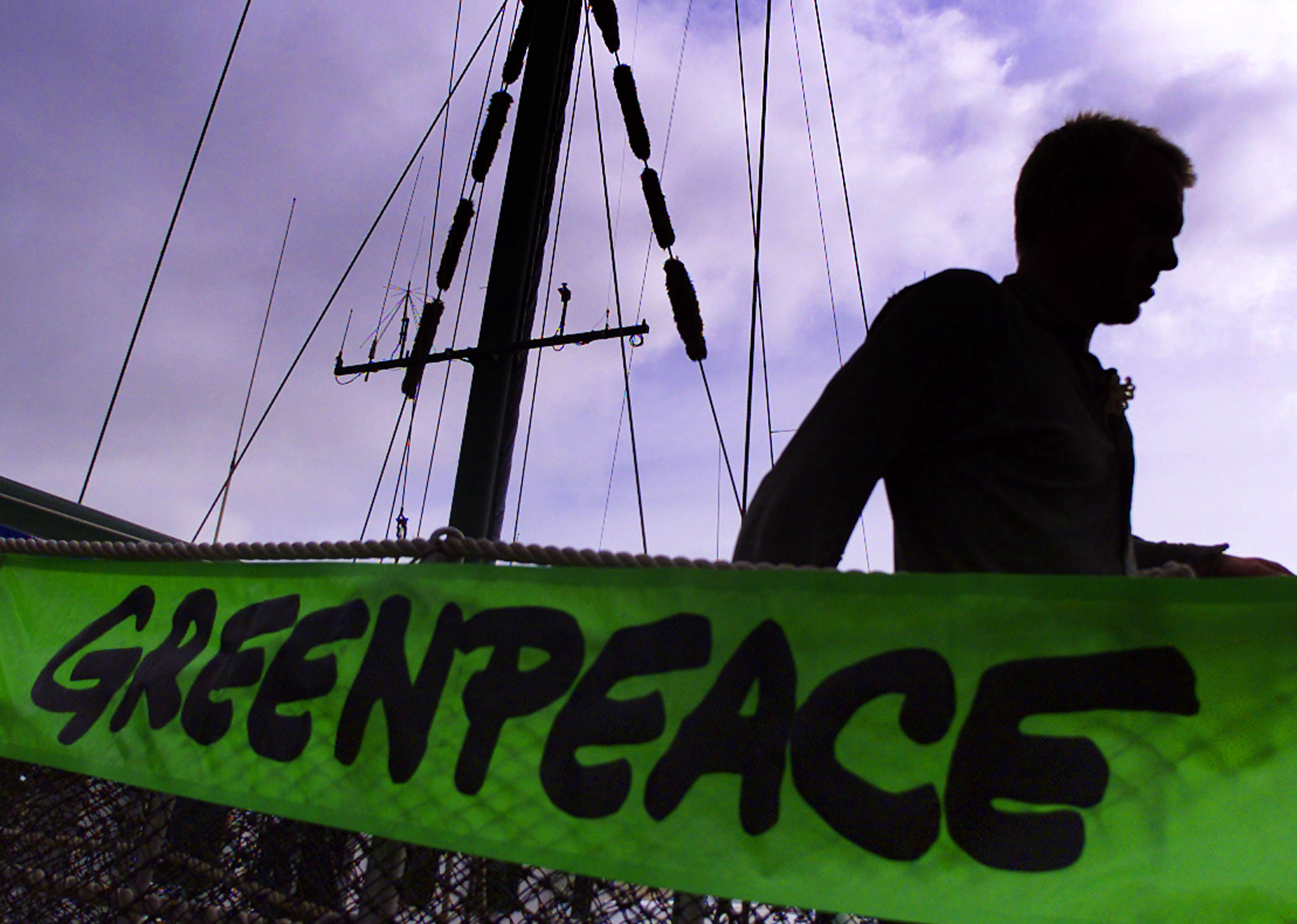
Greenpeace’s Iconic ‘Rainbow Warrior’ Ship Chopped Up On A Third-World Beach, Sold For Scrap

RTR9IQ0.jpg?is-pending-load=1

From The Daily Caller 8:11 PM 12/30/2018 | Energy Michael Bastasch | Energy Editor Greenpeace's iconic "Rainbow Warrior" boat was disposed of in a way the group campaigned against for years. Greenpeace regrets allowing its old vessel to be chopped up on a Bangladeshi beaching yard and sold for scrap. The embarrassing news flew under…

from Climate Change Skeptic Blogs via hj on Inoreader http://bit.ly/2ArLqdH

Cheers! 2018 Saw A Global Revolt Against ‘Climate Change Policies’

http://bit.ly/2EVWJxI 2018 SAW A GLOBAL REVOLT AGAINST CLIMATE CHANGE POLICIES 12:01 PM 12/31/2018 | ENERGY Michael Bastasch | Energy Editor 679 2018 saw a global revolt against policies aimed at fighting global warming Australia, Canada, France and the U.S. have all seen push back against global warming policies That included weeks of riots in France [...]

from Climate Change Skeptic Blogs via hj on Inoreader http://bit.ly/2BOCbUO

[ASAP] Orthogonal Lithography for Halide Perovskite Optoelectronic Nanodevices

TOC Graphic

ACS Nano
DOI: 10.1021/acsnano.8b05859
ancac3?d=yIl2AUoC8zA


from Journals via hj on Inoreader http://bit.ly/2R1WZCz

US Stock Markets

The 2018 stock market, a retrospective of charts. Continue reading →

from Climate Change Skeptic Blogs via hj on Inoreader http://bit.ly/2TnJ5rn

Bill Gates Backs Advanced Nuclear Power to Solve the Climate Crisis

bill_gates-300x295.jpg

Guest essay by Eric Worrall Bill Gates has joined the growing list of Greens who think renewables alone cannot replace fossil fuels. What I learned at work this year By Bill Gates December 29, 2018 … Global emissions of greenhouse gases went up in 2018. For me, that just reinforces the fact that the only…

from Climate Change Skeptic Blogs via hj on Inoreader http://bit.ly/2GLEIoj

Galapagos, Evolution & Climate Change: Travel & Book Report

2018-10-29_14.16.59_0.jpg?itok=TxlTLpTM


from Climate Change Skeptic Blogs via hj on Inoreader https://on.nrdc.org/2BPO2SG

Polystyrene Foam Containers Out in Nation's Largest City

poly_1.jpg?itok=d6Y_yt5P


from Climate Change Skeptic Blogs via hj on Inoreader https://on.nrdc.org/2s3Oubg

[ASAP] Core–Satellite Nanomedicines for Real-Time Monitoring of Enzyme-Activatable Drug Release by Fluorescence and Photoacoustic Dual-Modal Imaging

TOC Graphic

ACS Nano
DOI: 10.1021/acsnano.8b05136
ancac3?d=yIl2AUoC8zA


from Journals via hj on Inoreader http://bit.ly/2Viv8wJ

[ASAP] Targeting 3D Bladder Cancer Spheroids with Urease-Powered Nanomotors

TOC Graphic

ACS Nano
DOI: 10.1021/acsnano.8b06610
ancac3?d=yIl2AUoC8zA


from Journals via hj on Inoreader http://bit.ly/2Qgzxwa

[ASAP] Epitaxial Growth of Two-Dimensional Metal–Semiconductor Transition-Metal Dichalcogenide Vertical Stacks (VSe2/MX2) and Their Band Alignments

TOC Graphic

ACS Nano
DOI: 10.1021/acsnano.8b08677
ancac3?d=yIl2AUoC8zA


from Journals via hj on Inoreader http://bit.ly/2VgcdTb

How to watch NASA’s New Year’s date with a distant space rock

nasahandout30.jpg?is-pending-load=1

From The Toronto Star Sun., Dec. 30, 2018 To ancient explorers, "Ultima Thule" was what lay past the northernmost edges of maps, beyond the borders of the known world. So when NASA chose a target for its New Horizons spacecraft that was farther than anything explored before, "Ultima Thule" seemed a fitting moniker. The far-flung…

from Climate Change Skeptic Blogs via hj on Inoreader http://bit.ly/2Rp6Rpj

Collaboration request

Hi there How would you like to earn a 35% commission for each sale for life by selling SEO services Every website owner requires the ...