Journal of the American Chemical Society
DOI: 10.1021/jacs.8b11374


from Journals via hj on Inoreader http://bit.ly/2GpHVbo


Busy day in Santa
Cruz, CA.
Autonomous vehicles "have every incentive to create havoc," a transportation planner says. UC Santa Cruz Magazine reporting.
With no need to park, self-driving cars will clog city streets and slow traffic to a crawl.
However, a policy fix could address these problems before autonomous vehicles become commonplace, says Adam Millard-Ball.
If you think traffic in city centers is bad now, just wait until self-driving cars emerge on the scene, cruising around to avoid paying hefty downtown parking fees.
Even worse, because cruising is less costly at lower speeds, self-driving cars will slow to a crawl as they "kill time," says transportation planner Adam Millard-Ball, an associate professor of environmental studies at the University of California, Santa Cruz.
"Parking prices are what get people out of their cars and on to public transit, but autonomous vehicles have no need to park at all. They can get around paying for parking by cruising," he said. "They will have every incentive to create havoc."
Millard-Ball analyzes "The Autonomous Vehicle Parking Problem" in the current issue of Transport Policy.
That scenario of robot-fueled gridlock is right around the corner, according to Millard-Ball, who says autonomous, or self-driving, vehicles are likely to become commonplace in the next five to 20 years.
Millard-Ball is the first researcher to analyze the combined impact of parking costs and self-driving cars on city centers, where the cost and availability of parking is the only tool that effectively restricts car travel.
Under the best-case scenario, the presence of as few as 2,000 self-driving cars in downtown San Francisco will slow traffic to less than 2 miles per hour, according to Millard-Ball, who uses game theory and a traffic micro-simulation model to generate his predictions.
"It just takes a minority to gum things up," he said, recalling the congestion caused at airports by motorists cruising the "arrivals" area to avoid paying for parking: "Drivers would go as slowly as possibly so they wouldn't have to drive around again."
Free cell-phone parking areas, coupled with strict enforcement in loading areas, relieved the airport snarls, but cities will be hard-pressed to provide remote parking areas for self-driving cars at rates lower than the cost of cruising—which Millard-Ball estimates at 50 cents per hour.
Continued here [includes short video].

by Judith Curry
The House Natural Resources Committee Hearing on Climate Change will be livestreamed on their Facebook page.
Here is the link to the Hearing page [link], I have no idea if they will post the other written testimonies.
My written testimony is posted at [Curry Testimony House Natural Resources].
Below is text of my verbal comments:
I thank the Chairman, the Ranking Member and the Committee for the opportunity to offer testimony today.
Climate scientists have made a forceful argument for a future threat from manmade climate change. Manmade climate change is a theory whose basic mechanism is well understood, but the potential magnitude is highly uncertain.
If climate change was a simple, tame problem, everyone would agree on the solution. Because of the complexities of the climate system and its societal impacts, solutions may have surprising unintended consequences that generate new vulnerabilities. In short, the cure could be worse than the disease. Given these complexities, there is plenty of scope for reasonable and intelligent people to disagree.
Based on current assessments of the science, manmade climate change is not an existential threat on the time scale of the 21st century, even in its most alarming incarnation. However, the perception of a near-term apocalypse and alignment with range of other social objectives has narrowed the policy options that we're willing to consider.
In evaluating the urgency of emissions reductions, we need to be realistic about what this will actually accomplish. Global CO2 concentrations will not be reduced if emissions in China and India continue to increase. If we believe the climate models, any changes in extreme weather events would not be evident until late in the 21st century. And the greatest impacts will be felt in the 22nd century and beyond.
People prefer 'clean' over 'dirty' energy – provided that the energy source is reliable, secure and economical. However, it's misguided to assume that current wind and solar technologies are adequate for powering an advanced economy. The recent record-breaking cold outbreak in the Midwest is a stark reminder of the challenges of providing a reliable power supply in the face of extreme weather events.
With regards to energy policy and its role in reducing emissions – there are currently two options in play:
Apart from the gridlock engendered by considering only these two options, in my opinion, neither option gets us to where we want to go. A third option is to re-imagine the 21st century electric power systems, with new technologies that improve energy security, reliability and cost while at the same time minimizing environmental impacts. However, this strategy requires substantial research, development and experimentation. Acting urgently on emissions reduction by deploying 20th century technologies could turn out to be the enemy of a better long-term solution.
Given that reducing emissions is not expected to change the climate in a meaningful way until late in the 21st century, adaptation strategies are receiving increasing attention.
The extreme damages from recent hurricanes plus the billion dollar losses from floods, droughts and wildfires, emphasize the vulnerability of the U.S. to extreme events. It's easy to forget that U.S. extreme weather events were actually worse in the 1930's and 1950's. Regions that find solutions to current impacts of extreme weather and climate events will be better prepared to cope with any additional stresses from climate change, and to address near-term social justice objectives.
The industry leaders that I engage with seem hungry for a bipartisan, pragmatic approach to climate policy. I see a window of opportunity to change the framework for how we approach this.
Bipartisan support seems feasible for pragmatic efforts to accelerate energy innovation, build resilience to extreme weather events, and pursue no regrets pollution reduction measures. Each of these three efforts has justifications independent of their benefits for climate mitigation and adaptation. These three efforts provide the basis of a climate policy that addresses both near-term economic and social justice concerns, and also the longer-term goals of mitigation.
This ends my testimony.
Ok, let me tweet this and post on Facebook, then I will head over to the Longworth House Office Building.
I will post some reactions to the hearing once I am at the airport.
Another triumph of modeling
In 2014, Townsville City Council launched a detailed flood mapping service.
The maps will allow people to search individual properties to find out the risk of it being inundated during a one-in-100-year flood event.
Five years later and they're publishing inundation maps:
Townsville flood maps reviewed as more homes go underJared Owens, The Australian
Townsville City Council's spokeswoman said last night the model, which was based on expert modelling of different scenarios, was overwhelmed by an "unprecedented" monsoonal trough …
Local Government Association of Queensland chief executive Greg Hallam said Townsville's flood maps relied on "exhaustive modelling of every possible scenario", looking at variables such as rainfall and artificial structures.
"We're not God. We don't have supreme knowledge. We only have the best science, the best knowledge we can have," he said. "We now know with the (dam) gates fully open … what will flood and what won't, so there will be a new set of flood maps produced out of this event."
If we had better climate models, perhaps we might have been able to empty the dam before the downpour instead of [...]

http://bit.ly/2DcZxUJ Hearing – Climate Change: The Impacts and the Need to Act Posted on February 6, 2019 by curryja by Judith Curry The House Natural Resources Committee Hearing on Climate Change will be livestreamed on their Facebook page. Here is the link to the Hearing page [link], I have no idea if they will post the other written testimonies. My written [...]
from Climate Change Skeptic Blogs via hj on Inoreader http://bit.ly/2UMhKjo
http://bit.ly/2SeIGes By MICHAEL BASTASCH Former Vice President and climate crusader Al Gore criticized President Donald Trump for touting booming oil and natural gas production during his State of the Union address Tuesday night. "The President doesn't get it," Gore tweeted, hammering Trump for not mentioning the "outdated oil and natural gas projects" instead of the [...]
from Climate Change Skeptic Blogs via hj on Inoreader http://bit.ly/2TBqLLG

How to bring up Ubuntu Linux on a Windows PC inside a Docker virtual space in just a couple of minutes. A 20 minute video on installing, running, and managing Docker and Docker images on a Windows box. Continue reading →
from Climate Change Skeptic Blogs via hj on Inoreader http://bit.ly/2SveNG9
https://fxn.ws/2GqgQ85 By Joseph A. Wulfsohn CNN national correspondent John King ripped President Donald Trump for not mentioning climate change in his second State of the Union address. SEE DEMOCRAT STACEY ABRAMS' STATE OF THE UNION RESPONSE King began by praising defeated Georgia gubernatorial candidate Stacey Abrams, declaring she had the "best response" he can recall either Republican or Democrat giving and how she [...]
from Climate Change Skeptic Blogs via hj on Inoreader http://bit.ly/2ScOYLL
Year-round film mulching in winter wheat field facilitates rainwater storage in summer fallow period and reduces water evaporation in growing reason, and then increases water use efficiency in the dryland of the Loess Plateau, China. Optimized fertilization further promotes fertilizer utilization efficiencies. In this study, plastic film mulching was extended from plant growth season to summer fallow, and fertilizers were applied by monitoring soil nutrient availability. Field trials were conducted in the dryland of the Loess Plateau over 4 years by using four types of cultivation to investigate the effects of year-round plastic film mulching with monitored fertilization on utilization efficiencies of rainwater and nitrogen (N), and winter wheat yield. The four types of cultivation were farmer practice (FP), ridge-furrow with plastic film mulching system plus conventional fertilization(RPCF), ridge-furrow with plastic film mulching system plus monitored fertilization (RPFM), and flat soil surface with plastic film mulching system plus monitored fertilization (FPFM). Our results indicate that the average yield of winter wheat in RPFM and FPFM treatments was 4491 kg ha−1. Compared with FP treatment, the combined effects of monitored fertilization and film mulching(RPFM and FPFM treatments) could increase grain yield in the range of 24.7 to 42.1%. The film mulching extended to the fallow season increased the water storage in 2 m depth of soil profile, and the amount of soil water storage in the summer fallow period increased by 27 to 30% in FPFM treatment than FP treatment. After 4-year consecutive planting of wheat, the accumulation of nitrate-N in 2 m soil reached 277 kg·ha−1 in the FP treatment, which is 87.7% higher than of the level at the beginning of the experiment. Seventy-five percent of nitrate-N was distributed in the soil layer of 0–120 cm. In addition, the residual nitrate-N showed downward leaching with rainfall during the experiment. The RPFM and FPFM treatments reduced the apparent loss and residual levels of soil N, whereas increased its apparent mineralization compared with FP treatment. The FPFM treatment exhibited a greater utilization of residual nitrate-N from previous years and showed a higher amount of the mineralized N from soil organic matter, therefore leading to a relatively high apparent utilization rate of N (56.7%). Considering both grain yield production and utilization efficiencies of water and N, FPFM with year-round mulching was the most effective cultivation measure for winter wheat in the Loess Plateau.


In response to the Walloon Environment and Health Program, the Scientific Institute of Public Services (ISSeP) developed an integrated approach of environmental exposure assessment in the Walloon region, Belgium. The study presents an index-based approach to estimate the multiple environmental burdens at regional level and detailed local resolution. Indicators are based on environmental measurements of pollutants in ambient air and soil, and on stressors for citizens related to noise and radon. These indicators were mapped as proportions to obtain an accurate comparison between spatial units. In order to indicate the need for intervention, environmental indicators are calculated as the proportion of areas where the level of detrimental environmental factors exceeds threshold values from WHO guidelines and Walloon legal threshold values. In parallel, a spatial web tool based on GIS was developed to enable a flexible and weighted combination of the normalized indicators by computing the resulting composite index online. This interactive web tool designed for policy makers and experts eases the spatial analysis of results in order to identify geographic areas where hotspot exposures are a potential risk to human health. The next steps of this work aim to integrate more environmental indicators (stressors and benefits) and some sociodemographic and health indicators in order to detect vulnerable populations. A holistic assessment is essential to inform environmental justice debates and to ensure a health conducive equal environment. Finally, this environmental health tool will support decision makers focus resources and programs to improve the environmental health of Walloons living in areas disproportionately burdened by multiple sources of pollution.


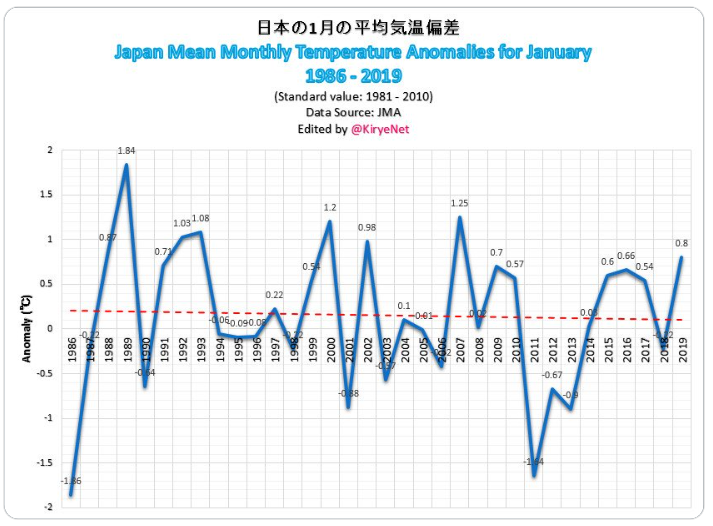
Since the global warming scare started some 30 years ago, Japan's winters in fact have have not been warming – but rather many areas show the opposite is happening: cooling.
For Japan as a whole, the entire country has not seen any rise in January mean temperature over the past 30 years, according to data from the Japanese Meteorology Agency (JMA):
As the chart above shows, if anything, Japan mean January temperature has been falling a bit, thus contrdicting the warming claims of climate alarmists.
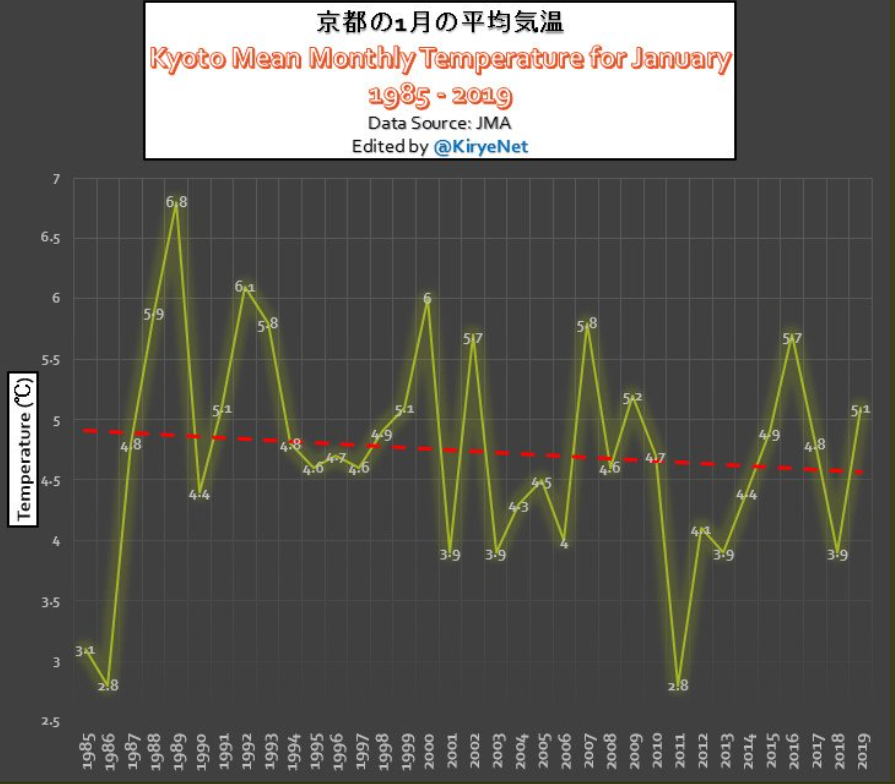
January in Kyoto has been cooling over the past 30 years, as the following chart shows, even as atmospheric CO2 concentrations have risen from about 350 ppm back in 1985 to over 410 ppm today:
The same is true for the south Japan station of Naze:
Naze has seen slight January cooling over the 33 years – not warming!
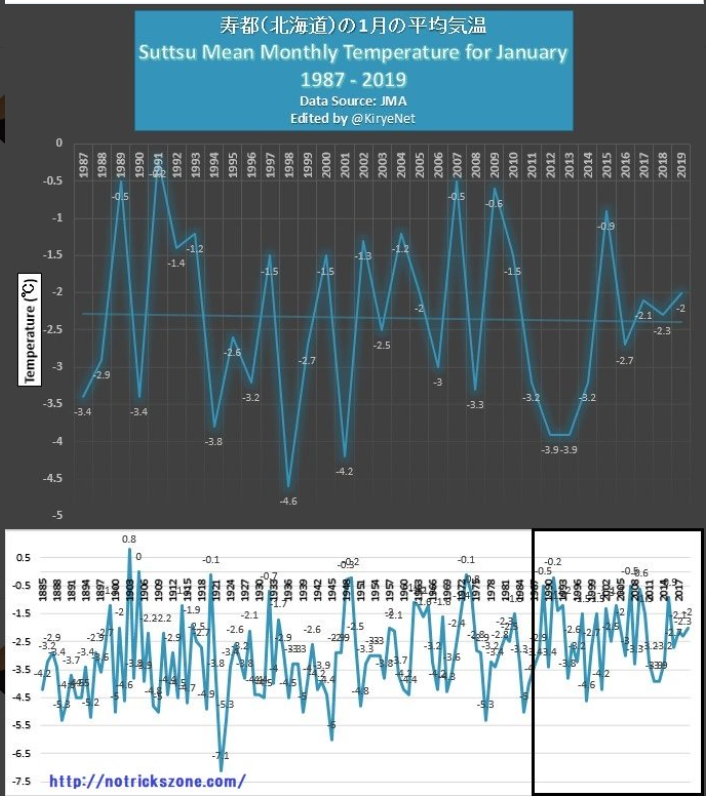
In northern Japan, the month of January has also gotten slightly colder over the past 30 years, as shown by measurements taken at the Suttsu station in Hokkaido:
Overall, January today in Suttsu is at about the same level as it was more than 100 years ago.
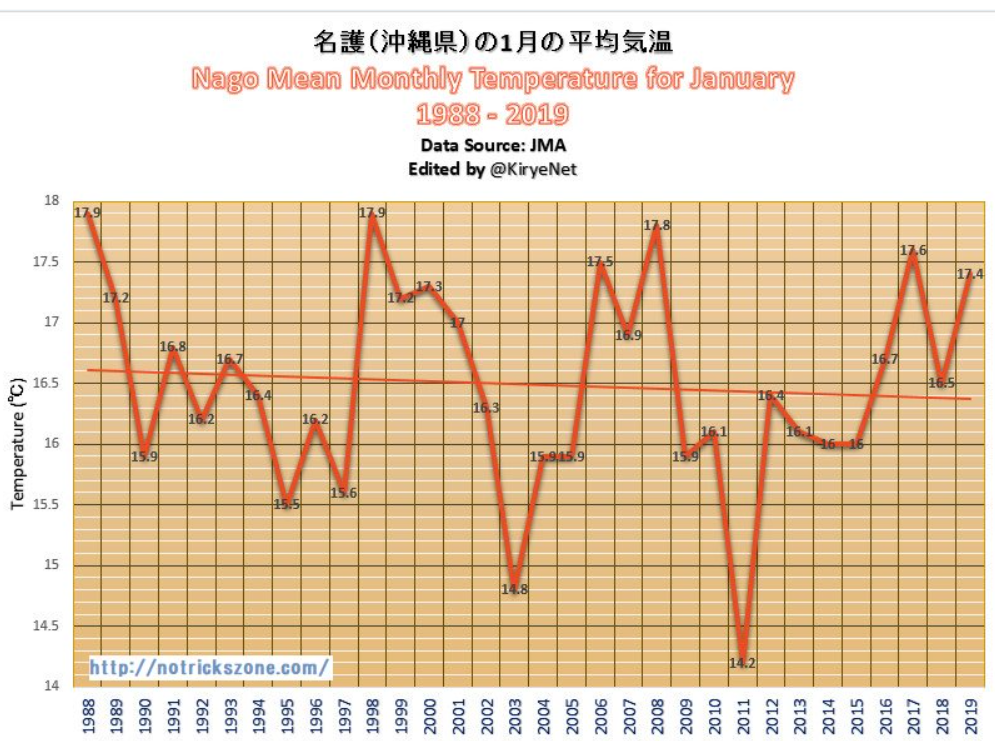
Moving far south to the Nago station in Okinawa, here as well we see that January mean tenmperatures have been cooling, and not warming like climate activists insisted it would.
Japan refuses to cooperate with the global warming "science":
By now many people should be awaiting an explanation as to why the trend has behaved the opposite of what has been predicted for decades by CO2 global warming scientists.
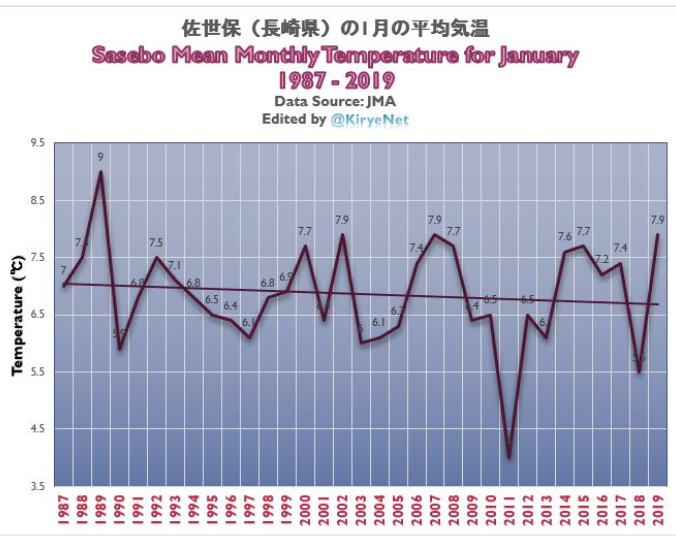
The trend for January at the Sasebo station near Nagasaki over the past 32 years has also seen a steady linear decline:
How can anyone in the Japanese media be speaking about rapid warming over the recent years? Much of the climate news in Japan are of poor quality, unfortunately, as they continue to make people believe it's warming when it is in fact not.
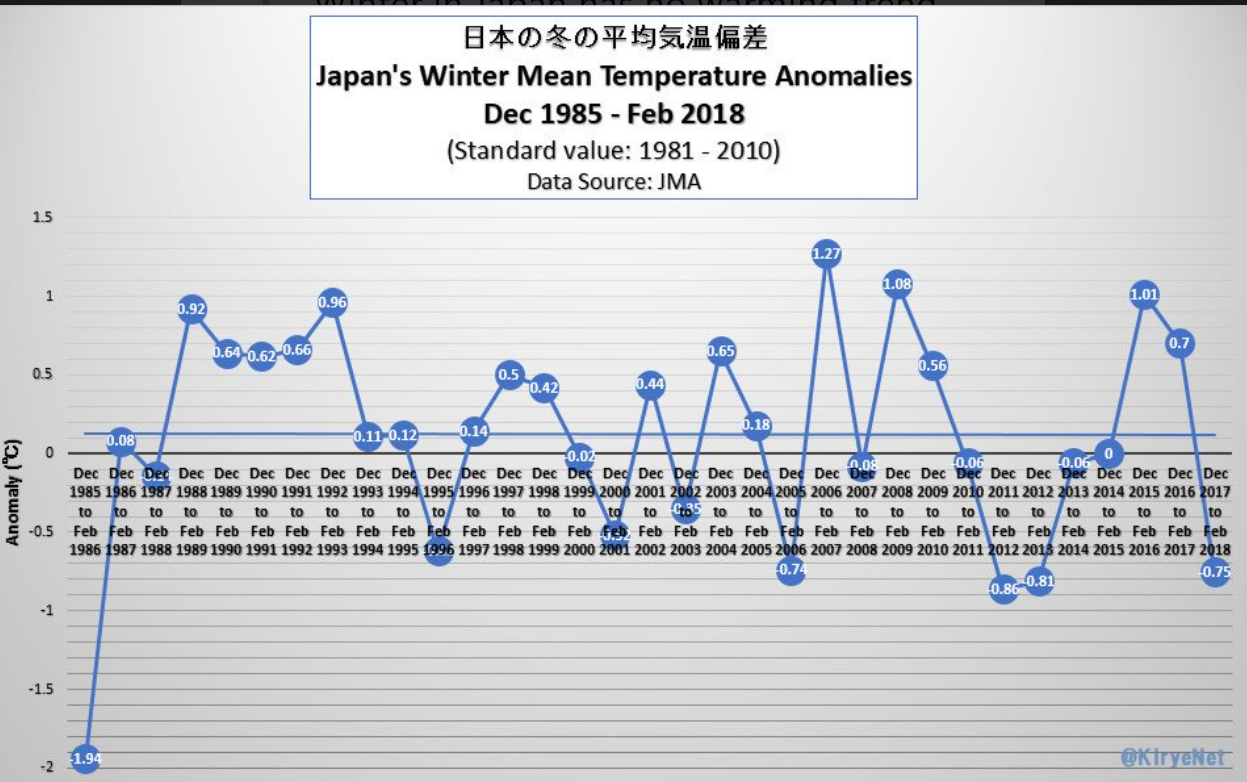
Okay, the charts show trends for the month of January, the dead of winter. So what about the complete winter in japan from December through February? Here as well we see no warming at all across Japan:
The untampered data from the Japanese Meteorological Agency (JMA) shows the Japan's winters have not warmed at all in over three decades.
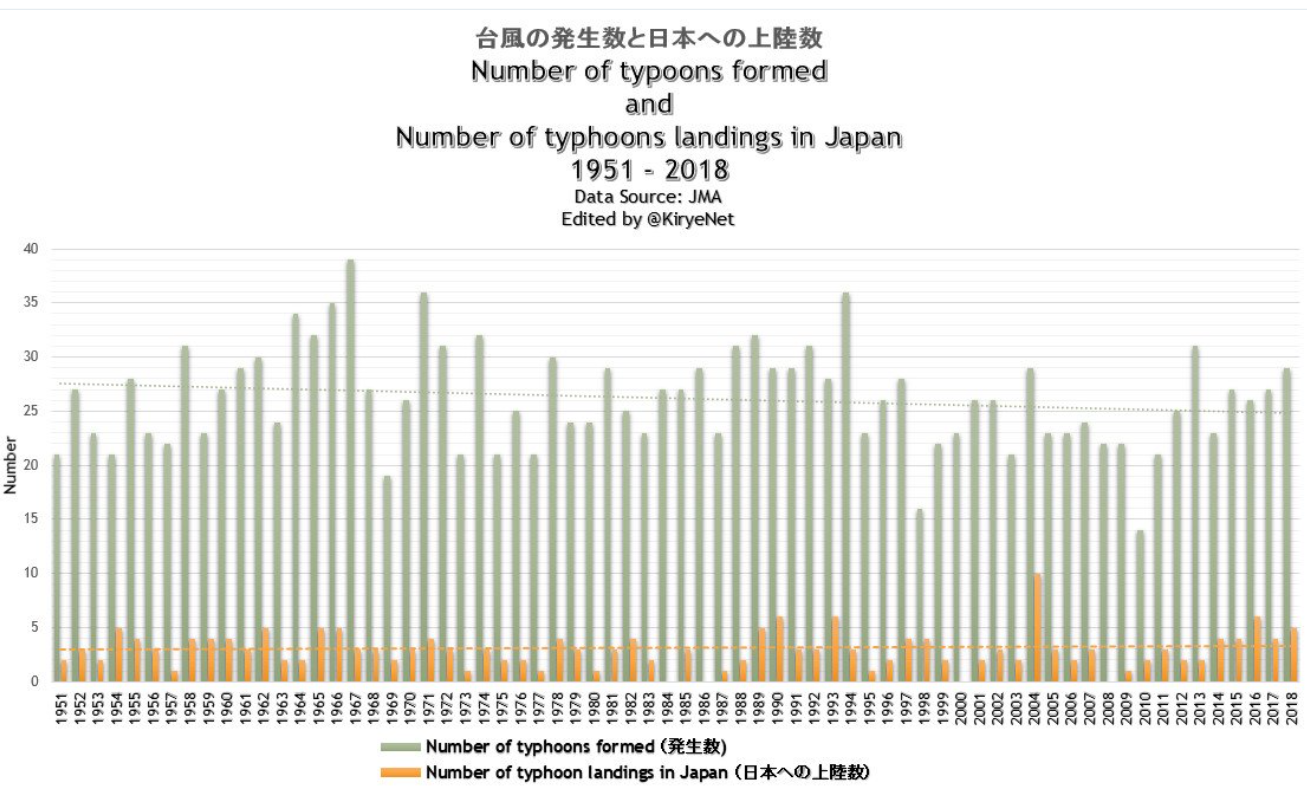
In general many other factors have not cooperated with the many predictions made by global warming scientists. One important example is typhoons, which we were told would become more frequent and intense. But here's the typhoon data from the JMA:
In summary, lots of hype about warming in Japan, yet the data haven't shown it in over 3 decades.

The purposes of this research are to quantify the concentration of heavy metals (Zn, Cu, As, Pb, Cd, and Hg) in the water and fish tissues of common carp (Cyprinus carpio) in the upper Mekong River and to thereby elucidate the potential dietary health risks from fish consumption of local residents. Surface water and fish tissues (gill, muscle, liver, and intestine) from four representative sample areas (influence by a cascade of four dams) along the river were analyzed for heavy metal concentrations. Results revealed that the levels of heavy metals in fish were tissue-dependent. The highest Cu and As levels were found in the liver; the highest Zn and Pb levels occurred in the intestine, and the highest Hg level was found in the muscle. The total target hazard quotient (THQ) value for residents is > 1 for long-term fish consumption, and local residents are, therefore, exposed to a significant health risk. Results from the current study provide an overall understanding of the spatial and tissue distribution of heavy metals in water and fish body along the upper Mekong River under the influence of cascade dams and highlight the potential health risk of As for the local residents of long-term fish consumption.
Men, we must all admit, are the better sex. It something needs killing, you call a man. We're taller and our looks improve whilst sporting a moustache. And talk about the ability to reach things on a high shelf? Boy.
These being incontrovertible truths, the world would be a happier place if there were a whole lot more men. And, thanks to global warming—which is going to strike any day now: soon, soon—there will be lots more men!
They may have wee p-values, though. No, wait. Rather, it is thanks to wee p-values we know men will shoulder the fairer sex into scarcity, they presumably not being able to take the heat.
This is the judgment of science; therefore, it is true. Just ask Misao Fukuda—whose last name is a slur in Russian, da?—and a slew of others who wrote "Climate change is associated with male:female ratios of fetal deaths and newborn infants in Japan" in the journal Environment and Epidemiology.
We imagine Fukuda said to him- or herself something like this: "Say. Global warming's going to mosey along some day, and it would look bad if I didn't have a research paper on the subject. I'm going to get in on it. What question can I ask? How about is global warming 'having any impact on the sex ratio of newborn infants'?"
Because, the good Lord knows, global warming can only do bad things, and messing with the sex ratio is a bad thing.
To prove the connection, Fukuda popped a diskette into his floppy drive, or something similar, and used "Microsoft Excel Statistics 2012 for Windows" to analyze some hardcore data.
"What statistical methods did they employ, Briggs?"
Glad you asked, friend. Let me quote them: "Pearson correlation coefficients (r) were used to evaluate whether yearly mean temperature differences were associated with either male:female ratios of spontaneous fetal deaths or male:female ratios of births."
Now if that isn't science, I don't know what is.
"You're the expert. But tell me, how do changes in yearly mean temperatures meddle with the sex ratios averaged over all Japan?
Nobody knows. My guess is that yearly global warming particles, which are everywhere during years, seep into lady parts at—ahem—just the right moment. They get in there and whisper to the X sperm, "Psst. Are you as hot as me?" I mean metaphorical whispering, of course: this is science. The Xs distracted, the Ys are free to swim upstream and do their manly duty.
"So if my wife and I want a daughter, we should wait to try during winter?"
You'd think so, but no. Everybody knows abnormally cold temperatures are especial proof the world is warming. It's complicated, but it has to do with polar vortexes.
"But aren't polar vortexes part of the climate? And therefore if they're making extra cold weather, shouldn't we doubt global warming theory?"
I'll take your question to mean you want to know about the wee p-values Fukuda found. Here's the money quote: "a statistically significant negative association was found between temperature differences (the exposure of interest) and sex ratios of births (the outcome of interest) from 1968 to 2012 (r = -0.518, P = .0002)."
"That is a wee P."
Yes, sir, it is. About as wee as they come. Therefore, since p-values have nothing whatever to say about any hypotheses whatsoever of interest, as I have proved—not just argued, proved—it must necessarily be the case this wee P has nothing to say about confirming a temperature-sex-ratio connection; therefore, the connection between temperature and sex-ratios, which can only be a causal connection, has been proved.
"Hold up. You just said p-values can't be used for that purpose. Yet you went ahead and used them for that purpose anyway!"
It's science, son. It's complicated. If it were easy, anybody could do it.
And did I mention CNN picked up on the story? They figure "conceptions of boys especially vulnerable to external stress factors," yet, echoing Fukuda, they say higher temperatures will give us more boys.
"So it must follow that higher temperatures give rise to less stress?"
You got it. Yet another reason to welcome global warming. Just don't sit up waiting for it.
 Open Access
 This article is licensed under a Creative Commons Attribution-NonCommercial 3.0 Unported Licence.


In this paper, the effects of cerium oxide nanoparticles (CeO2 NPs) on the group bacterial behaviors were elaborated. After 36-h cultivation, the biofilm biomass was enhanced by the sub-lethal concentrations of 0.5 and 2 mg/L CeO2 NP exposure. Meanwhile, the promoted production of total amino acids in microbes further resulted in the increased surface hydrophobicity and percentage aggregation. To resist the CeO2 NPs stress, the biofilm exhibited a double-layer microstructure, with the protein (PRO) and living cells occupying the bottom, the polysaccharide (PS), and dead cells dominating the top. The bacterial diversity was highly suppressed and Citrobacter and Pseudomonas from the phylum of γ-Proteobacteria strongly dominated the biofilm, indicating the selective and enriched effects of CeO2 NPs on resistant bacteria. The stimulated inherent resistance of biofilm was reflected by the reduced adenosine triphosphate (ATP) content after 4 h exposure. The increased levels of reactive oxygen species (ROS) in the treatments of 8 h CeO2 NP exposure led to the upregulated quorum sensing signals of acylated homoserine lactone (AHL) and autoinducer 2 (AI-2), beneficial to mitigating the environmental disturbance of CeO2 NPs. These results provide evidences for the accelerating effects of CeO2 NPs on biofilm formation through oxidative stress, which expand the understanding of the ecological effects of CeO2 NPs.
http://bit.ly/2ScfXas By Valerie Richardson – The Washington Times Sunday, February 3, 2019 Numerous media outlets cited last week's polar vortex as an example of extreme weather caused by climate change, but it turns out such cold snaps are actually on the decline. Roy Spencer, principal research scientist at the University of Alabama in Huntsville, posted a graphic [...]
from Climate Change Skeptic Blogs via hj on Inoreader http://bit.ly/2ULpWQS
https://washex.am/2WHm8Sh by John Siciliano | February 05, 2019 10:48 PM President Trump didn't offer an olive branch to environmentalists on climate change in his State of the Union address Tuesday night, but major groups say his call for infrastructure legislation could be an opening for cooperation. The Natural Resource Defense Council, a major national environmental group, [...]
from Climate Change Skeptic Blogs via hj on Inoreader http://bit.ly/2REyvuF